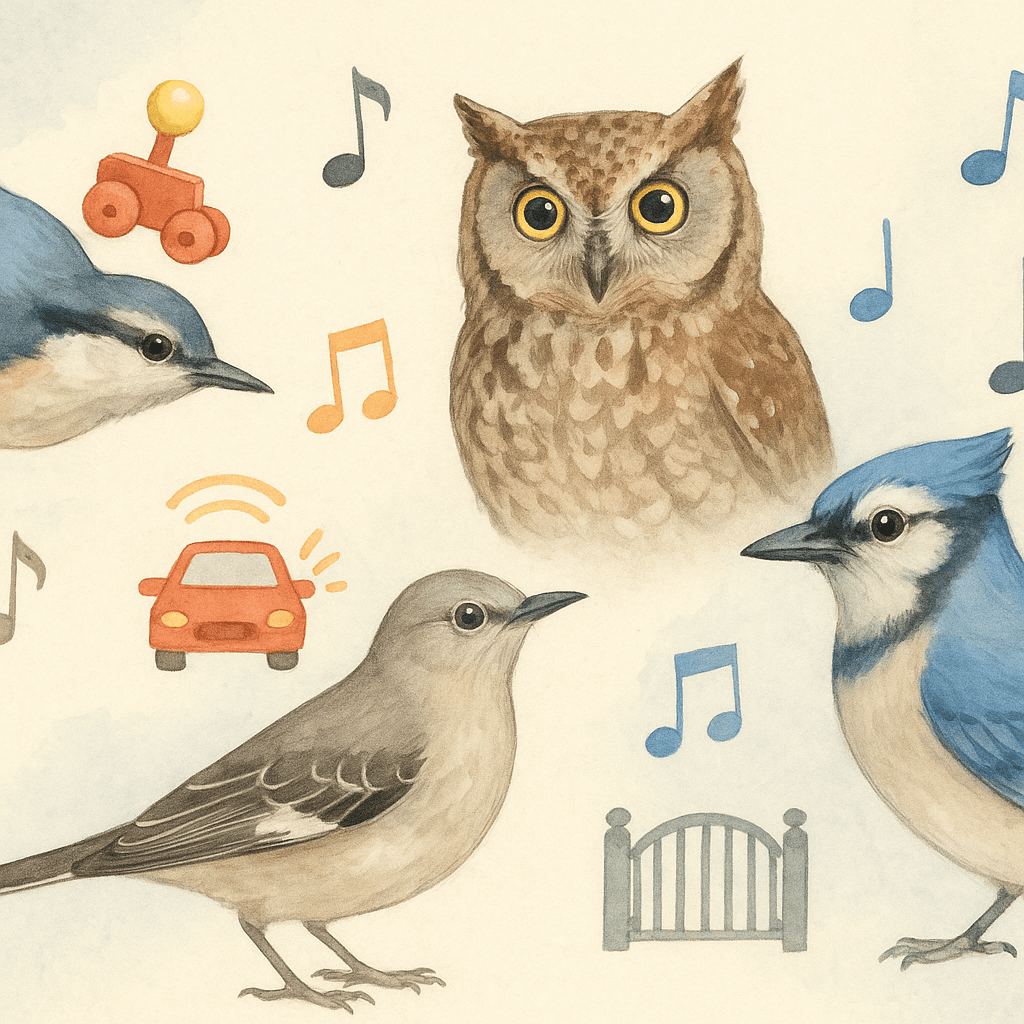
Sound Guide
What Bird Sounds Like a Squeaky Toy?
Meet 6 birds whose calls sound like squeaky toys, rubber ducks, and rusty gates – and learn how to ID them.
Read Article →
Pattern: Repeats each phrase 3–5 times, then switches
Where: Yards, rooftops, parking lots, fences
Best clue: Sings at night; cycles through different "alarm" sounds
Pattern: Continuous blended chatter (no clear repeats)
Where: Buildings, signs, nest boxes, flocks
Best clue: Sounds like channel-surfing through a radio
Pattern: Single metallic "conk-la-REE!"
Where: Marshes, wetlands, pond edges, cattails
Best clue: Buzzy, electronic quality – not mimicking anything
Pattern: Sharp "peek!" and rapid "tut-tut-tut"
Where: Lawns, gardens, forest edges
Best clue: Urgent chirping at dusk or when predators are near
Alarm still going off outside? Record it in Wings & Whistles and catch the culprit in the act. Get the app free →
There are two main reasons you might hear a bird that sounds exactly like the car alarm in your neighbor's driveway:
Some birds are natural mimics – they learn and copy sounds from their environment. Species like the Northern Mockingbird and European Starling can incorporate car alarms, ringtones, sirens, and other man-made sounds into their songs. Male mockingbirds build vast repertoires over their lifetime, adding new sounds each season.
In urban areas, these birds hear car alarms so frequently that they become part of the local "dialect." A mockingbird in a parking lot may have a very different repertoire than one in a rural forest.
Other birds don't mimic anything – their natural calls just happen to land in the "sounds like an alarm" frequency zone. Sharp, metallic, or buzzy calls can trigger the same response in our brains as electronic beeps and sirens.
Your brain hears "alarm!" and reaches for patterns it knows. The bird is just being a bird.
If your mystery bird sounds less "car alarm" and more "laser zap, smoke-detector chirp, or pure electronic beep," that is a different cast: saw-whet owls, pewees, and a flycatcher with a contact call that genuinely sounds like a video-game effect. We cover them in What Bird Sounds Like a Laser, Beep, or Electronic Chirp?. If you would rather just hear the usual suspects side by side, compare the five sounds people ask about most, or start training your ear properly with the six songs worth learning first.
Two close cousins of the car alarm come up constantly. If the sound is a long electronic trill you keep mistaking for your handset, see what bird sounds like a phone ringing. If it rises and falls like an emergency vehicle instead of chirping in bursts, see what bird sounds like a siren.
Let's meet the usual suspects.
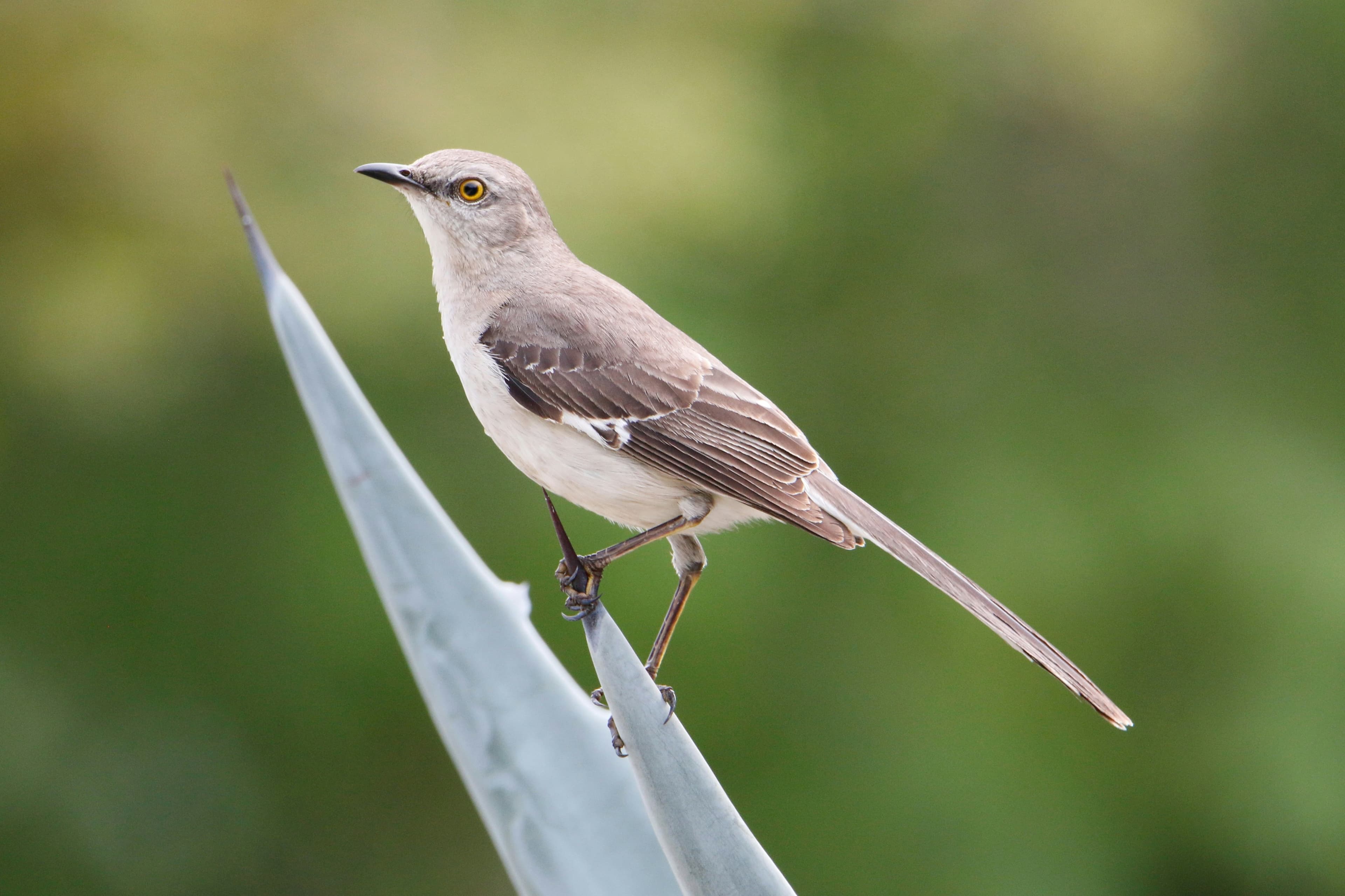
If you're hearing what sounds like a car alarm – especially one that seems to cycle through different alarm patterns – the Northern Mockingbird is your most likely culprit.
Mockingbirds are legendary mimics. They copy other birds, frogs, insects, and yes, man-made sounds. What makes them recognizable is their pattern: they repeat each sound 3-5 times before switching to something completely different.
Audio fingerprint: If you hear a bird that sounds like an alarm but keeps switching to new sounds every few seconds, it's almost certainly a mockingbird.
Picture this: It's 2 AM. A gray bird perches on a streetlight in your neighborhood, cycling through car alarm beeps, a cell phone ring, and a cardinal's whistle – all in the span of 30 seconds. That's a mockingbird doing what mockingbirds do.

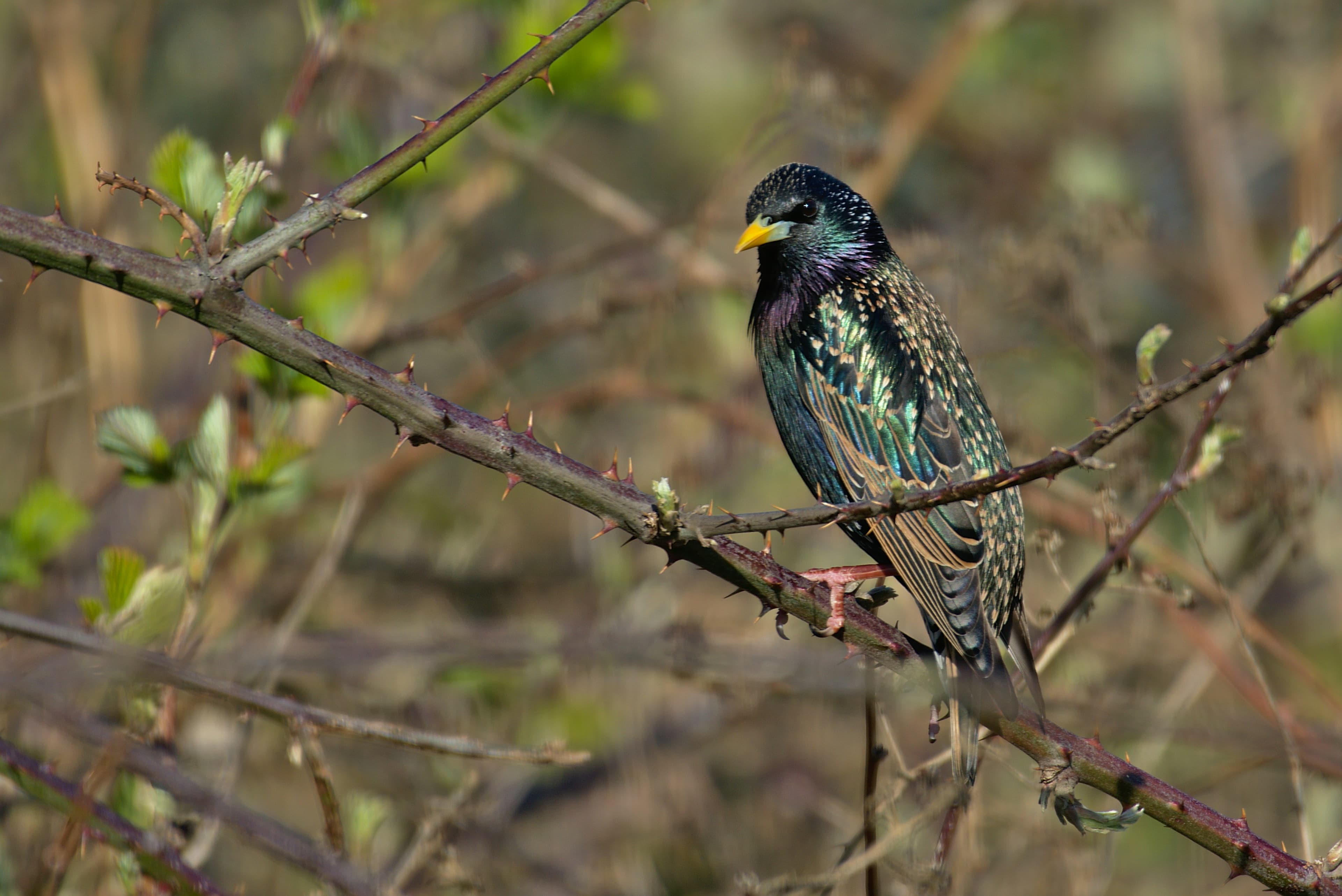
The European Starling is another accomplished mimic, though its style is different from the mockingbird's. Where mockingbirds deliver clear, repeated phrases, starlings produce a rapid, continuous stream of whistles, clicks, rattles, and copied sounds all blended together.
Starlings can mimic alarms, but the sound gets buried in their continuous, blended chatter. It's like hearing an alarm through a blender.
Audio fingerprint: If it sounds like nonstop electronic chatter with no clear repeats, think starling.
Picture this: A flock of chunky, iridescent birds clusters on a building ledge, each one producing a stream of whistles, clicks, and occasional alarm-like beeps – all blending into one chaotic chorus.

Continuous chatter, no clear repeats. Record a few seconds → check match → confirm near buildings or in flocks.
Two mimics down, two suspects to go. Learn every alarm bird by ear, five minutes a day. Download Wings & Whistles Google Play
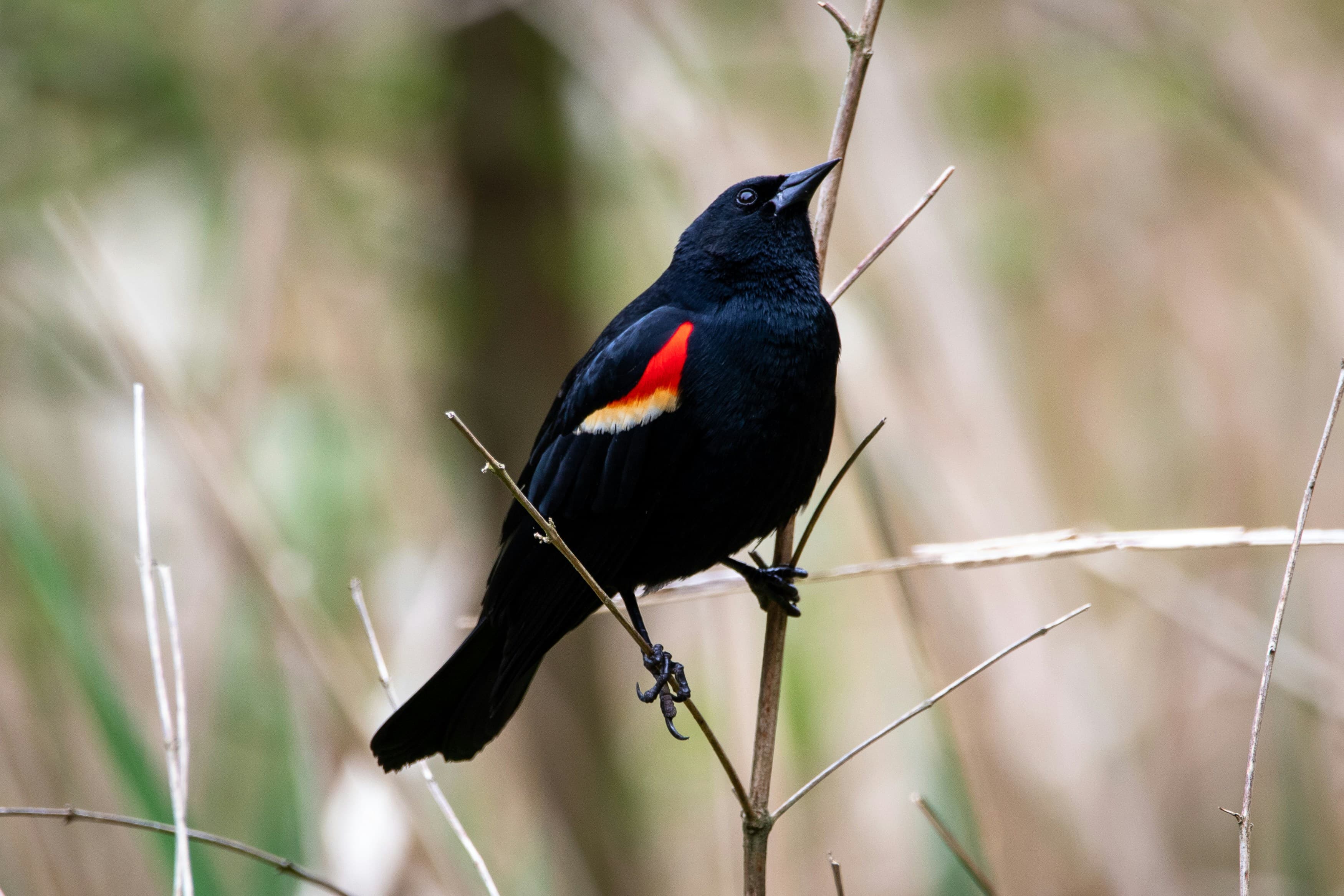
The Red-winged Blackbird doesn't mimic anything – its natural call just sounds alarmingly electronic. The male's signature "conk-la-REE!" has a buzzy, metallic quality that many people compare to a broken or glitchy car alarm.
Audio fingerprint: If the buzzy, metallic sound is coming from a marsh or wetland, it's almost certainly a red-wing.
Picture this: A jet-black bird with crimson shoulder patches perches on a cattail at the edge of a pond, throwing back its head to belt out a loud, buzzy "conk-la-REE!" that echoes across the water.

Buzzy, metallic "conk-la-REE!" Record a few seconds → check match → confirm near marsh or wetland.
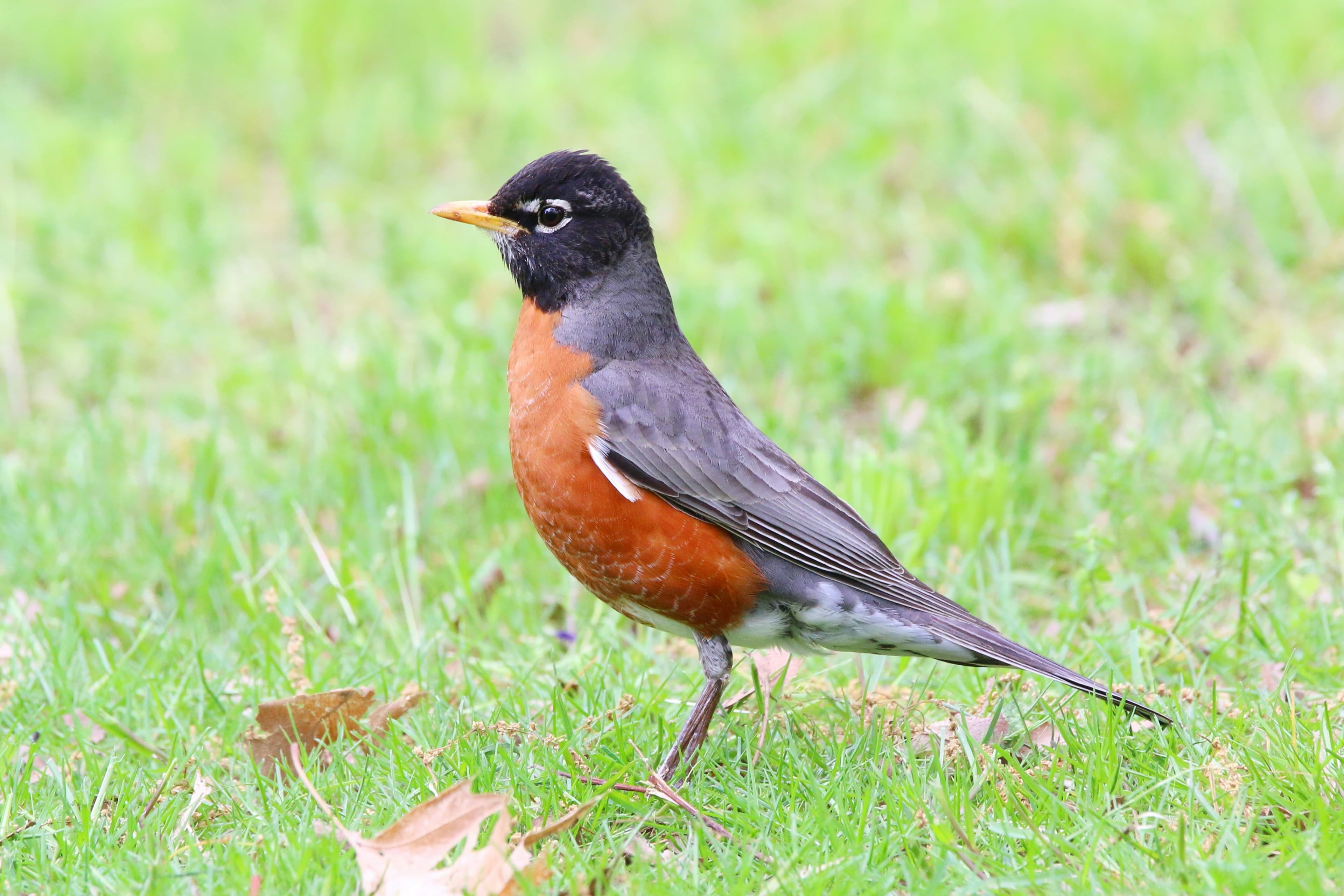
The American Robin is famous for its cheerful "cheerily, cheer-up" song, but it also has a set of alarm calls that can sound surprisingly electronic. The sharp "peek!" and rapid "tut-tut-tut" calls have an urgent, beeping quality.
Audio fingerprint: If you hear sharp, urgent chirping near a lawn at dusk – especially with a cat or hawk nearby – it's probably a robin alarm call.
Picture this: The sun is setting. A robin on your lawn spots the neighbor's cat slinking through the bushes and launches into a frantic "peek! peek! tut-tut-tut-tut" that echoes across the yard.

Sharp "peek!" + rapid "tut-tut-tut." Record a few seconds → check match → confirm on lawn at dusk or near a predator.
You don't need to be a bird expert. You just need a simple process. (New to bird sound apps? Check out our guide to identifying bird sounds.)
The Northern Mockingbird is the most common bird that sounds like a car alarm. Mockingbirds are excellent mimics that learn sounds from their environment, including car alarms, sirens, and other electronic noises. They repeat each sound 3-5 times before switching to something new.
Mockingbirds copy sounds to expand their vocal repertoire. Males with more diverse songs are more attractive to females. In urban and suburban areas, car alarms are common sounds, so mockingbirds learn them just like they learn other bird songs.
Northern Mockingbirds are famous for singing at night, especially unmated males during breeding season. If you hear what sounds like a car alarm at 2 AM coming from a tree or rooftop, it's almost certainly a mockingbird.
The Red-winged Blackbird produces sharp, metallic calls that many people compare to a broken or glitchy car alarm. Its "conk-la-REE!" song has a buzzy, electronic quality even though it's not mimicking anything.
Yes. European Starlings are excellent mimics and can copy car alarms, phone ringtones, and other electronic sounds. However, their mimicry is usually embedded in a rapid, chattering song rather than delivered as clear, repeated phrases like a mockingbird.
Practice identifying alarm-like calls with guided lessons in W&W



The next time you hear what sounds like an alarm coming from a tree:
Once you know it's a mockingbird doing its 3 AM concert or a red-wing defending its marsh, the sound transforms. What was an "annoying alarm" becomes a reminder that you share your neighborhood with some remarkably clever, noisy neighbors.
And honestly? A mockingbird that learned your car alarm is kind of impressive.
Next time you hear the "alarm," record it in W&W and see what it suggests. Download Wings & Whistles Google Play
Meet 6 birds whose calls sound like squeaky toys, rubber ducks, and rusty gates – and learn how to ID them.
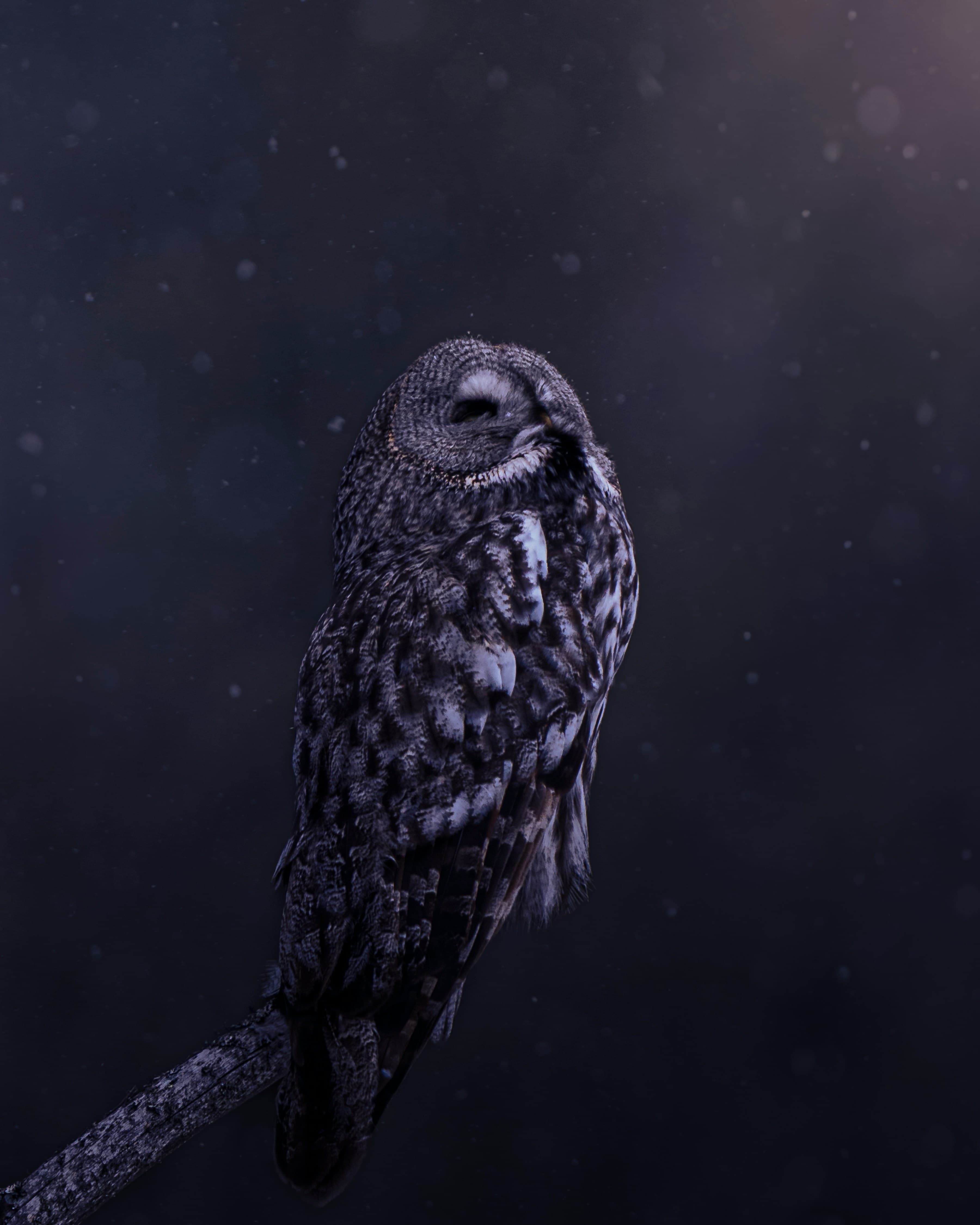
Hear birds singing in the middle of the night? Learn why birds sing after dark and which species you're likely hearing.