Sound Guide
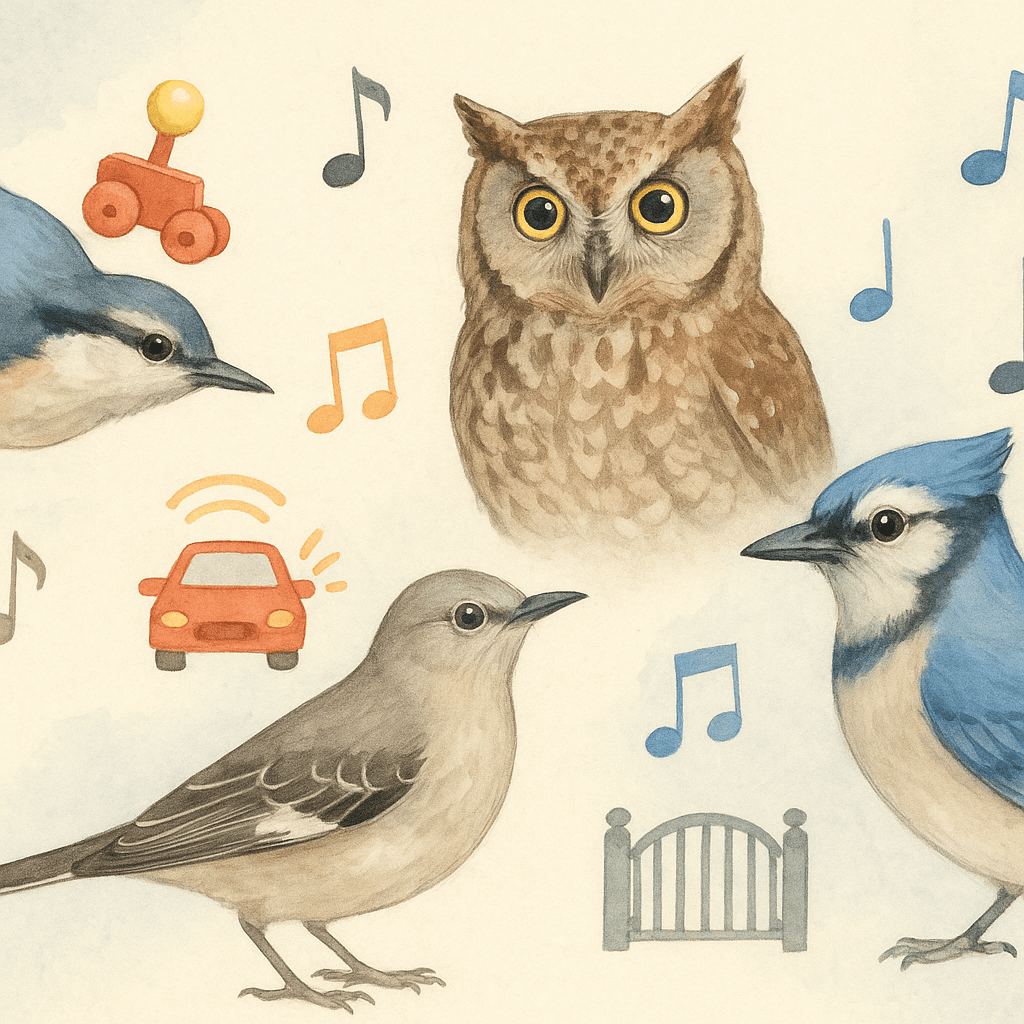
6 Birds That Sound Like Squeaky Toys (North America)
The North America version of this guide, covering Brown-headed Nuthatch, Eastern Screech-Owl, Mockingbird, and more.
Read Article →
In North America? Read the North America version.
Great Tit is the clearest classic. Eurasian Blue Tit is higher and busier. Dunnock is rougher and more hedge-based. Robin is the more musical wild card. Once you know what to listen for, they become much easier to tell apart.
Heard it after dark instead? That is a different cast entirely. See strange bird noises at night in the UK.
If you want the shortest possible answer, start with Great Tit. If the sound is more scratchy, hedge-based, or less cleanly repeated, then Eurasian Blue Tit, Dunnock, or Robin may be the better fit.
Hearing it in the garden right now? Record a few seconds in Wings & Whistles and settle it. Get the app free →
For many people in the UK, the best first answer is Great Tit. It is one of the most familiar birds behind that small, high, oddly mechanical sound that gets described as toy-like or pump-like.
But it is not the only one. Eurasian Blue Tit can sound brighter and busier, Dunnock rougher and scratchier, and Robin more whistled and fluid.
That is why this kind of mystery sound is easier to solve by sound shape than by name alone. Listen for whether the noise is clean or messy, repeated or flowing, and whether it seems to come from a feeder, a perch, or deep in a hedge.
Usually, it is not because the bird is imitating a toy. It is because short, high-pitched notes repeated in a simple pattern can sound strangely mechanical to human ears. That is why people compare bird calls to squeaky toys, bike pumps, rusty hinges, and other everyday household sounds.
This is also why several very different species can end up feeling similar at first. They may not sound the same in a birding sense, but they can all land in the same mental bucket for someone hearing them casually from a window or garden path.
If your mystery bird sounds like a tiny bicycle pump in the garden, start here.
Great Tit is the cleanest and most literal fit for this search. Compared with the other birds on this list, it usually sounds more structured and more deliberate.
A neat, repeated two-note phrase. Clear, punchy, and slightly mechanical.

Gardens, parks, woodland edges, and around feeders.
If the sound feels simple, repeated, and tidy, Great Tit is the strongest first suspect.
If the sound is still small and squeaky but less tidy, Eurasian Blue Tit is a strong contender.
Eurasian Blue Tit often sounds quicker, thinner, and more energetic than Great Tit. Instead of a clean repeated phrase, it can feel like a fast burst of high notes with a tiny rattly or trilling finish. It is also one of the most familiar garden birds in the UK, which makes it a very realistic answer for everyday mystery sounds.
Quick high squeaks, sometimes with a slight rattly flourish at the end.

Gardens, hedgerows, woodland, parks, and feeder areas.
If it sounds bright, fast, and a bit more chattery than Great Tit, Eurasian Blue Tit becomes the better fit.
Dunnock is one of the most overlooked candidates for this kind of sound.
It often stays low in cover and does not stand out visually, but vocally it can fit the squeaky-toy idea surprisingly well. Compared with the tits, Dunnock usually sounds rougher, thinner, and more scratchy, especially if the sound is coming from a hedge or dense shrub.
A squeaky, scratchy little warble, or a sharp peeping call.

Hedges, shrubs, gardens, parks, and low cover.
If the sound seems to come from a hedge and feels rougher or less polished than a tit, Dunnock is a very good bet.
Robin is the more musical suspect, but it still belongs on this list.
It does not usually sound as mechanical as Great Tit or as scratchy as Dunnock, but its voice is high, bright, and common enough that many people still describe it as squeaky. Robin is especially worth considering if the sound feels more like a whistle than a repeated call, or if it is coming from a visible perch in a garden, park, or street.
Thin, bright, whistled phrases. More musical than toy-like, but still high and sharp enough to be described as squeaky.

Gardens, parks, towns, and cities, often from an obvious perch.
If the sound feels whistled first and squeaky second, especially from a fence, branch, or shrub, Robin moves up the list.
Use this quick cheat sheet:
A good way to think about it is this:
That simple elimination pattern is often enough to narrow things down fast, even before you see the bird.
If you hear a bird that sounds like a squeaky toy in the UK, start with Great Tit. If it sounds faster and chattier, try Eurasian Blue Tit. If it sounds rougher and seems to come from a hedge, try Dunnock. If it sounds more whistled and fluid, especially from a visible perch, try Robin.
Once you learn those four sound shapes, this particular kind of mystery gets much easier to solve.
The best first match is often Great Tit, but Eurasian Blue Tit, Dunnock, and European Robin can also fit depending on the exact texture and rhythm of the sound.
Great Tit is the classic answer. If the sound feels like a small repeated pump or hinge, this is the first bird to check.
Dunnock is a strong match, especially if the sound is coming from low cover or a hedge rather than an open perch.
Great Tit and Eurasian Blue Tit are two of the most likely answers, with Dunnock and Robin also worth checking.
European Robin is a good first suspect, especially in towns and gardens where robins may sing in low light or after dark.
Start identifying mystery bird sounds Download Wings & Whistles Google Play
The North America version of this guide, covering Brown-headed Nuthatch, Eastern Screech-Owl, Mockingbird, and more.
Hear birds singing in the middle of the night? Learn why birds sing after dark and which species you're likely hearing.