Sound Guide
What Spring Bird Migration Sounds Like in Your Yard
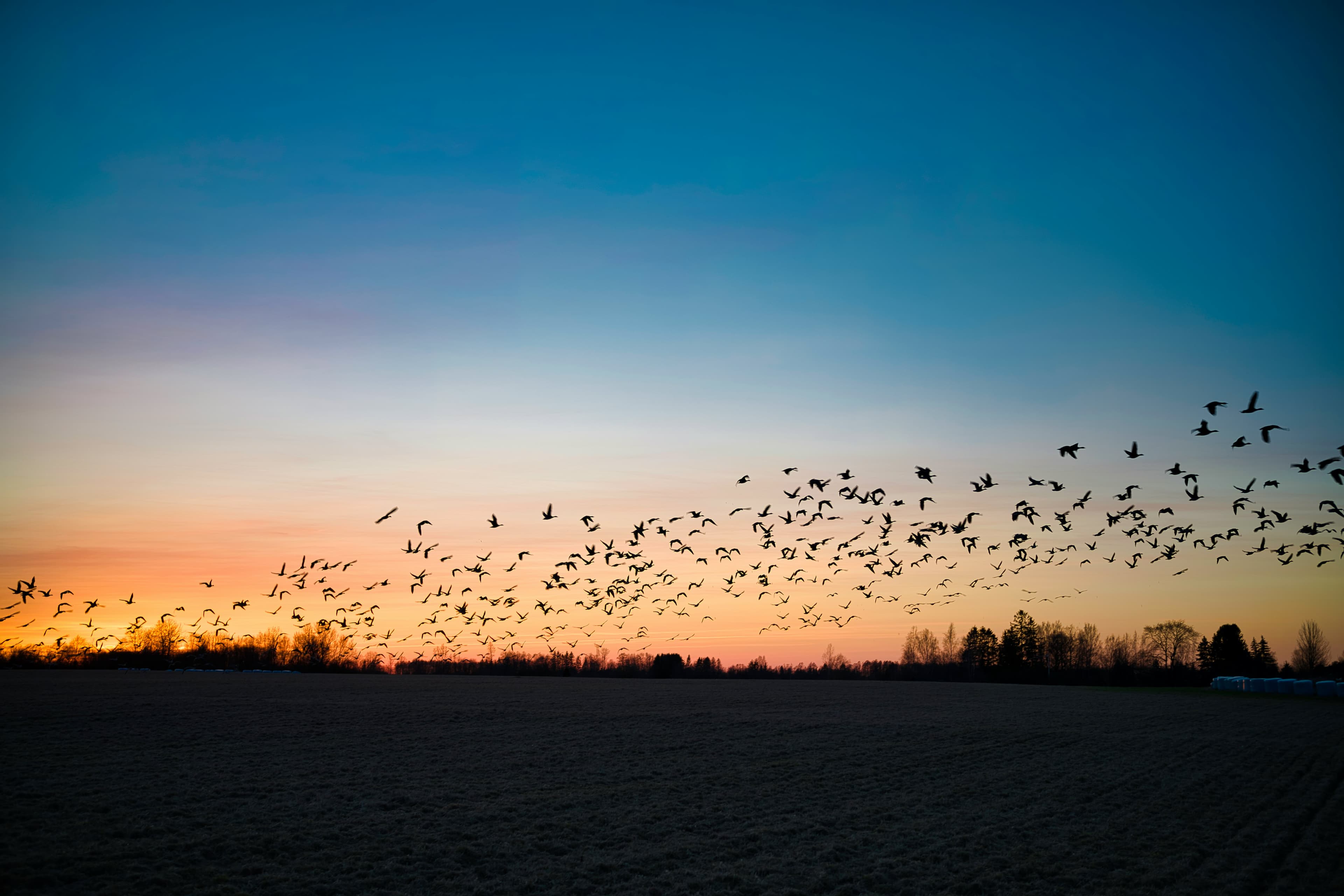
Your yard sounds different now. New voices appear overnight as warblers, thrushes, and sparrows arrive. Here's the full arc from March to May.
Read Article →
Or if you're here for the science, keep scrolling. We've got you.
The comments are spiraling. National outlets covered it. More than 650 people showed up to a single bird walk at Bryant Park, and organizers had to bring in “bird security” to manage the crowds.
So: why does the American Woodcock dance?
The honest answer is that scientists aren't entirely sure. And that ambiguity is part of what makes the bird so fascinating.
One idea is that the rocking motion helps the bird find food. As it steps heavily and bobs, it may prompt earthworms to move underground, making them easier to detect. The woodcock's bill tip is highly specialized for sensing prey in soil, so the whole performance may be part percussion, part probe.
Another theory flips the whole thing outward. Some researchers think the dance is also a form of antipredator signaling. A way of communicating I see you, and I can leave at any moment. Cornell Lab of Ornithology scientist Andrew Farnsworth described what people are seeing in Bryant Park as a mix of foraging, roosting, stretching, sensory scanning, and “a little bit of deception.”
In other words, the dance may be doing several jobs at once. Which feels exactly right for a bird this strange. The most likely answer isn't one theory. It's that the woodcock is running a multi-tool behavior: feeding, scanning, and signaling all at once.
The American Woodcock belongs to the shorebird order, but it lives in young forests, thickets, and meadow edges. Not surf-washed beaches. Its eyes sit so high and far back on the head that it has near-360-degree vision, and its skull and brain are arranged in a famously unusual way to make that anatomy work.
That odd look is part of what's driving the viral moment. It's a bird built like a periscope stuck into a potato. But the woodcock's real weirdness goes deeper than appearance.
Here's what most of the viral videos miss: the sound.
At dusk in early spring, the male finds an open field or meadow edge and begins calling from the ground. The call, universally transcribed as peent, is nasal, buzzy, almost electronic. It sounds less like a bird and more like something malfunctioning. It doesn't sound like a songbird. It sounds like a glitch.
Then he launches.
As he spirals upward, air passing through his outer wing feathers creates a liquid twittering sound that's entirely separate from his voice. As he zigzags back down, he adds a separate series of chirping vocal notes. One bird, multiple instruments. Percussion, synth, and strings, all at once. And you can hear it long before you can see it.
That is the sky dance. And it makes the Bryant Park shuffle feel like the opening act.
Bryant Park birds use the city as a spring migration stopover before continuing north. In the Northeast, American Woodcock movement usually runs from late winter into mid-spring, with birds refueling in wet thickets and overgrown field edges before pushing on to their breeding grounds.
You don't need a Manhattan park to find one. You need a meadow edge, dusk, and a little patience. Listen for the peent. Then look up.
Best time to see a woodcock dance: 30–60 minutes after sunset, at meadow edges or wet fields in early spring.
If you want to recognize it the moment it happens, learn the peent call, the wing twitter, and the sky dance in Wings & Whistles. Then try a meadow edge at dusk during the spring migration window.
Bryant Park is essentially the only green space in Midtown Manhattan, which makes it an oasis for birds crossing an otherwise concrete desert. Woodcocks migrating north need to land somewhere, and in that stretch of the city, Bryant Park is it. Woodcocks have likely been using Manhattan as a migratory rest stop since before human habitation. eBird has records of them in the park going back to 2002.
But here's the darker side of that story: woodcocks aren't just wandering into Bryant Park by luck. Research shows woodcocks fly extremely low during migration — often below a hundred feet. That low flight path puts them directly in the path of Midtown's glass facades and lit-up lobbies. Bright lights pull birds in the same way they pull moths. The park's planters and shrubs are a refuge from exactly that.
The woodcocks are also in other parks throughout the city. They're just easier to spot in Bryant Park's open layout. Anywhere with moist soil and some cover, they could be there.
Mostly no. At least not in Bryant Park. The courtship sky dance happens at dusk in open fields, not in the middle of a crowd at noon. What people are filming in the park is foraging behavior: the rocking motion that may help the bird detect earthworms, mixed with some stretching, sensory scanning, and what Cornell's Andrew Farnsworth calls “a little bit of deception.” The mating display, the one with the peent call and the aerial spiral, is a different performance entirely. Far more spectacular. It just happens after dark.
The species is classified as least concern, with a population estimated around 3.5 million. But between 1966 and 2019, American Woodcock numbers declined. Habitat loss, building collisions, light pollution, and predation from outdoor cats are all factors. The Bryant Park moment has probably done more for woodcock public awareness than decades of conservation messaging. That's not nothing.
They arrive tired, in need of food and rest, and the park becomes a temporary refuge. For a few days, maybe a week, they stay. Then they're gone. In the Northeast, northbound American Woodcock movement usually runs from late winter into mid-spring, with exact timing depending on weather and local conditions. You don't need to go to Midtown. You need to go outside at dusk.
Your yard sounds different now. New voices appear overnight as warblers, thrushes, and sparrows arrive. Here's the full arc from March to May.
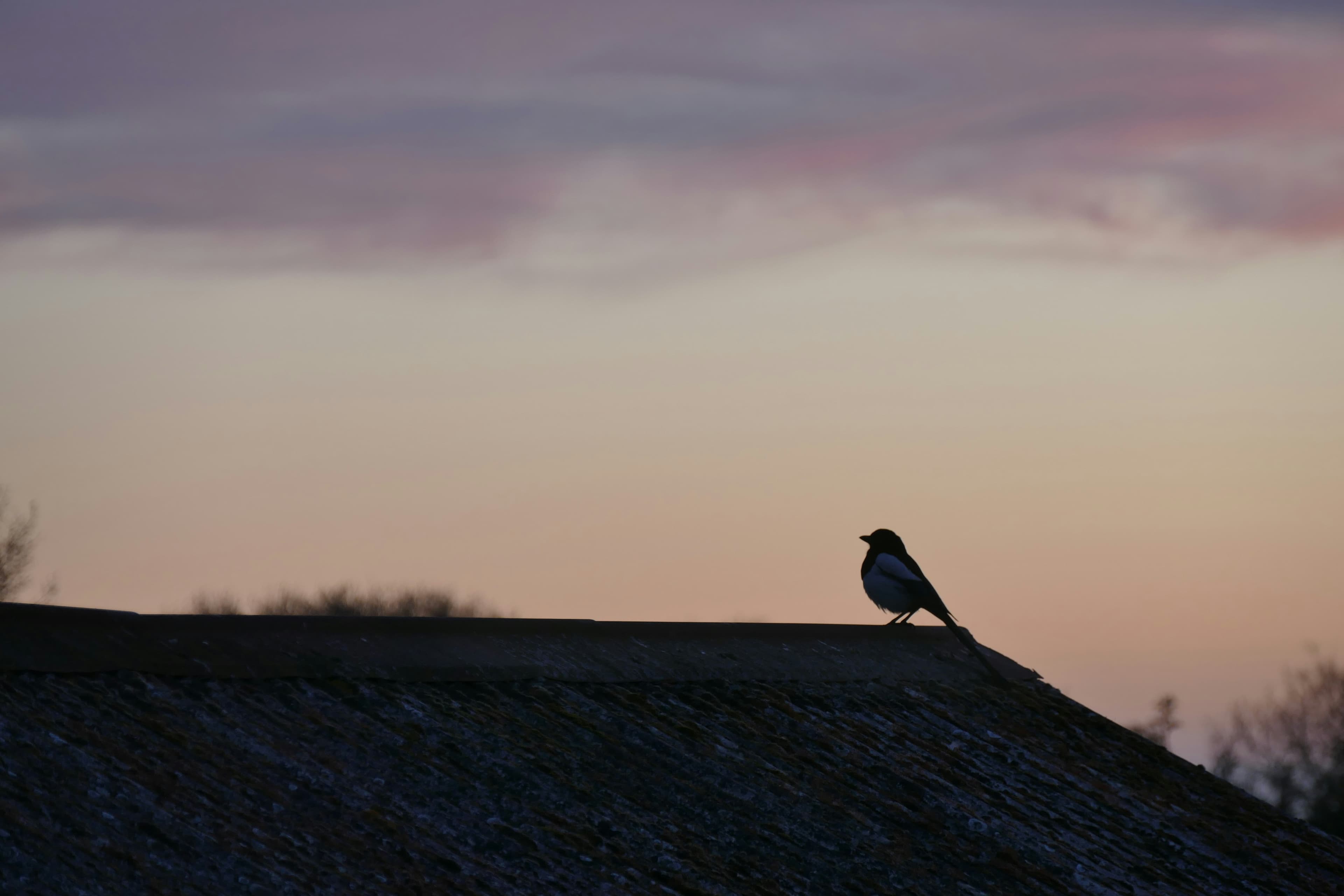
Every morning, as the first light touches the sky, birds begin their symphony. But why do they choose dawn for their most vigorous singing?