
Sora
Learn to identify the Sora by ear. Master the "KEE-kee-kee-kee-kee-kee-kee" phrase and tell it apart from similar species.
What the Sora sounds like
Each little whistle leans upward into its second note: ker-WEE, with a pause before the next one.
How to tell it apart
Lessons featuring the Sora
Ready to test your ear? Practice identifying the Sora's sounds in these interactive in-app lessons.
Start Learning Free
Where you'll hear it
Breeds across most of Canada and the northern United States. Migrates through the continental U.S. and Caribbean. Winters in the southern U.S., Mexico, Central America, and northern South America. A few linger year-round in the Gulf Coast and southern California.
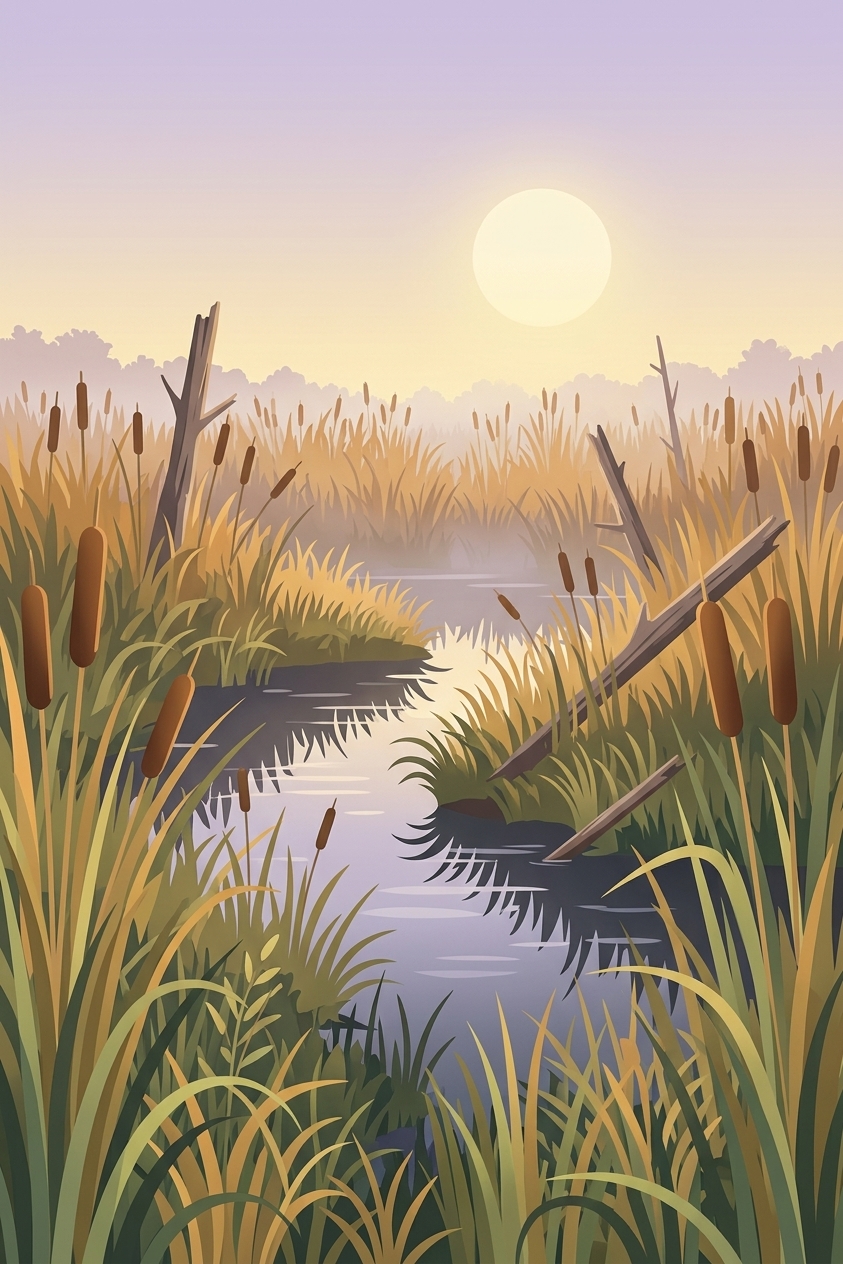
Shallow freshwater and brackish marshes with cattail, bulrush, sedge, wild rice, and other emergent vegetation; wet meadows, rice fields, flooded pasture, and mangrove edges during migration and winter.
Northbound migrants appear from March–May; peak nesting June–July. Southbound movement begins August, with most gone from northern marshes by late October. Winter birds are largely sedentary until spring.
How to recognize it by sight
The Sora is North America's most widespread rail, a compact marsh bird about the length of a small robin, with a stubby yellow bill, slate-gray face, black mask, and warm patterned back.
Similar species
Virginia Rail
Longer reddish bill and overall slimmer body
Yellow Rail
Much smaller and more secretive
American Coot
Larger, charcoal gray body and white bill with red knob