Sound Guide
What Spring Bird Migration Sounds Like in Your Yard
The full eight-week arc from March's opening notes to May's crescendo. The parent post to this one.
Read Article →
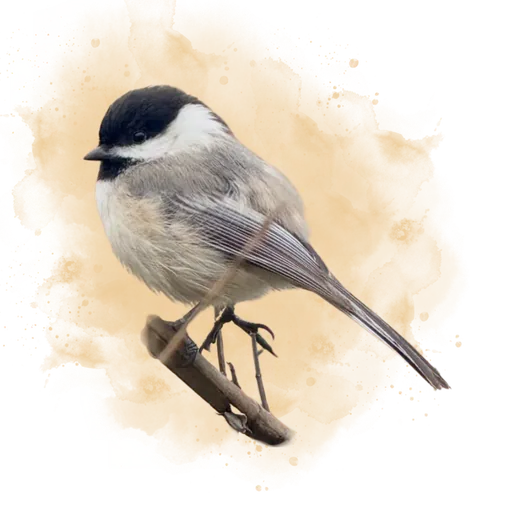 Black-capped Chickadee opens with its pure, falling fee-bee, two clear whistles dropping like a gentle sigh.
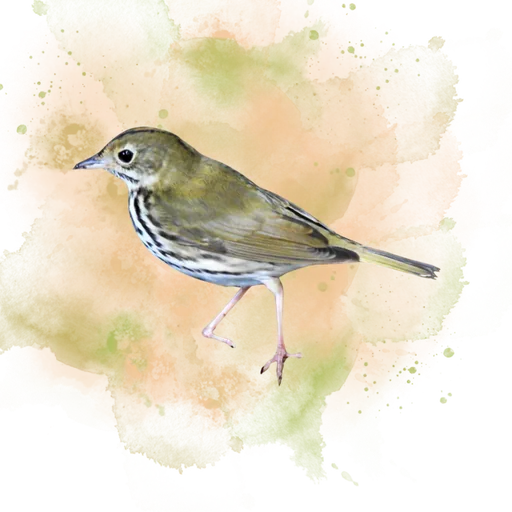 Ovenbird rings out its teacher-teacher-TEACHER, each burst louder than the last, over a Black-capped Chickadee's fee-bee and a low, distant
 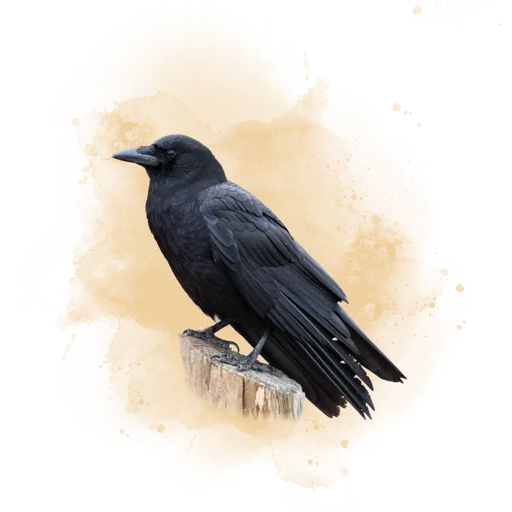 American Crow.
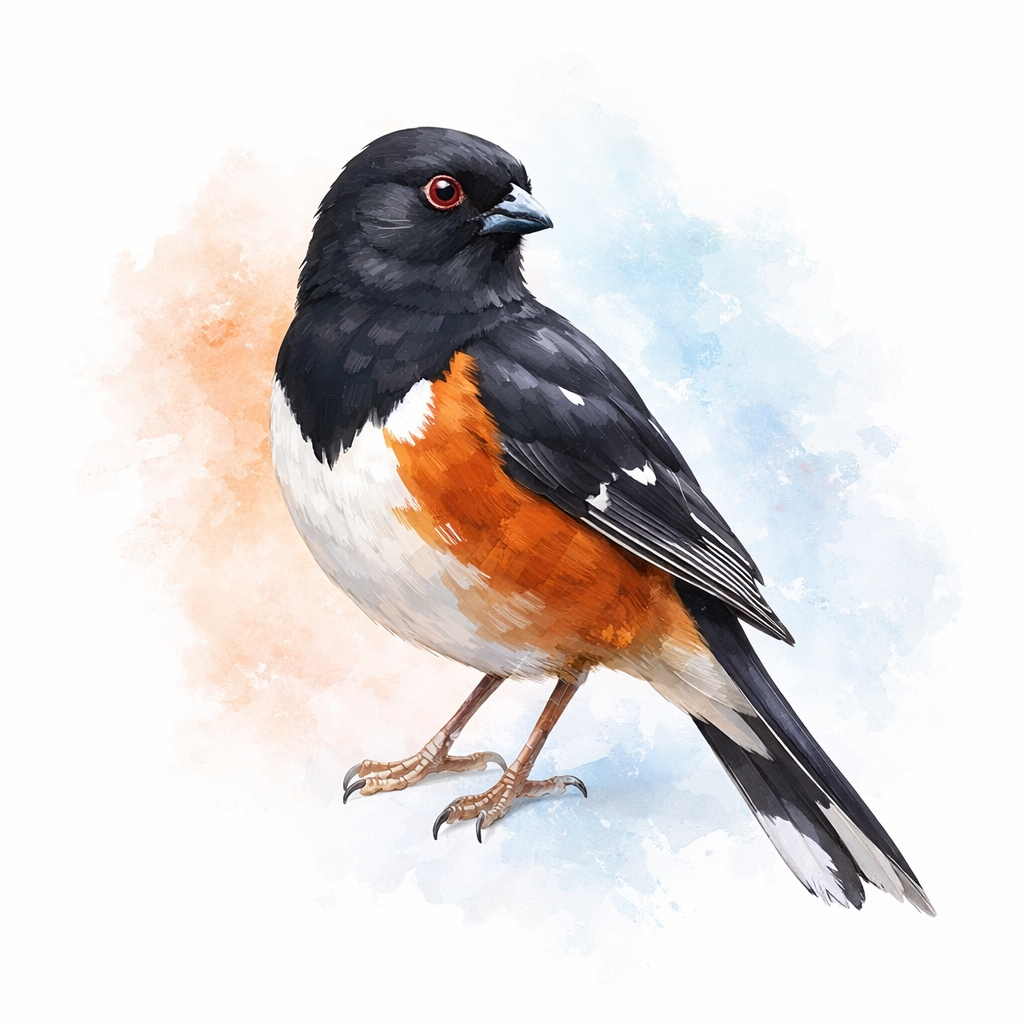 Eastern Towhee steps up with a sharp drink-your-teeea, the two opening notes deliberate before the long, buzzy trill.
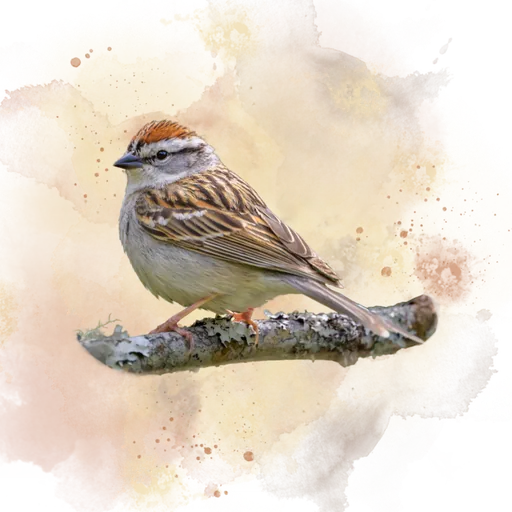 Chipping Sparrow rattles its dry, mechanical trill underneath, a string of identical chips running together like a tiny motor.Black-capped Chickadee slips in another clean, falling fee-bee.Eastern Towhee finishes its drink-your-teeea with a bright rolling trill, the buzzy flourish that ends the song.Eastern Towhee delivers the full phrase, a bold drink-your-teeea and its long buzzy trill, front and center.
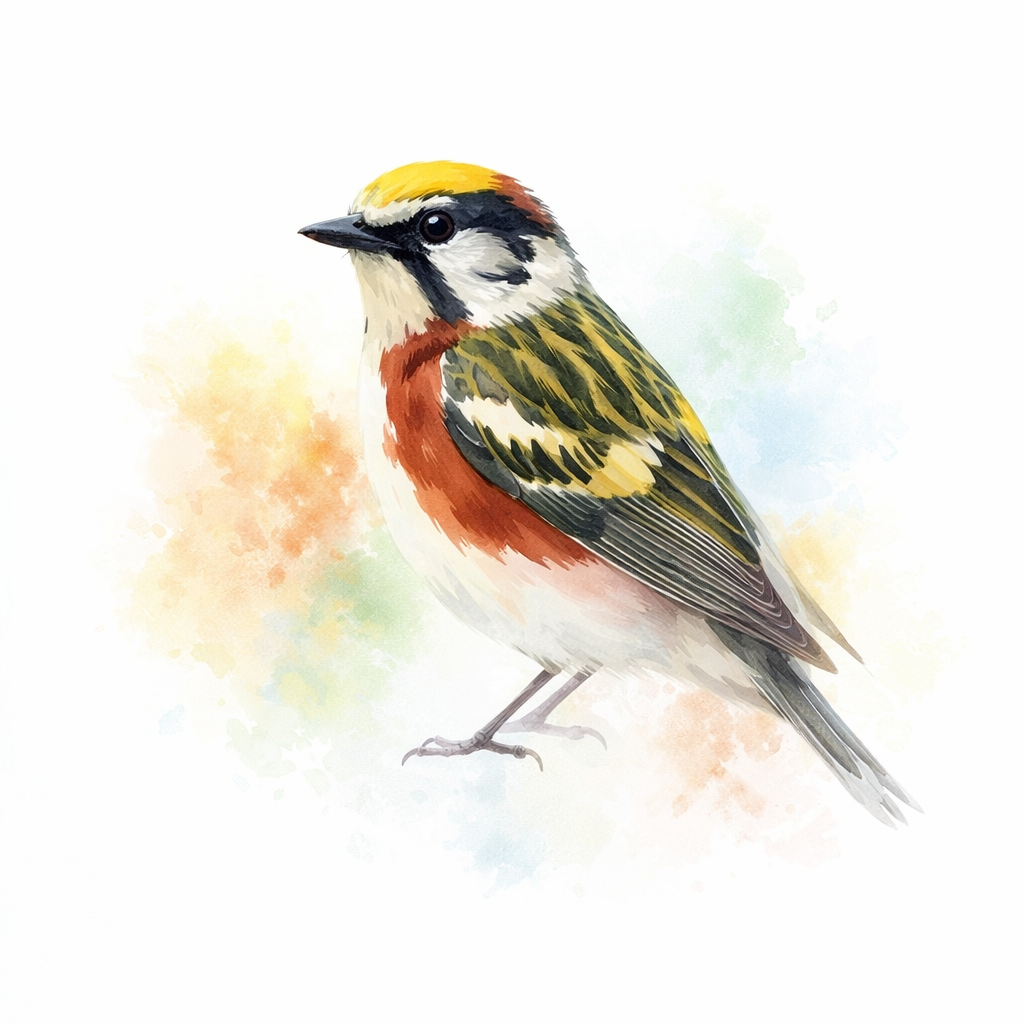 Chestnut-sided Warbler cuts through with a bright pleased-pleased-pleased-to-MEETCHA, the accented finale snapping upward.Black-capped Chickadee drops a clean two-note fee-bee just after the towhee.Black-capped Chickadee adds another pure, falling fee-bee.Chestnut-sided Warbler rings out pleased-pleased-pleased-to-MEETCHA from mid-canopy, the rising finale snapping above the understory.American Crow pushes a flat, coarse caw from well back in the forest.Eastern Towhee rings out drink-your-teeea from the mid-level brush, the trill spilling out beneath it.Chestnut-sided Warbler sounds another pleased-pleased-pleased-to-MEETCHA from mid-canopy, snapping cleanly above the chorus.Eastern Towhee throws a sharp, rising chewink call from the understory, a quick upward flick before the trill.
Most guides to spring warblers are illustrated lists. You read about Yellow Warbler, then Common Yellowthroat, then Veery, and you walk into the woods expecting to hear them one at a time, in order, with captions. It is nothing like that. A May morning is dense and overlapping. Two species sing the same instant. A third calls overhead while a fourth flute-spirals somewhere off behind you. Learning the isolated lab version is half the job. The other half is learning to untangle all of it at once.
This post is built the way you actually meet these birds: by where they sit in the soundscape. The clips below come from two New York habitats, and the species sections walk through who is on each one. Click any moment to jump to it. If you want the broader story, our parent guide handles the full eight-week arc.
The clips here were recorded between seven and eleven in the morning across late May. They are not Cornell-clean. There are gaps. Crickets run underneath. Wind moves the canopy. A woodpecker rolls a churr right over a warbler you were trying to hear. That is the point. The messy thing is what your ear actually meets in the field, and learning to untangle it is the hard skill that lab recordings can't teach.
Where we have it, every species below also has the clean, isolated version, so you can learn the clean phrase first and then go pick it out of the overlap. The sections are grouped by where each bird sits: the brushy edge, the forest interior and floor, then the canopy up top. In the field, height is half the ID. Click any moment in a clip to jump straight to it.
Start where the cover is thick and low: blackberry tangles, willow edges, the scrubby young growth coming back on a hillside. This is a shrubby woodland edge at Rockefeller, with a 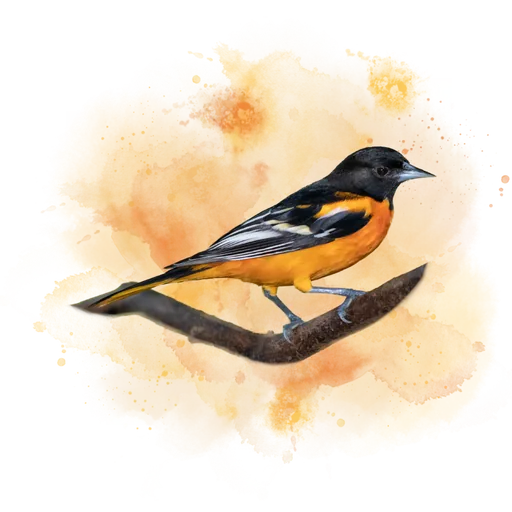 Baltimore Oriole floating over the top and a
 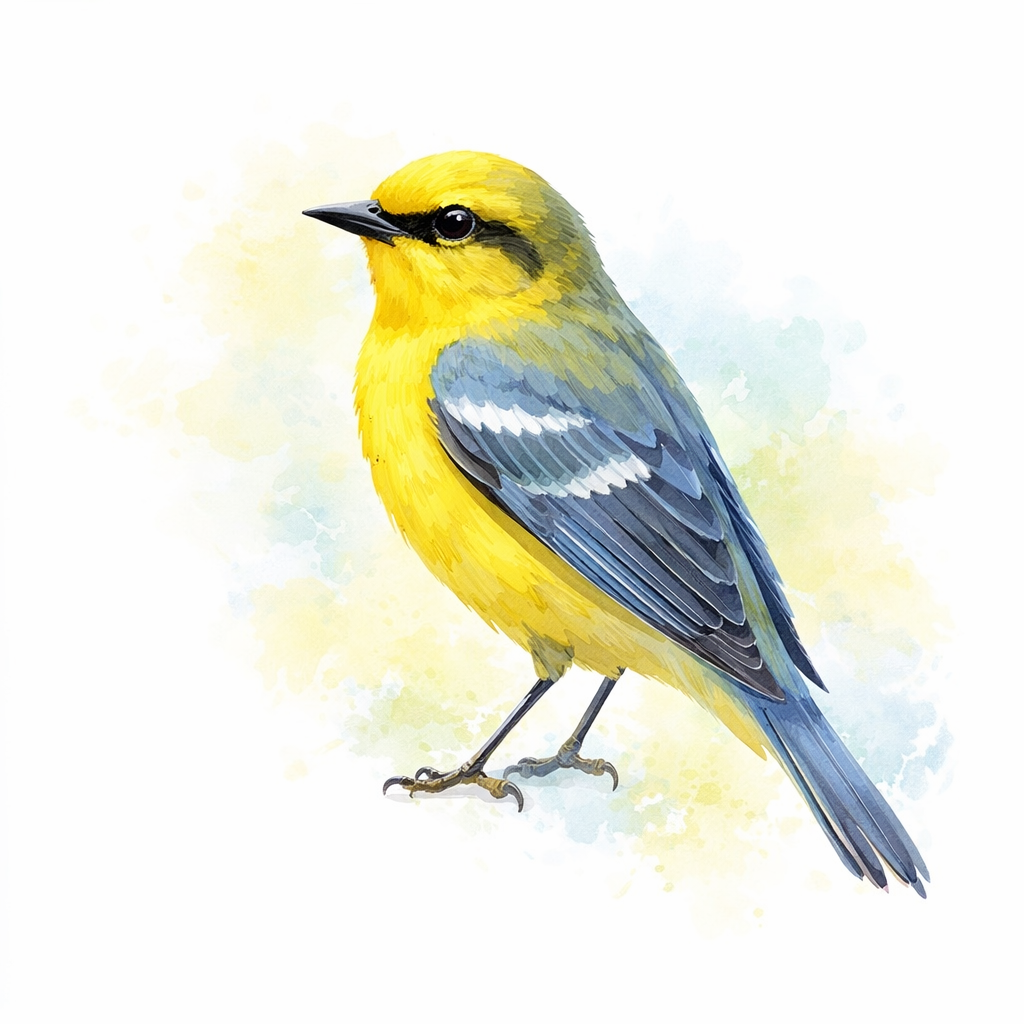 Blue-winged Warbler buzzing underneath it.
Baltimore Oriole floats rich, liquid whistled phrases from the background, warm and flute-like through the leaves.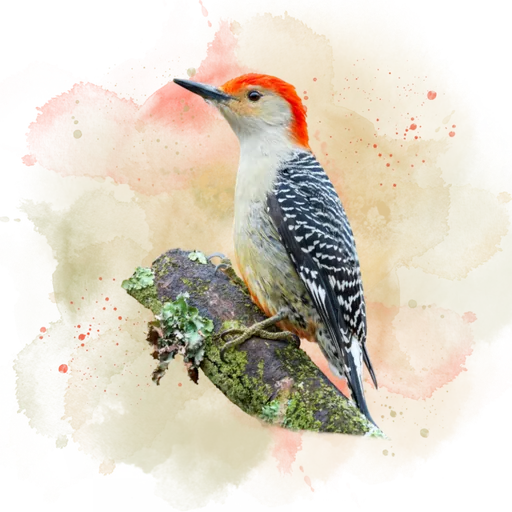 Red-bellied Woodpecker cuts in with a rolling, burry churr, like a tiny motor briefly catching, just under the oriole.Blue-winged Warbler cuts through with its buzzy bee-buzz, a thin inhaled note then a lower, rougher buzz, sounding more insect than bird.
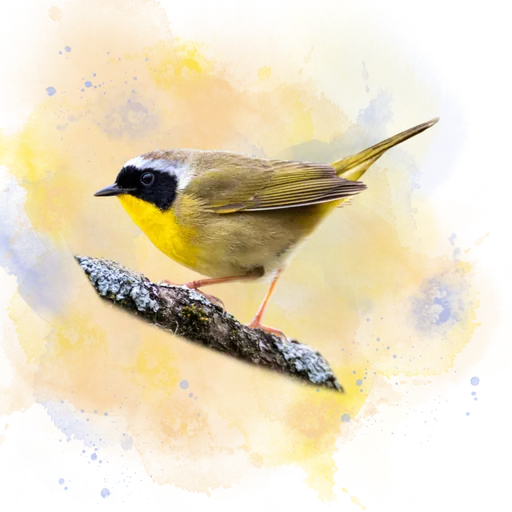 Common Yellowthroat takes the foreground with a rolling, bouncing witchity-witchity, the closest, loudest voice.Baltimore Oriole's rich, liquid caroling rolls through the foreground while a high, buzzy Blue-winged Warbler bee-buzz cuts in over the top, the two voices briefly stacking.
The voice you will almost certainly hear before you can see is the Common Yellowthroat. It lives in tangles: cattail marshes, blackberry thickets, weedy roadside ditches, the overgrown corner of the yard you have been meaning to clean out. The song is "witchity-witchity-witchity," three or four times, in a cheerful staccato that sounds like the bird is in slightly too much of a hurry. Once you hear it, you cannot un-hear it. (Males wear a black raccoon mask over a yellow throat. Females are the same olive-and-yellow, no mask, which trips up even experienced birders, since they look like they could be a different species.)
The Yellowthroat's contact note is a husky, low chip, often written "tchep" or "chuck." Both sexes give it, and it carries surprisingly well through dense vegetation. If you hear that chip ticking out of a thicket and nothing else, a Yellowthroat is your best first bet.

From higher up, in the willow above the tangle, comes the Yellow Warbler. If the Yellowthroat is the bird inside the bush, the Yellow Warbler is the bird singing from the branch above it. It is bright lemon yellow from beak to tail and likes exposed perches, making it the warbler you are most likely to actually see in May. The mnemonic is one of the oldest in American birding: "sweet-sweet-sweet, I'm so sweet," a clear seven- or eight-note phrase that speeds up as it goes and snaps upward on that emphatic "so sweet" at the end. The "I'm so sweet" tag is the part that sticks. Your brain starts filling it in before the bird gets there.

Now the two buzzy ones, the warblers that trade melody for a hard insect-like edge. The Blue-winged Warbler barely sounds like a bird at all: a lazy, two-part beee-bzzzz, an inhaled sigh and then a buzzy exhale, like someone sighing through a kazoo. It is so unmusical that beginners often write it off as an insect. Don't. That two-note buzz from a brushy edge in May is a small, electric-yellow warbler with a thin black eye-line, and once you know the beee-bzzzz you will hear it everywhere the second growth is thick.
Sharing that same scrubby habitat is the Chestnut-sided Warbler, and its song is the friendliest mnemonic in the woods: "pleased-pleased-pleased-to-MEETCHA," with the accented final phrase snapping upward and landing squarely in the foreground. It is bright, emphatic, and easy to pick out once you have it. (The accented ending is the tell. The "MEETCHA" song is the one he throws out to win a mate; the flatter, unaccented version is for squabbles with rival males.) You can hear it cut clean through the Catskills chorus up top.
One more edge voice worth knowing, because it sounds nothing like a warbler: the Eastern Towhee, a big rufous-sided sparrow that announces itself with a bold, ringing "drink-your-TEEEA," two sharp notes and a trilled finish. Its short call is even more famous: a rising, slurred chewink that gave the bird one of its old names. From the leaf litter under the same brush, that is your towhee.

Walk in off the edge, under the canopy, where it is darker and the air goes still. The voices here are lower, rounder, and more spaced out. This clip is a wooded understory at Rockefeller: a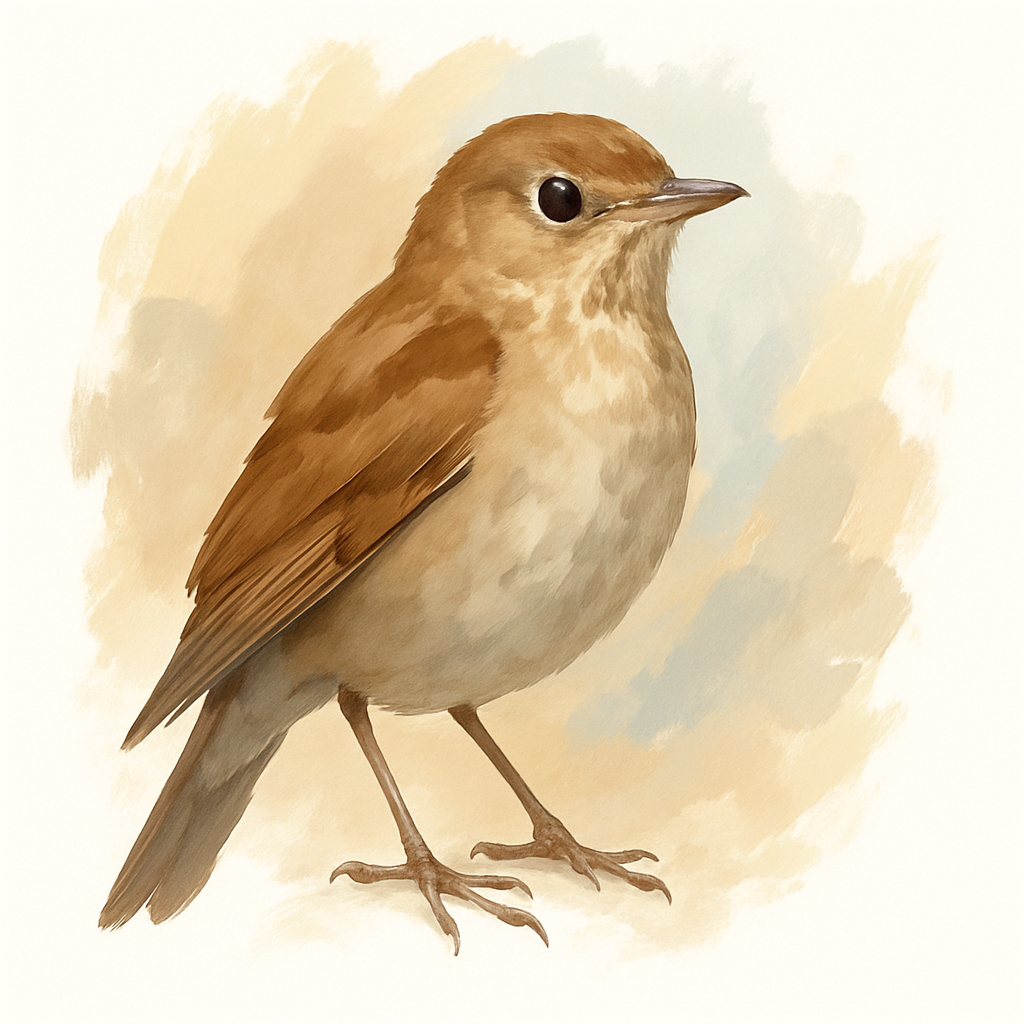 Veery spiraling downward over a Common Yellowthroat drifting in from the edge behind it.
Veery opens with its unmistakable song, breathy flute-like phrases spiraling downward in overlapping loops.Veery unspools another phrase, a downward-spiraling churn of flute tones that seems to corkscrew toward the forest floor.Veery pours out another cascading, downward-spiraling flute-song, rich and liquid.Veery sounds its downward-spiraling flute-song again, each phrase coiling inward like slow-poured bronze.Common Yellowthroat cuts in with a rolling, emphatic witchity-witchity, bouncing just under the Veery.The clearest flute in the eastern woods is the Wood Thrush, and its famous "ee-oh-lay" middle phrase is what everyone learns first. The part most guides skip comes before it. Almost every Wood Thrush song opens with a quiet, repeated "bup, bup, bup," two or three soft notes, like the bird clearing its throat. If you can hear those opening bups, you are within twenty yards of the bird, and you can use them to find it in the forest interior before the loud part starts. (A Wood Thrush can sing two notes at once, harmonized against itself, using a Y-shaped voice box. That is what makes the flutework sound rich rather than thin. You are hearing a duet from a single bird.)

The Veery is a thrush too, but it doesn't arrange itself in three parts. Its song spirals continuously downward, looping through "veer-veer-veer" phrases that get lower and breathier as they go. Cornell describes it as sounding "as if whirling around inside a metal pipe," or, less poetically, a paper-towel tube. The hollow, resonant quality is unmistakable once you have it. The give-away when it isn't singing is its contact call: a downward, nasal, two-syllable veeyer that drops in pitch and sounds slightly buzzy. One long unbroken descending spiral is your Veery. A Wood Thrush hits three parts with the loud middle flutework instead.

Down on the forest floor, one voice gets louder as it goes, and it is impossible to miss once you know it: the Ovenbird, a walking, ground-dwelling warbler that throws out a ringing "teacher-teacher-TEACHER-TEACHER," each phrase a notch louder than the last until the whole forest seems to be insisting on the point. It is one of the defining sounds of the eastern interior in May. You will hear it long before you spot the small, thrush-like bird strolling the leaf litter, flicking its tail, refusing to fly.

Last, look up. The canopy layer is where the all-day singers and the highest, thinnest voices live, over the top of everything else. Here is a 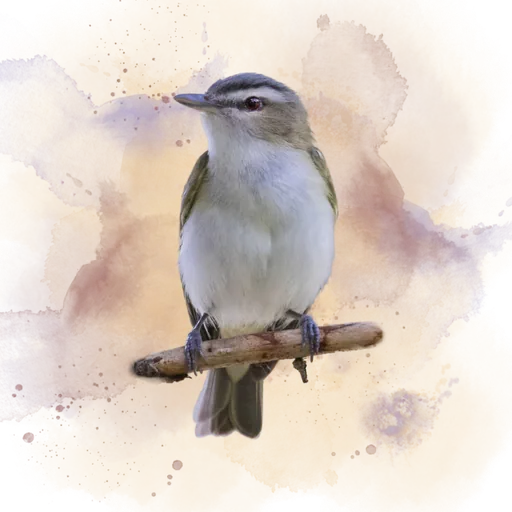 Red-eyed Vireo holding court from the treetops over a wash of crickets.
Red-eyed Vireo holds court from the canopy, tossing out unhurried, rambling phrases like a storyteller who never quite finishes a sentence, over a steady wash of crickets.The Red-eyed Vireo is the bird that never stops. Short, robin-like whistled phrases, each one a little question and answer ("Here I am… where are you?"), delivered with a pause and then repeated, on and on, all morning and through the heat of the day when everything else has gone quiet. The cadence is the tell: deliberate, a little burry, endlessly patient. If a robin-ish voice is still going at noon from high in the leaves and you cannot find the singer, it is almost always a Red-eyed Vireo. (Birders have clocked single males singing more than twenty thousand phrases in a day.)

Higher and thinner still is the Blackpoll Warbler, whose song is a test of your hearing as much as your ID: a string of high, even tsi-tsi-tsi-tsi notes, all on nearly the same pitch, so high and insect-like that many people genuinely cannot hear it at all. It rises in the middle and fades at the end, like a tiny machine spinning up and winding down. If you catch a warbler song that seems to live at the very top of your range and barely registers as a bird, you have likely found a Blackpoll. It just flew the length of the continent to reach New York, and come fall it will launch off the Atlantic coast on a nonstop ocean crossing to South America, one of the longest flights of any songbird.
And over the top of the whole edge, from the tallest trees, the Baltimore Oriole drops rich, clear, whistled phrases. The field guides mention this only in passing: every male sounds different. "Baltimore Oriole song" describes a shape (rich, melodious, whistled phrases from the treetops, with a deliberate, almost spoken cadence), but the actual notes vary so much between individuals that experienced birders can name specific males in a neighborhood by song alone. So learn the texture instead: rich, slightly fluty, deliberate, short phrases with pauses between. Once you have that, you will know an oriole even when the exact notes are ones you have never heard.

When you just want a quick mental field guide, here are the eight primary voices on the recordings above, the phrases to run through your head while you stand in the driveway and listen. Click any row to hear the clean version where we have it.
Tap any row to hear the call.
Eight species, one week, five minutes a day. This is the drill that turns the page into ear memory.
Most of the work happens between drills, while you are doing dishes, walking to the mailbox, or sitting on the back porch. That passive exposure does ninety percent of the lifting. The two minutes of focused listening are just to keep the right files open in your head.
Want the structured version of this method? The 7-day plan walks you through the same loop with a stricter daily structure for people who like checklists. If two weeks feels more your speed than seven days, here is the gentler method for backyard residents (different species, same approach). Some May migrants (flycatchers especially) sound almost electronic instead of musical; if that is what you are hearing instead, start here.
Lock in May warbler songs with short, audio-first lessons



In mid-May across the eastern and central US, the loudest new arrivals include Yellow Warbler, Common Yellowthroat, Chestnut-sided Warbler, Blackpoll Warbler, Blue-winged Warbler, Red-eyed Vireo, Wood Thrush, Veery, Ovenbird, and Baltimore Oriole. These cover the bulk of what most woodland edges and yards hear during peak migration weeks, alongside year-round residents like chickadees and towhees that are still singing on territory.
A song is a long, structured vocalization that males use to claim territory and attract mates; it can carry up to a half mile through a forest for the loudest singers. A chip note (or call) is a short, sharp contact sound used by both sexes year-round for short-range communication. Songs tell you what species is in the area. Chip notes tell you exactly where the bird is right now, which is why experienced birders lean on them heavily once leaves are out.
Pick three species you are most likely to hear in your habitat and drill them daily for a week before adding any more. Mnemonics help enormously; the classic phrases exist because they actually stick: sweet-sweet-sweet for Yellow Warbler, witchity-witchity for Common Yellowthroat, pleased-to-MEETCHA for Chestnut-sided Warbler, teacher-TEACHER for Ovenbird. Then practice picking each one out of an overlapping recording, which is the skill the field actually demands.
Across the eastern and central US in May, the warblers most likely to be singing near you are Yellow Warbler, Common Yellowthroat, Chestnut-sided Warbler, Blackpoll Warbler, and Blue-winged Warbler, with non-warbler migrants like Red-eyed Vireo, Wood Thrush, Veery, Ovenbird, and Baltimore Oriole filling out the choir alongside them. The first few hours after sunrise give the loudest, most diverse window, but plenty keep singing into late morning.
Early morning is the gold-standard window for hearing spring migrants. Males that arrived overnight start singing as soon as it is light enough to see, and the first few hours after sunrise are the densest. But many species keep going well into late morning. The recordings in this post were made between roughly seven and eleven, and a few, like the Red-eyed Vireo, sing straight through the middle of the day. Late afternoon offers a smaller second peak.
Yes, and most experienced birders identify a meaningful share of their warblers by ear alone. Calls and chip notes are especially useful once leaves are fully out, because the birds become harder to see but their short contact notes still carry through the canopy. Once you have learned a species' song, you can confidently log it without ever putting eyes on the bird, which is how spring migration day-lists climb into the dozens.
Open any bird for its recordings, what to listen for, and the birds it gets mistaken for.
Hear these voices in the app. Every lesson is a little journey. Download Wings & Whistles Google Play
The full eight-week arc from March's opening notes to May's crescendo. The parent post to this one.
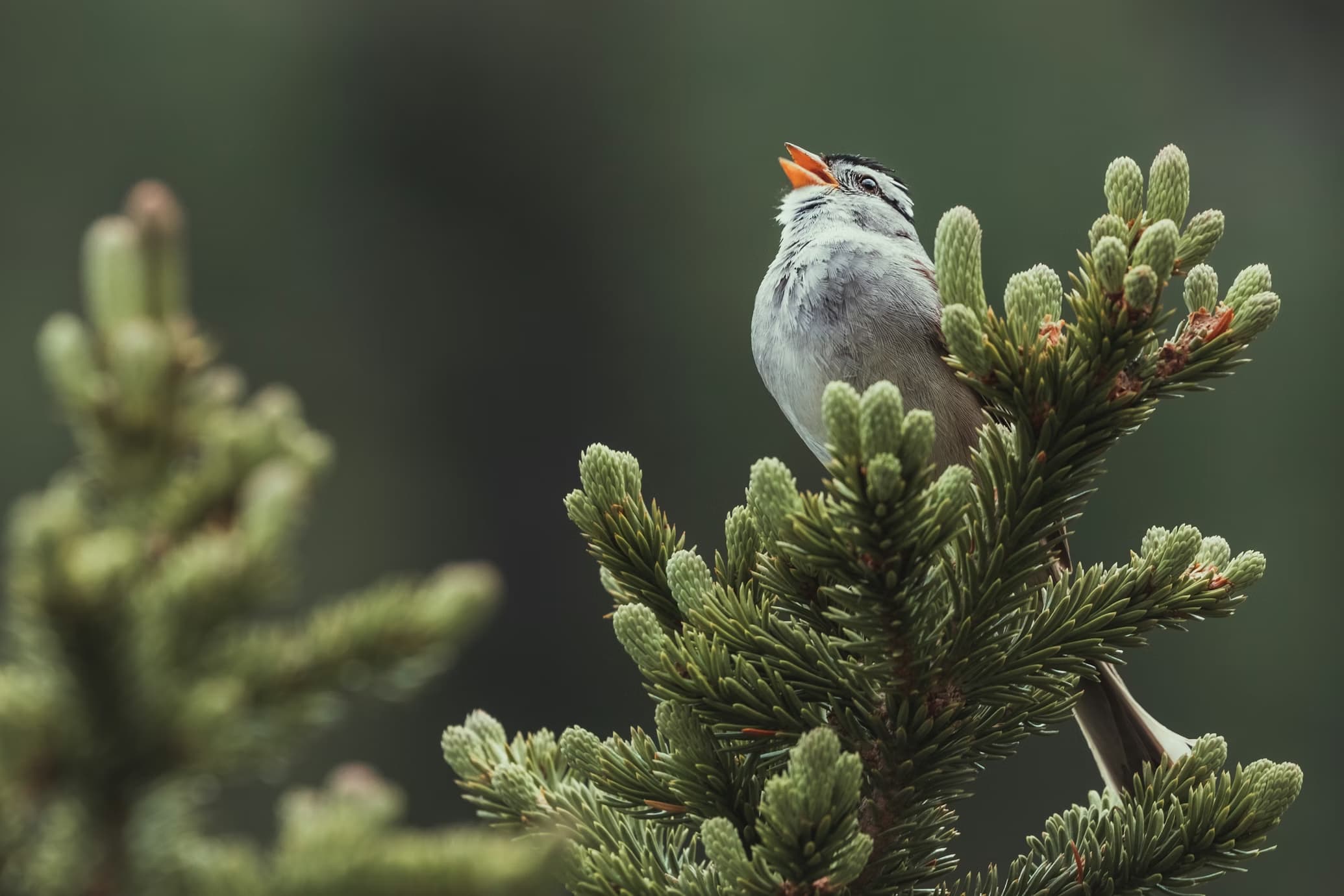
Seven backyard birds, ten minutes a day. The companion learning post to this drill page.