Sound Guide
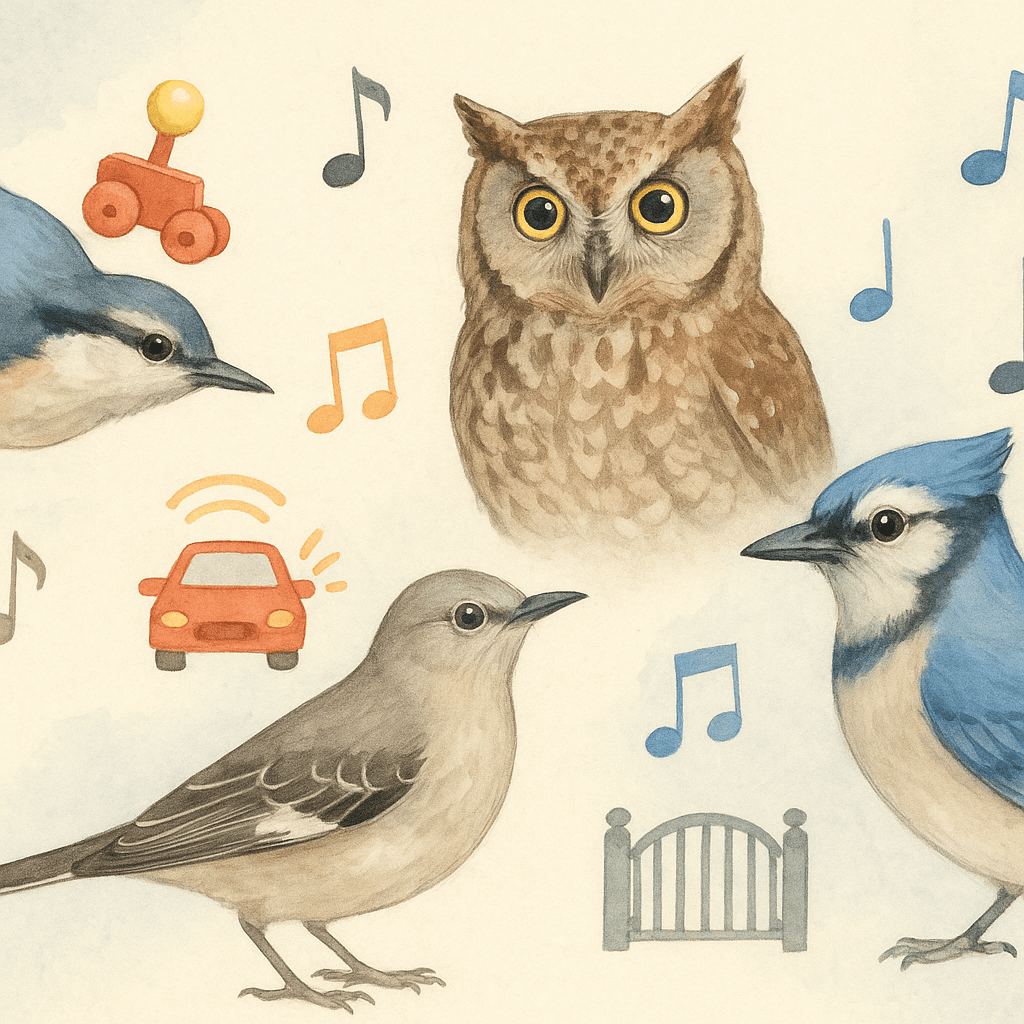
What Bird Sounds Like a Squeaky Toy?
Meet 6 birds whose calls sound like squeaky toys, rubber ducks, and rusty gates – and learn how to ID them.
Read Article →
Will the Real R2-D2 Please Stand Up? Your Backyard Has Suspects.
Somewhere out there, a Brown-headed Nuthatch is making droid noises at a pine tree, completely unaware it sounds like it should be fixing the hyperdrive on the Millennium Falcon.
Here's the thing: your brain is a pattern-matching machine. When a bird hits a certain pitch or rhythm, you reach for the nearest cultural reference to make sense of it. "That sounds like R2D2" is a lot more satisfying than "that's a 4kHz tonal vocalization with rapid frequency modulation."
So when you find yourself Googling "what bird sounds like R2D2" at 2am (no judgment, we've all been there), you're not losing it. You're just hearing North America's weirdest sound effects artists doing their thing.
Here are 7 birds that sound like they belong in a movie, video game, or your phone's notification tray, plus where to find them.
Sound: Squeaky rubber-ducky chirps
Where: Southeastern pine forests
Best clue: Pure tone, rapid "beep-boop" quality
Sound: Haunting, mournful wail
Where: Northern lakes (Hollywood puts it everywhere)
Best clue: Eerie "something bad is about to happen"
Sound: Clear "peter-peter-peter" whistles
Where: Eastern woodlands, feeders
Best clue: Kids say it sounds like a laser gun
Sound: Buzzy "peent" + booming dive
Where: Twilight sky over cities, fields
Best clue: Spaceship flyby sound at dusk
Sound: Deep, gulping "oonk-a-lunk" pumps
Where: Freshwater marshes, wetlands
Best clue: Rhythmic plumbing-boom from the reeds
Sound: Loud, urgent "kill-deer! kill-deer!"
Where: Gravel lots, fields, golf courses, rooftops
Best clue: Repeating two-syllable siren you can't ignore
Sound: Clean two-note "fee-BEE" ("hey sweetie")
Where: Backyards, woodland edges, feeders
Best clue: Sounds like a human whistle for attention
The Sound: High-pitched squeaky chirps that are almost unsettlingly electronic –like someone's aggressively squeezing a dog toy in a pine forest.

The Cornell Lab of Ornithology literally describes this bird as sounding like "a rubber ducky being squeezed." That's not us editorializing –that's ornithologists admitting this bird sounds fake. The pure tone, rapid repetition, and "beep-boop" quality hit all the same frequencies that sound designers use for friendly robots.
Southeastern pine forests are your best bet. Georgia, the Carolinas, Florida –anywhere with longleaf or loblolly pines. Listen high in the canopy; they like to work the treetops while making their droid announcements.
Brown-headed Nuthatches are one of the few bird species documented using tools. They'll pick up bark flakes and use them to pry other bark pieces off trees to find insects. So not only do they sound like R2-D2, they problem-solve like him too.
Often confused with: Red-breasted Nuthatch (more nasal, less squeaky) or Pygmy Nuthatch (western equivalent).
Outside the Southeast, or hearing longer strings of beeps and burbles instead of one squeaky chirp? Different droid entirely. We break down what bird sounds like R2-D2 in a dedicated guide, with the four mimics and buzzy-voiced birds most often mistaken for an astromech.
The Sound: A haunting, mournful wail that rises and falls like something terrible is about to happen. If you've watched any horror movie set near water (or a forest, or a desert, or another planet), you've heard this bird.

Some call it "the Wilhelm scream of bird calls." It shows up constantly in movies and TV, even in deserts, jungles, and alien planets where no loon has ever flown. Sound editors love it because it instantly signals "eerie wilderness" and "something's about to happen."
Northern lakes in the US and Canada –they love clear, cold water. The catch? Hollywood uses the loon call for deserts, jungles, alien planets, and basically anywhere fog exists. If you hear a loon in a movie set in Africa, that's a sound editor who didn't do their homework.
Loons have four distinct calls: the wail (the famous one), a tremolo ("laughing"), a yodel (territorial), and a hoot (quiet contact call). The eerie wail is what they use to locate family members across the lake.
Not this: If you hear it in a desert, jungle, or alien planet scene –that's a sound editor, not a bird.
The Sound: A clear, whistled "peter-peter-peter" that kids (and, let's be honest, adults) immediately recognize as sounding like "pew pew pew" –the universal sound of a laser gun.

The titmouse's song is pure, clean, and punchy –none of the warbling or trilling that makes most birds sound "birdy." Each note is distinct and slightly descending, exactly like the cartoon laser sound effects we grew up hearing in Star Wars and video games.
Eastern North America, especially deciduous forests and suburban feeders. They're bold, curious, and often the first birds to investigate a new feeder. Their crested head makes them look perpetually surprised.
Tufted Titmice are hoarders. They cache seeds and nuts in bark crevices and under leaves, then remember thousands of hiding spots. They've also been observed plucking hair directly from live animals (including humans) to line their nests.
Often confused with: Northern Cardinal (similar whistle pattern but richer, more musical).
The Sound: A buzzy, nasal "PEENT" followed by –and this is the wild part –a deep, resonant boom as they pull out of a steep dive.

As the male nighthawk plummets toward the ground and pulls up at the last moment, air rushing through his wing feathers creates a deep whooshing boom. Cornell describes it as sounding "like a racecar has just passed by." Basically the audio equivalent of a spaceship doing a low flyby.
Look up at twilight in summer. They hunt flying insects over open areas –rooftops, parking lots, fields. Cities with flat-roofed buildings are prime nighthawk territory.
Despite the name, Common Nighthawks aren't hawks at all –they're more closely related to whip-poor-wills. They're crepuscular, meaning they're most active at dawn and dusk.
Often confused with: Whip-poor-will (vocal at night but repeats its name instead of "peent").
The Sound: A deep, gulping "OONK-ka-LUNK... OONK-ka-LUNK" that sounds exactly like a backed-up water pump or someone desperately plunging a toilet in the next room.

The American Bittern's call is so low and rhythmic that it genuinely sounds like failing infrastructure. It literally inflates its esophagus like a balloon before releasing a series of pump-like sounds that carry a long way across a marsh.
Freshwater marshes and wetlands. Here's the catch: bitterns are masters of camouflage. They freeze with their bills pointed straight up, turning into a convincing impression of reed stalks. You'll almost certainly hear one before you see it.
The bittern's booming call has earned it dozens of nicknames over the years, including "stake-driver," "thunder-pumper," and "mire drum."
Not this: Actual plumbing issues, bullfrogs, or distant machinery. If you're not near a marsh, keep investigating.
The Sound: A loud, piercing, repetitive "KILL-DEER! KILL-DEER! KILL-DEER!" that sounds like someone installed a panic alarm in a bird.

The killdeer call is urgent, repetitive, and designed to get attention. It's the sonic equivalent of an emergency notification you can't swipe away. The two-syllable pattern, the sharp timbre, the way it just keeps going –your brain interprets this as "something is wrong."
Open fields, gravel parking lots, golf courses, rooftops –basically any flat, open area where they can nest directly on the ground.
Killdeers are famous for their "broken wing" display. If a predator gets too close to their nest, they'll dramatically flop around like they're injured, luring the threat away. Once you're far enough from the nest, they miraculously "recover" and fly off.
Often confused with: Other plovers (Semipalmated, Piping) or actual car alarms. Killdeers have two black breast bands.
The Sound: A clear, whistled "fee-BEE" or "hey, sweetie" that sounds exactly like someone in the distance trying to get your attention.

Most bird songs are complex, warbling, or chattering –obviously bird-like. The chickadee whistle is just two clean notes, at pitches and a rhythm that perfectly matches how humans whistle for attention. It's so convincing that people regularly investigate, thinking someone is calling for them.
One of the most widespread and common backyard birds in North America. If you have a feeder, you probably have chickadees.
The "chick-a-dee-dee-dee" call is actually a sophisticated alarm system. The number of "dees" indicates threat level – more "dees" means bigger danger.
Often confused with: Carolina Chickadee (nearly identical; check your range) or an actual human whistling.
Heard something weird? Use this decision tree:
Still unsure? Record 5–15 seconds in W&W, check the match, and confirm with habitat. Over time, you'll recognize the local sound effects crew without reaching for your phone.
No. R2-D2's voice was created by sound designer Ben Burtt using processed vocal sounds and electronic techniques. The similarity to Brown-headed Nuthatches is coincidence, but a fun one. Both just happen to hit frequencies our brains read as "friendly robot."
The Common Loon's wail is mournful, eerie, and instantly signals "remote wilderness." For decades, editors have dropped it in wherever they need "spooky outdoors," even in deserts and alien planets where no loon has ever flown.
If you want Brown-headed Nuthatches, you'll need to be in the Southeast and have pine trees. They're particularly fond of suet feeders. If you're outside their range, Pygmy Nuthatches (their western cousins) make very similar squeaky sounds. For "laser gun" sounds, Tufted Titmice love sunflower seeds and are easy to attract.
Most "weird" bird sounds make perfect sense from the bird's perspective. Low booming sounds carry far in dense vegetation (bittern). Haunting wails travel across lakes (loon). High-pitched alarm calls cut through ambient noise (killdeer). They're not trying to sound like pop culture references –we're the ones doing the pattern matching.
The Common Loon gets our vote. Its haunting wail over misty lakes genuinely sounds like it belongs in another dimension. Early settlers called it "the spirit of the north," and Hollywood agrees –that's why they use it in every "eerie wilderness" scene, even when it doesn't make sense.
Practice identifying these pop-culture-sounding calls with guided lessons in W&W


Sources
The next time you hear what sounds like a droid, a horror movie soundtrack, a laser gun, or a UFO transmission coming from outside:
Your brain will keep making these pop culture connections –that's just what pattern-matching machines do. But now you'll know the real artists behind the sounds. And honestly? A bird that sounds like R2D2 is way cooler than the actual R2D2.
Hear something weird? Record it in W&W. Download Wings & Whistles Google Play
Meet 6 birds whose calls sound like squeaky toys, rubber ducks, and rusty gates – and learn how to ID them.
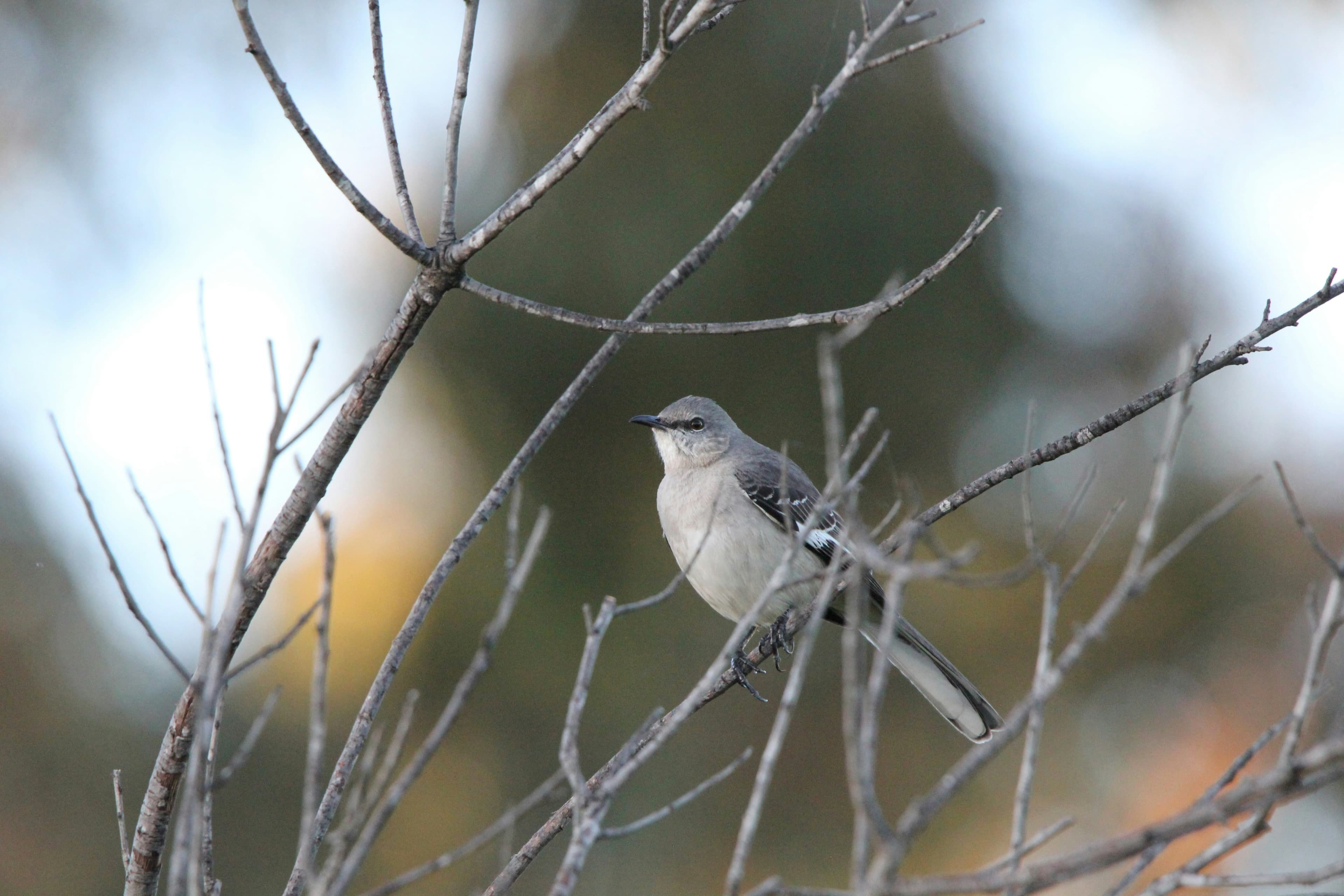
Meet 4 birds whose calls sound like alarms and electronic beeps – and learn how to ID them.