
King Rail
Learn to identify the King Rail by ear. Master the "kik-kik-kik-kik-kik!" phrase and tell it apart from similar species.
What the King Rail sounds like
A loud, rolling series that speeds up, then seems to tumble to a stop. It carries far across a still marsh at dawn.
How to tell it apart
Lessons featuring the King Rail
Ready to test your ear? Practice identifying the King Rail's sounds in this interactive in-app lesson.
Start Learning Free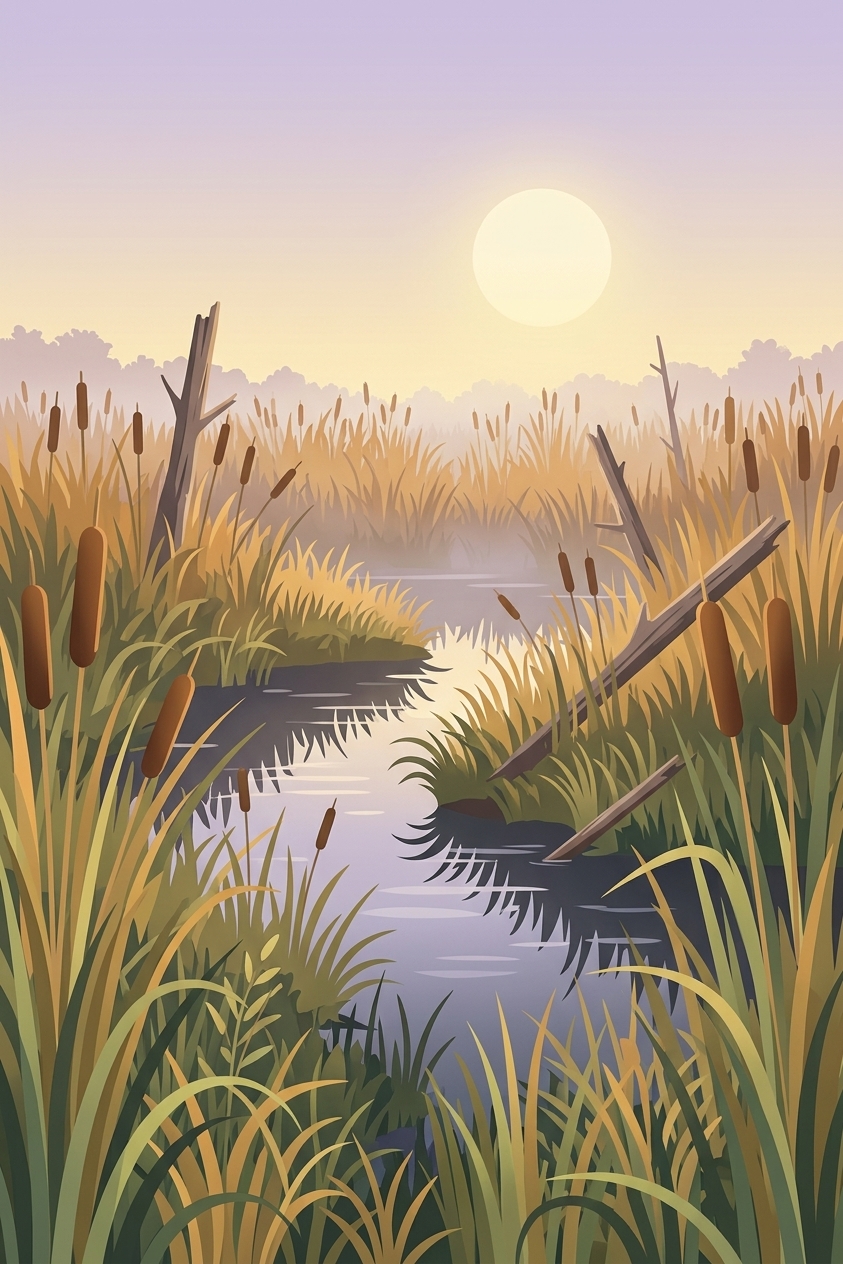
Where you'll hear it
King Rails have a patchy range in eastern and central North America. Some stay year-round in the Southeast and Gulf Coast, while northern birds move south for winter.
Freshwater marshes are its sweet spot, especially cattail marshes, wet meadows, rice fields, and reedy edges of ponds and slow rivers. It also uses brackish marshes in some places, but it favors fresher wetlands more than its close salt-marsh cousin, the Clapper Rail.
They’re easiest to detect in spring and early summer, when calling birds boom out from marshes at dawn and dusk. In colder months they grow even more secretive, hugging dense cover unless flushed.
How to recognize it by sight
The King Rail is a big, long-billed marsh bird with rich chestnut underparts and a sneaky, low-slung walk. You’ll usually hear it before you see it, slipping through cattails like a rusty shadow with oversized toes built for mud and floating plants.