Behavior
Why Are Birds Singing at Night?
Hear birds singing in the middle of the night? Learn why birds sing after dark and which species you're likely hearing.
Read Article →

Sound: Long, harsh, raspy, drawn-out scream
Where: Farmland, barns, fields, open country
Best clue: A true scream, never a hoot – the "screaming bird"
Sound: Eerie descending whinny; soft monotonic trill
Where: Suburbs, woodlots, parks, backyard trees
Best clue: A quavering horse-whinny, more spooky than loud
Sound: Monkey-like caterwauls; "who-cooks-for-you"
Where: Wet woods, swamps, mature forest near water
Best clue: Rowdy, cackling duets that sound almost primate
Sound: Deep hoots plus harsh screeches
Where: Woods, edges, parks, suburbs – nearly everywhere
Best clue: Raspy begging screeches from young birds in late summer
Hearing the scream right now? Record it in Wings & Whistles and find out what is out there. Get the app free →
First, the reassuring part: a scream in the dark is rarely anything to worry about. There are two main reasons you hear birds making harsh, screaming sounds after dark, and both come down to one group of birds.
Most of the screamers of the night are owls, and owls do their living while you sleep. They hunt, defend territory, and court mates in the dark, so the dead-quiet hours are exactly when their voices carry. A sound that would blend into a busy daytime soundscape lands like a horror-movie cue at 2 AM, when the only competition is crickets.
Owls also have a wider vocabulary than the textbook "hoot." Several species pair their hoots with screams, screeches, hisses, and caterwauls. So the sound that raised the hair on your neck is often just an owl being an owl.
Owls are fiercely territorial, and harsh calls help them stake their claim and warn off rivals without a fight. Late winter and early spring – peak courtship and nesting – tend to be the noisiest stretches.
The other big source of nighttime screaming is hungry young owls. In late summer, fledglings that have left the nest but cannot yet hunt for themselves follow their parents around, giving raspy, insistent begging calls for hours. If the screaming sounds repetitive, scratchy, and almost pitiful, you are probably hearing a teenage owl asking for dinner.
One honest caveat: not every scream in the night is a bird. A red fox or a fighting raccoon can produce shrieks that sound startlingly human or owl-like. If the sound came from ground level and moved along the ground, think mammal. If it came from a roof, a tree, or overhead, you are almost certainly dealing with an owl. Let's meet the usual suspects.
If the sound that woke you was a long, harsh, raspy SCREAM – not a hoot, not a whinny, but a genuine shriek – the Barn Owl is your prime suspect. This is the original "screaming bird at night," and its call has unnerved people for centuries.
Unlike most owls, Barn Owls do not really hoot at all. Their main call is a drawn-out, rasping scream that can last a couple of seconds and carry a long way across open country. Pale and silent in flight, then suddenly screaming overhead, the Barn Owl earned its old folk names: ghost owl, demon owl, screech owl.
Audio fingerprint: A long, harsh, raspy scream with no musical quality at all. If it sounds like a shriek rather than a hoot, trill, or whinny, think Barn Owl.
Picture this: It's well past midnight near an old barn. A ghostly, heart-shaped white face drifts low over the field on silent wings, then lets loose a raspy scream that tears across the dark before it vanishes back into the night.

Here is a twist: the bird with "screech" in its name rarely screeches. The Eastern Screech-Owl is one of the most common backyard owls in the eastern United States, and its two main sounds are eerie rather than ear-splitting – but they spook plenty of people in the dark.
Its signature sound is a soft, descending whinny, like a tiny, ghostly horse, that wavers and trails downward. It also gives a smooth, even monotonic trill on a single pitch, used between mates and family members. Neither is a true scream, but in the silence of 3 AM they can absolutely raise goosebumps.
Audio fingerprint: A quavering, descending whinny or a steady, even trill – eerie and tremulous rather than harsh or loud. If it shivers downward like a spooky little horse, think screech-owl.
Picture this: A small, cat-eared owl is tucked against the trunk of a backyard oak, nearly invisible. As you listen, a trembling whinny drifts down out of the leaves, soft and uncanny, and then everything goes quiet again.

Eerie descending whinny or even trill. Record a few seconds → check match → confirm in wooded yards and parks.
If the night erupts in wild, cackling, almost monkey-like screams – especially two birds going back and forth – you are most likely hearing Barred Owls. Most people know them for the classic "who-cooks-for-you, who-cooks-for-you-all" hoot, but their full vocabulary gets a lot stranger than that.
When a pair gets fired up, those tidy hoots dissolve into a rowdy caterwauling duet: gurgles, cackles, hoots, and screams piled on top of each other. People often describe it as monkeys, maniacal laughter, or a full-blown argument breaking out in the trees. It is one of the most dramatic sounds in the nighttime woods.
Audio fingerprint: Rowdy, monkey-like caterwauling and cackles, often in a noisy two-bird duet, mixed with "who-cooks-for-you" hoots. If it sounds like a primate argument in the woods, think Barred Owl.
Picture this: You're near a wooded creek at night when two big, round-headed owls launch into a back-and-forth of hoots, cackles, and screams that builds into a wild, laughing crescendo, then drops back to a calm "who-cooks-for-you."

Monkey-like caterwauls + "who-cooks-for-you." Record a few seconds → check match → confirm in wet woods near water.
Three night screechers down, one to go. Learn all four owls by ear, five minutes a day. Download Wings & Whistles Google Play
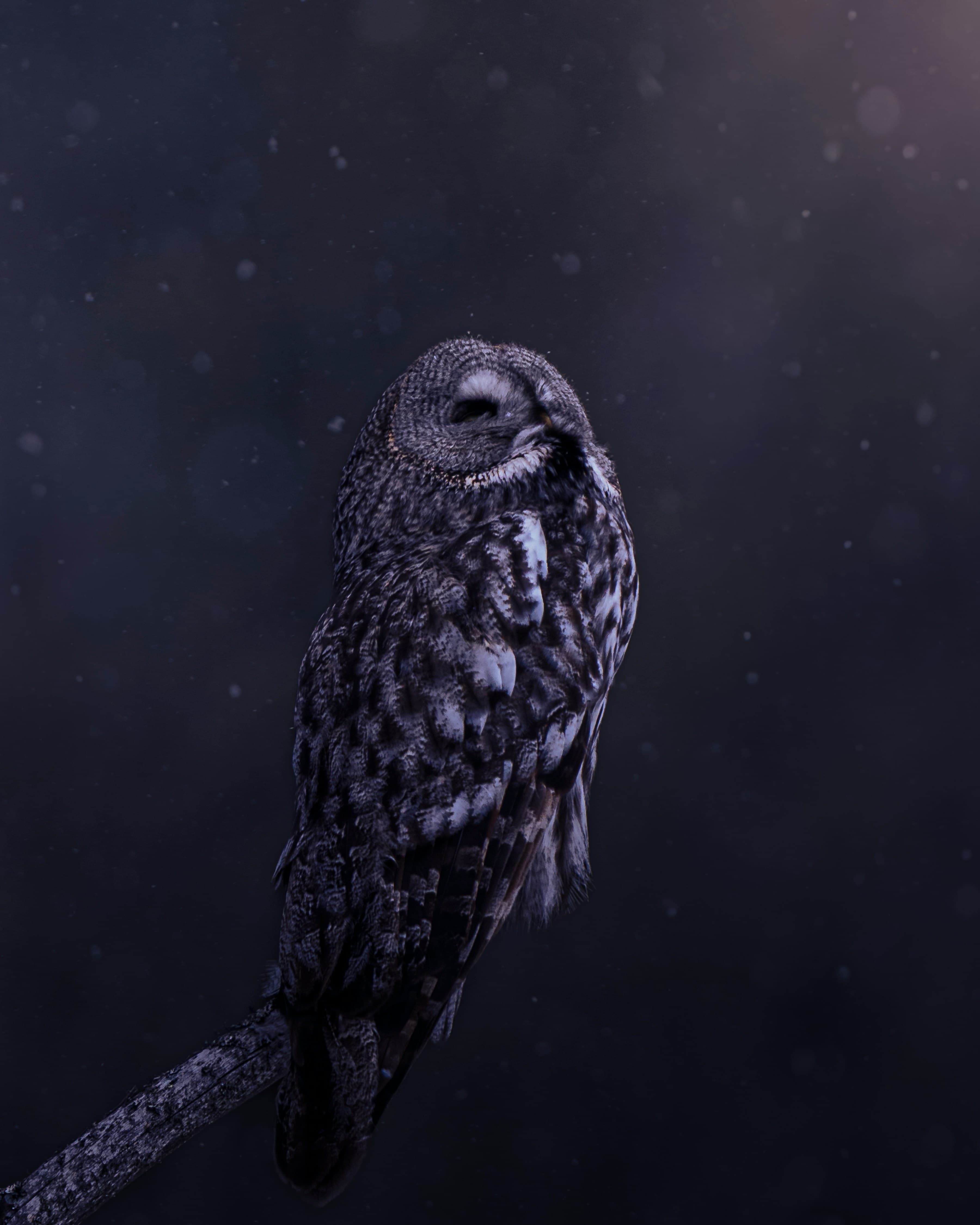
The Great Horned Owl is best known for its deep, soft "hoo-hoo-hoo-hoo" hoots, the textbook owl sound. But this big, powerful owl also produces harsh screams and screeches, and one source of them surprises a lot of people in late summer.
When young Great Horned Owls leave the nest but cannot yet hunt, they spend weeks following their parents and giving raspy, grating begging screeches for food. These calls can go on and on through the night, and they sound nothing like the dignified adult hoot. Many late-summer "screaming owl" mysteries turn out to be a hungry teenage Great Horned Owl.
Audio fingerprint: Deep, evenly spaced hoots from adults, plus harsh, raspy screeches – especially repetitive, scratchy begging calls in late summer. If hoots and screeches come from the same area, think Great Horned Owl.
Picture this: It's August, and a scratchy, insistent screech keeps repeating from the tall trees behind the house. Up on a branch, a fully grown but still-clueless young owl is hollering for a parent to bring the next meal.

Deep hoots + harsh begging screeches. Record a few seconds → check match → confirm near wooded edges in late summer.
You don't need to be a bird expert. You just need a simple process. (New to bird sound apps? Check out our guide to identifying bird sounds.)
The Barn Owl is the bird most likely to be screaming at night. Instead of hooting, it gives a long, harsh, raspy scream that carries across open country and has unsettled people for centuries. If the sound is a genuine shriek rather than a hoot or whinny, a Barn Owl is your top suspect.
Owls are nocturnal, so they hunt, defend territory, and court mates after dark, when their voices carry through the quiet. Harsh screams help them warn off rivals, and in late summer hungry young owls give raspy begging calls for hours. A scream in the night is almost always an owl being an owl, not a sign of danger.
Despite its name, the Eastern Screech-Owl rarely screeches. Its two main sounds are an eerie, descending whinny that wavers downward like a tiny ghostly horse and a soft, even trill on one pitch. Both can sound uncanny in the dark, but neither is a true scream.
Wild, monkey-like screaming and cackling at night, especially from two birds trading calls, usually means Barred Owls. When a pair gets excited, their familiar "who-cooks-for-you" hoots dissolve into rowdy caterwauling that many people mistake for monkeys or maniacal laughter.
Not always. Most nighttime screams are owls, but a red fox or fighting raccoons can also produce shrieks that sound startlingly human or owl-like. A simple clue: ground-level screams that move along the ground point to a mammal, while screams from a roof, tree, or overhead point to an owl.
Practice identifying alarm-like calls with guided lessons in W&W


The next time a scream cuts through the dark and your pulse spikes:
Once you know it's a Barn Owl quartering a field, or a young Great Horned Owl begging for dinner, the sound changes. What felt like something out of a horror movie becomes a window into a whole shift of life happening while you sleep.
And honestly? Sharing your night with an owl is kind of wonderful.
Open any bird for its recordings, what to listen for, and the birds it gets mistaken for.
Next time you hear the scream, record it in W&W and see what it suggests. Download Wings & Whistles Google Play
Hear birds singing in the middle of the night? Learn why birds sing after dark and which species you're likely hearing.
Hearing strange calls after dark? Match what you heard to the most likely species using sound clues, habitat, and time of year.