Sound Guide
What Bird Sounds Like a Car Alarm or Siren?
Meet 4 birds whose calls sound like car alarms, sirens, and electronic beeps – and learn how to ID them.
Read Article →
A Chipping Sparrow is the classic culprit, with a long, dry, single-pitch trill that sounds like an old landline ringing. A recognizable ringtone buried in nonstop chatter is a European Starling copying it; one repeated a few times then dropped is a Northern Mockingbird. A Northern Cardinal's clear whistles and metallic chip can also read as an alert.

Hearing the ringtone right now? Record it in Wings & Whistles and find out who is really calling. Get the app free →
Pattern: One long, even trill on a single pitch
Where: Yards, parks, conifers, lawns with scattered trees
Best clue: Sounds like an old landline ringing or a sewing machine
Pattern: Continuous blended chatter with a ringtone tucked in
Where: Buildings, signs, nest boxes, flocks
Best clue: An actual ringtone or jingle pops out of the noise
Pattern: Repeats each phrase 3–5 times, then switches
Where: Yards, rooftops, parking lots, fences
Best clue: A "ringtone" repeated a few times, then a totally different sound
Pattern: Loud, slurred "purdy-purdy-purdy" plus sharp "chip" notes
Where: Woodland edges, shrubs, backyards, feeders
Best clue: Clear whistles and a metallic chip that sometimes read as an alert
There are two main reasons a bird can have you patting your pockets for a phone that isn't ringing:
Some birds don't copy anything – their natural voices just happen to land in the "sounds like a phone" zone. The Chipping Sparrow is the poster child: its song is one long, dry, machine-like trill on a single pitch, which is uncannily close to an old-fashioned landline ringing. The Northern Cardinal's clear, slurred whistles and sharp, metallic "chip" notes can land there too.
Your brain hears "phone!" and reaches for the pattern it knows best. The bird is just being a bird.
Other birds are natural mimics – they learn and copy sounds from their environment. Species like the European Starling and Northern Mockingbird can genuinely copy cell-phone ringtones, electronic jingles, alarms, and sirens. In neighborhoods where phones ring all day, those tones become part of the local "dialect," and the birds fold them right into their songs.
If your mystery bird sounds less "phone ringing" and more "laser zap, smoke-detector chirp, or pure electronic beep," that is a different cast: saw-whet owls, pewees, and a flycatcher with a contact call that genuinely sounds like a video-game effect. We cover them in What Bird Sounds Like a Laser, Beep, or Electronic Chirp?.
Let's meet the usual suspects.
If you're hearing what sounds like an old landline ringing – one steady, buzzy tone that goes on for a couple of seconds – the Chipping Sparrow is your most likely culprit.
This small, rusty-capped sparrow sings a single, long, dry trill on one pitch. There's no melody and no variation – just a mechanical, evenly spaced rattle that people compare to an old phone ringing, a sewing machine, or even an insect. It isn't mimicking anything; that flat, machine-like quality is simply how the bird sounds.
Audio fingerprint: One even trill on a single pitch, lasting a couple of seconds, with no rise, fall, or change in tone.
Picture this: A tidy little sparrow with a bright reddish cap sits high in a backyard pine, throws its head back, and lets out a long, dry rrrrrrrr that rings across the yard like a phone nobody is answering.
The European Starling is the bird most likely to copy an actual cell-phone ringtone. Starlings are accomplished mimics, and in towns and cities they hear electronic jingles, alarms, and ringtones constantly – so they weave those exact sounds into their songs.
The catch is the delivery. Starlings produce a rapid, continuous stream of whistles, clicks, rattles, and copied sounds all blended together. A ringtone won't arrive as a clean, repeated phrase – it pops out of the chatter for a second, then dissolves back into the noise.
Audio fingerprint: If you catch a recognizable ringtone or jingle buried in nonstop, rambling chatter, think starling.
Picture this: A chunky, iridescent bird sits on a rooftop antenna, reeling off whistles and clicks – and right in the middle, unmistakably, the first few notes of a phone ringtone, before it rolls straight on into more chatter.

A ringtone buried in nonstop chatter. Record a few seconds → check match → confirm near buildings or in flocks.
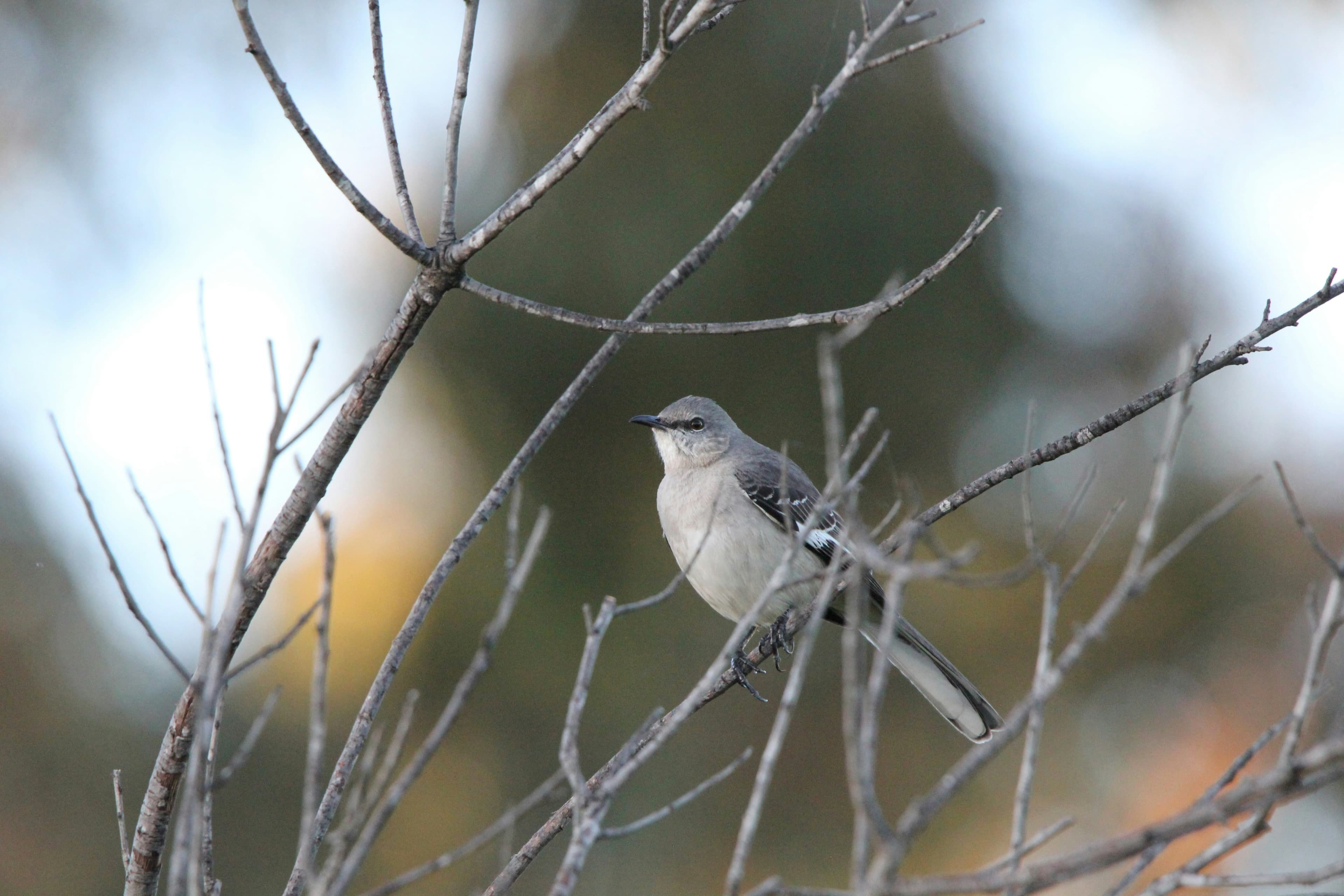
The Northern Mockingbird is another accomplished mimic, and it can absolutely learn a ringtone. What sets it apart from the starling is the pattern: mockingbirds deliver clear, distinct phrases and repeat each one 3–5 times before switching to something completely different.
So a mockingbird's ringtone doesn't flash by once – it rings, and rings, and rings, then suddenly becomes a car alarm, a cardinal's whistle, or a squeaky gate. That repeat-then-switch rhythm is the giveaway.
Audio fingerprint: If a "ringtone" repeats several times and then gives way to a string of other sounds, it's almost certainly a mockingbird.
Picture this: It's 2 AM. A slim gray bird perches on a streetlight, cycling through a ringtone, a few car-alarm beeps, and a robin's cheer – each one repeated a few times – all in the span of 30 seconds. That's a mockingbird doing what mockingbirds do.

A ringtone repeated, then a new sound. Record a few seconds → check match → confirm by the repeat-then-switch pattern.
Three ringtone suspects down, one to go. Learn all four by ear, five minutes a day. Download Wings & Whistles Google Play
The Northern Cardinal is the long shot on this list, and we want to be honest about that. It doesn't mimic anything, but its loud, clear, slurred whistles – often written as "purdy-purdy-purdy" or "cheer-cheer-cheer" – and its sharp, metallic "chip" notes can sometimes read as an electronic ring or alert tone, especially from a distance.
It's a weaker match than the others. A cardinal's whistles are more musical than a true ringtone, but those down-slurred, repeated notes and that bright metallic chip are why some people first reach for their phone before spotting the red bird in the shrubs.
Audio fingerprint: Clear, slurred whistles repeated in a series, plus a sharp, metallic "chip" – tuneful enough that you'll usually rule out a real phone quickly.
Picture this: A brilliant red bird with a pointed crest sits in a backyard shrub, firing off a run of loud, clear "purdy-purdy-purdy" whistles and the occasional metallic "chip" that, for a half-second, you could swear was a notification.

Clear whistles + a metallic "chip." Record a few seconds → check match → confirm by the musical, slurred quality.
You don't need to be a bird expert. You just need a simple process. (New to bird sound apps? Check out our guide to identifying bird sounds.)
The Chipping Sparrow is the classic answer for an old-fashioned phone ringing – its long, dry, mechanical trill on one pitch sounds remarkably like a landline. For modern cell-phone ringtones, mimics like the European Starling and Northern Mockingbird actually copy the tones they hear.
The Chipping Sparrow. Its song is a single, even trill that rings on one pitch for a couple of seconds, very close to the steady ring of an old rotary or landline phone. Listen for it from yards, parks, and conifers in spring and summer.
Yes. European Starlings and Northern Mockingbirds are skilled mimics that learn sounds from their surroundings, including cell-phone ringtones and electronic jingles. Starlings weave the ringtone into rambling chatter, while mockingbirds repeat it several times before moving on.
A Northern Mockingbird. Unmated males often sing through the night during breeding season, cycling through learned sounds, including ringtones and alarms. If a "phone" keeps ringing from a rooftop at 2 AM, it's almost certainly a mockingbird.
Sometimes. The Northern Cardinal doesn't mimic anything, but its loud, slurred "purdy-purdy-purdy" whistles and sharp, metallic "chip" notes can read as an electronic ring or alert tone, especially from a distance. It's a weaker match than the trilling Chipping Sparrow or the mimics.
Practice identifying ringtone-like calls with guided lessons in W&W




The next time you hear what sounds like a phone ringing from a tree:
Once you know it's a Chipping Sparrow rattling out its old-phone trill or a starling showing off a stolen ringtone, the sound transforms. What felt like a phone you couldn't find becomes a reminder that you share your neighborhood with some remarkably clever, noisy neighbors. From here, learning the rest of your yard's calls by ear is the natural next step.
And honestly? A starling that learned your ringtone is kind of impressive.
Open any bird for its recordings, what to listen for, and the birds it gets mistaken for.
Next time you hear the "ringtone," record it in W&W and see what it suggests. Download Wings & Whistles Google Play
Meet 4 birds whose calls sound like car alarms, sirens, and electronic beeps – and learn how to ID them.

Meet 7 birds that sound uncannily electronic – saw-whet owls, pewees, and more – and learn each one by ear.