Sound Guide
Birds That Sound Like Pop Culture
From light sabers to ringtones, meet the birds whose calls echo the sounds of movies, games, and gadgets – and learn to ID them.
Read Article →
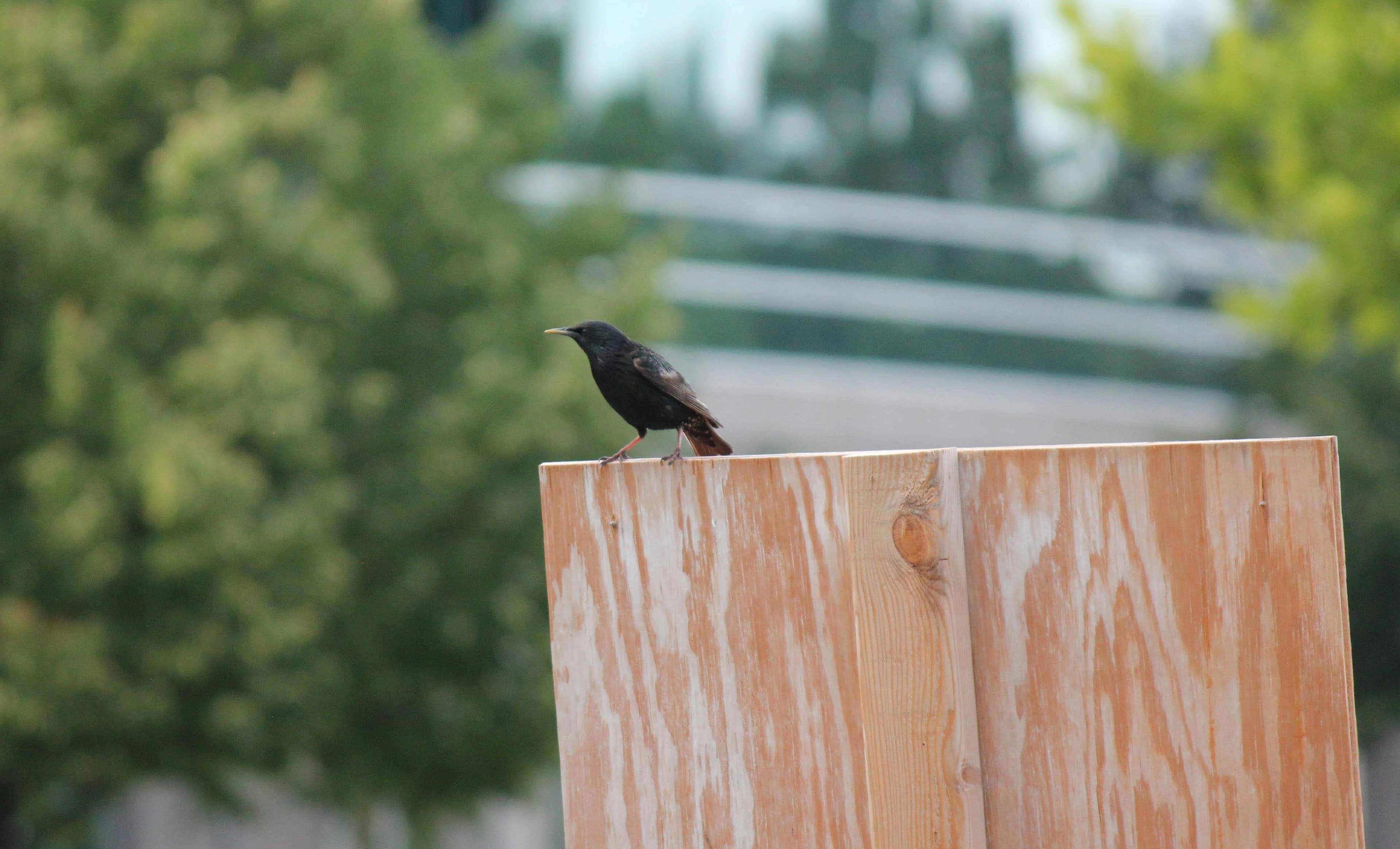
Pattern: Continuous blended chatter of whistles, clicks & warbles
Where: Buildings, rooftops, signs, parking lots, flocks
Best clue: Sounds like a droid narrating its day; no clear repeats
Pattern: Long, halting improvisation that never repeats
Where: Dense shrubs, thickets, hedgerows, garden edges
Best clue: A catlike "mew" mixed into the electronic muttering
Pattern: Single buzzy, metallic "conk-la-REE!"
Where: Marshes, wetlands, cattails, roadside ditches
Best clue: Buzzy electronic timbre – not mimicking anything
Pattern: Rising, rusty, mechanical squeal
Where: Lawns, parking lots, fields, noisy flocks
Best clue: Sounds like a creaky gate or a droid winding up
Hearing the droid chatter right now? Record it in Wings & Whistles and get a match in seconds. Get the app free →
There are two reasons a bird outside your window can sound like it's beeping and burbling in droid-speak:
Some birds are natural mimics and improvisers – they collect sounds and remix them into long, electronic-sounding streams. The European Starling copies whistles, clicks, and mechanical noises and blends them into a continuous chatter that can sound exactly like an astromech droid thinking out loud. The Gray Catbird, a member of the mimic-thrush family, strings together its own endless improvisation of squeaks and gurgles that lands in the same uncanny zone.
Because these birds build their repertoires from whatever they hear, no two performances are quite the same. That ever-shifting, never-repeating quality is exactly what makes them sound less like a song and more like a machine muttering to itself.
Other birds don't mimic anything – their natural calls just happen to have a buzzy, metallic, or mechanical timbre that reads as electronic. The Red-winged Blackbird and Common Grackle aren't copying R2-D2; their voices simply land in the "that sounds like a robot" frequency zone.
Your brain hears a beep or a squeal and reaches for the nearest pattern it knows – a droid. The bird is just being a bird. If your mystery sound is more of a single pure beep or laser zap than a burbling conversation, you may be hearing a different cast entirely; we cover those in What Bird Sounds Like a Laser, Beep, or Electronic Chirp?.
Let's meet the usual suspects.
If you're hearing a nonstop stream of whistles, clicks, and warbles that genuinely sounds like R2-D2 chattering, the European Starling is your most likely culprit. Starlings are accomplished mimics, and their everyday song is a rapid, continuous blend of copied sounds and electronic-sounding notes.
What makes them so droid-like is the texture: rising and falling whistles, sudden clicks and rattles, and little gurgles all run together with no clear repeats. It's the same quality that makes an astromech droid sound like it's holding a conversation with itself.
Audio fingerprint: If it sounds like nonstop electronic chatter with no clear repeated phrases, think starling.
Picture this: A chunky, iridescent bird sits on a rooftop antenna, head bobbing, pouring out a stream of whistles, clicks, and warbles that rises and dips like a droid working through a problem out loud.

The Gray Catbird is a close cousin of the mockingbird, and it improvises a long, halting performance of squeaks, gurgles, and electronic-sounding notes that never quite repeats. From inside a shrub, it can sound exactly like a droid quietly muttering to itself.
The giveaway is right in the name: scattered through the rambling song is a low, catlike "mew". If you hear electronic burbling punctuated by what sounds like a cat, you've found your bird.
Audio fingerprint: A halting, improvised mutter of squeaks and gurgles with a catlike "mew" mixed in – that's a catbird.
Picture this: A slate-gray bird with a black cap stays hidden deep in a thicket, working through a quiet, unhurried string of clicks, gurgles, and droid-like burbles, then drops a sudden mewing note as if to remind you it's there.

Halting mutter with a catlike "mew." Record a few seconds → check match → confirm near dense shrubs or thickets.
The Red-winged Blackbird doesn't mimic anything – its natural call just sounds electronic. The male's signature "conk-la-REE!" has a buzzy, metallic edge that many people hear as a droid beep or a glitchy electronic chirp.
The buzzy ending is the key. It's not a smooth musical note; it's a grating, mechanical trill that carries across open water, which is exactly why it reads as electronic rather than birdy.
Audio fingerprint: If a buzzy, metallic beep is coming from a marsh or wetland, it's almost certainly a red-wing.
Picture this: A jet-black bird with crimson shoulder patches perches on a cattail at the edge of a pond, throws back its head, and lets out a loud, buzzy "conk-la-REE!" that sounds like a droid clearing its circuits.

Buzzy, metallic "conk-la-REE!" Record a few seconds → check match → confirm near marsh or wetland.
Three droid voices down, one to go. Learn all four by ear, five minutes a day. Download Wings & Whistles Google Play
The Common Grackle rounds out the cast with a sound that is hard to forget: a short, rising, rusty squeal that sounds like a creaky gate or a droid winding itself up. Like the red-wing, it isn't imitating anything – that mechanical screech is just how a grackle sings.
The classic description is a rusty hinge, and it fits. The note climbs sharply and cuts off, giving it the abrupt, mechanical quality of an electronic effect rather than a melody.
Audio fingerprint: A short, rising, metallic squeal like a rusty gate – usually from a big, glossy blackbird in a yard or parking lot.
Picture this: A long-tailed, iridescent blackbird struts across a lawn, pauses, hunches its shoulders, and forces out a creaky, rising squeal that sounds like a droid powering on.

Rising, rusty, mechanical squeal. Record a few seconds → check match → confirm on a lawn or in a flock.
You don't need to be a bird expert. You just need a simple process. (New to bird sound apps? Check out our guide to identifying bird sounds.)
The European Starling is the bird that most often sounds like R2-D2. It's a champion mimic that weaves whistles, clicks, and warbles into a continuous chatter that can sound exactly like a droid thinking out loud. The Gray Catbird is a close runner-up with its halting, muttering improvisation.
For two reasons. Some birds, like the European Starling, are mimics that learn and remix electronic-sounding noises. Others, like the Red-winged Blackbird and Common Grackle, simply have naturally buzzy or mechanical calls that land in the "that sounds like a robot" zone.
Yes. European Starlings are accomplished mimics that copy whistles, mechanical sounds, and even other birds, blending them into a rapid stream that can sound uncannily like R2-D2. They aren't copying the movies, but the texture of their chatter lands in the same electronic zone.
The European Starling and Gray Catbird are the most common backyard birds that produce electronic beeping and whistling. Both improvise long strings of squeaks, gurgles, and whistles, and the Common Grackle's rising, rusty squeal reads as electronic too.
That's almost certainly a Gray Catbird. It improvises a long, halting mutter of squeaks, gurgles, and electronic-sounding notes from inside dense shrubs, and the giveaway is the catlike "mew" it slips into the song.
Practice identifying droid-like calls with guided lessons in W&W




The next time you hear what sounds like R2-D2 coming from a tree, a rooftop, or a thicket:
Once you know it's a starling remixing the neighborhood or a catbird muttering from a hedge, the sound changes. What felt like a glitch in the matrix becomes a reminder that you share your block with some genuinely clever, electronic-voiced neighbors.
And honestly? A starling that sounds like a droid is a lot more fun than a malfunctioning gadget.
Open any bird for its recordings, what to listen for, and the birds it gets mistaken for.
Next time you hear the "droid," record it in W&W and see what it suggests. Download Wings & Whistles Google Play
From light sabers to ringtones, meet the birds whose calls echo the sounds of movies, games, and gadgets – and learn to ID them.

A pure beep, a laser zap, a back-up alarm at 4 a.m.? Meet 7 birds that sound uncannily electronic and learn each one by ear.