Sound Guide
What Bird Sounds Like a Car Alarm? Usually a Mockingbird
Meet 4 birds whose calls sound like car alarms, beeping smoke detectors, and electronic chirps – the beeping cousins of the siren wailers.
Read Article →

A long wail drifting across a northern lake (climbing, holding, then sliding back down) is almost always a Common Loon, especially at dusk or after dark. In town, a 'siren' that cuts out and turns into something else entirely is a Northern Mockingbird or European Starling doing impressions. A piercing 'kill-DEER!' from overhead, day or night? Killdeer.

That's the loon's wail: the clearest true match for a siren's rise and fall. Of the three other suspects below, one comes by its wail naturally (the Killdeer), and two are straight-up impressionists copying the real thing.
Hearing the wail right now? Record it in Wings & Whistles and get a match in seconds. Get the app free →
Pattern: A long, eerie wail that rises, holds, and falls
Where: Quiet northern lakes and ponds (spring and summer)
Best clue: Carries far over open water, often at night
Pattern: Repeats each phrase 3–5 times, then switches
Where: Yards, rooftops, parking lots, fences
Best clue: Sings at night; may copy a real siren whistle, then move on
Pattern: Continuous blended chatter (no clear repeats)
Where: Buildings, signs, nest boxes, flocks
Best clue: A siren whistle buried in nonstop radio-surfing chatter
Pattern: Loud, rising "kill-DEER kill-DEER," often in flight
Where: Open ground – fields, gravel lots, athletic fields, shorelines
Best clue: Urgent, repeated wail overhead, day or night
There are two very different reasons a bird can wind up sounding like a wailing ambulance:
Some birds just happen to make a long, gliding call that climbs in pitch and slides back down – the exact shape of an emergency siren. The Common Loon and the Killdeer aren't copying anything. Their natural calls simply trace the same up-and-down wail your brain files under "siren."
These wails are built to carry. A loon needs its voice to travel across an entire lake, and a killdeer often calls while wheeling overhead, so both sounds reach you loud, urgent, and unmistakably siren-shaped.
Other birds are natural mimics – they learn and copy sounds from their surroundings. Species like the Northern Mockingbird and European Starling can fold the rising whistle of a real ambulance or police siren into their songs, right alongside car alarms, ringtones, and other birds. In a busy neighborhood, those siren whistles become part of the local dialect.
The giveaway is what happens next: a real siren keeps wailing, but a mimic copies the whistle for a second or two and then jumps to something completely different.
If your mystery sound is less "wailing ambulance" and more "beeping car alarm, chirping smoke detector, or electronic whoop," that is a slightly different cast. We cover the beeping and electronic cousins in What Bird Sounds Like a Car Alarm?.
Let's meet the usual suspects.
If you're near a quiet northern lake and a long, mournful wail drifts across the water, you've found the most siren-like sound in North America. The Common Loon's wail call rises, holds, and falls – the exact arc of a distant ambulance winding up and down.
Loons aren't mimicking anything. The wail is how they keep in contact across open water, especially at dawn, dusk, and through the night. It's loud, eerie, and built to travel a long way.
Audio fingerprint: A long, single note that slides up and back down, carrying across open water – if you're near a quiet northern lake, that's a loon wail.
Picture this: It's dusk on a still lake in the north woods, mist hanging over the water. From somewhere out in the dark comes a long, rising-and-falling wail that lifts the hair on your arms. That's a loon calling to its mate.
Hear it in the player at the top of this page.
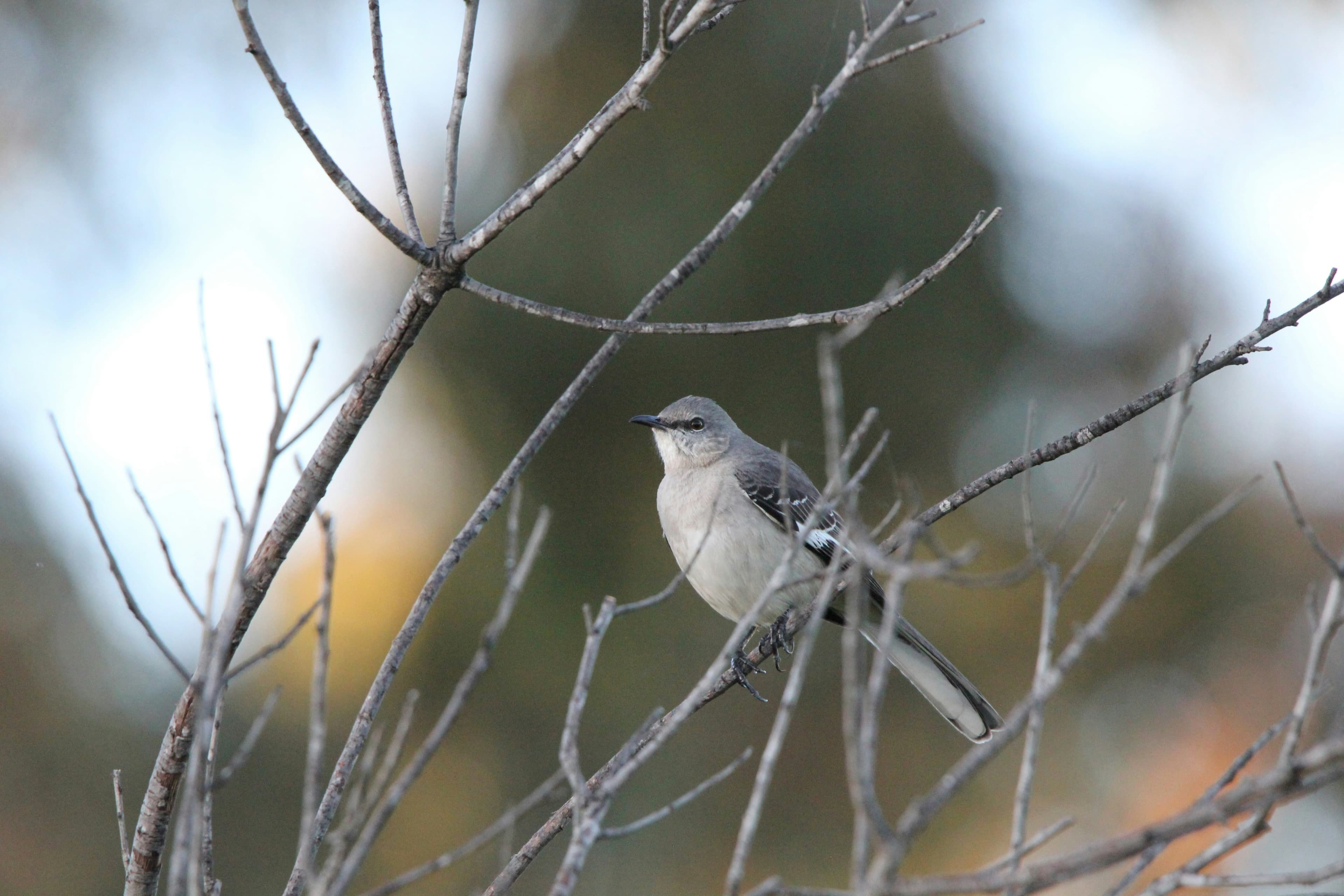
If your "siren" is coming from a rooftop in town and keeps changing into other sounds, the Northern Mockingbird is your most likely culprit. Mockingbirds are legendary mimics, and a bird that lives near busy streets can learn the rising whistle of a real ambulance or police siren.
What makes them recognizable is the pattern: they repeat each sound 3-5 times before switching to something completely different. A real siren stays a siren. A mockingbird gives you a siren whistle, then a car alarm, then a cardinal.
Audio fingerprint: If a "siren" keeps switching to new sounds every few seconds, you're hearing a mockingbird running through its playlist, not an emergency.
Picture this: It's 2 AM. A slim gray bird perches on a streetlight and belts a rising siren whistle three times, then jumps to a car alarm, then a cardinal's whistle – all in the span of 30 seconds. That's a mockingbird doing what mockingbirds do.

Siren whistle that keeps switching sounds. Record a few seconds → check match → confirm with repeated phrases in a yard or rooftop.
The European Starling is another accomplished mimic, though its style is different from the mockingbird's. Where mockingbirds deliver clear, repeated phrases, starlings produce a rapid, continuous stream of whistles, clicks, rattles, and copied sounds all blended together.
Starlings can work a rising siren-whistle into that stream, but it gets buried in the nonstop chatter. It's like hearing a siren through a blender.
Audio fingerprint: If a siren whistle is tucked inside nonstop electronic chatter with no clear repeats, think starling.
Picture this: A flock of chunky, iridescent birds clusters on a building ledge, each one producing a stream of whistles, clicks, and the occasional rising siren note – all blending into one chaotic chorus.

Siren whistle inside continuous chatter. Record a few seconds → check match → confirm near buildings or in flocks.
Three sirens down, one to go. Learn all four by ear, five minutes a day. Download Wings & Whistles Google Play
The Killdeer doesn't mimic anything either – its natural call just happens to wail. This long-legged plover gives a loud, rising "kill-DEER kill-DEER" that climbs in pitch and repeats, often from a bird circling overhead. It can sound like a tiny siren on patrol.
Audio fingerprint: A piercing, rising "kill-DEER!" repeated over and over, often from a bird wheeling overhead – day or night.
Picture this: You cross a gravel parking lot and a slender, long-legged bird explodes into the air, circling and crying a shrill, rising "kill-DEER! kill-DEER!" that wails across the open ground.

Want the full story on this one? We dug into why a killdeer screams kill-deer – the etymology, the parking-lot-at-midnight mechanism, and what else this bird gets up to beyond the siren wail.
Rising "kill-DEER" wail from overhead. Record a few seconds → check match → confirm over open ground, day or night.
You don't need to be a bird expert. You just need a simple process. (New to bird sound apps? Check out our guide to identifying bird sounds.)
The Common Loon is the classic bird that sounds like a siren. Its long wail call rises, holds, and falls across open water, tracing the same up-and-down arc as an emergency siren. Mimics like the Northern Mockingbird and European Starling can also copy real siren whistles.
A Common Loon's wail rises and falls just like an ambulance, and a Killdeer gives a loud, rising "kill-DEER" wail from overhead. In town, mockingbirds and starlings sometimes copy the actual whistle of a police or ambulance siren.
The Common Loon is the best match for a true rising-and-falling wail. Its wail call glides up in pitch, holds, and slides back down, and it carries for long distances across a quiet lake, which is exactly why people mistake it for a distant siren.
Common Loons are very vocal at night on northern lakes, and Killdeer call day and night over open ground. In neighborhoods, Northern Mockingbirds often sing after dark and may work a siren whistle into the mix.
Yes. Northern Mockingbirds and European Starlings are skilled mimics that can copy the rising whistle of a real ambulance or police siren. The tell is that a mimic copies the whistle for a second or two and then switches to a different sound, while a real siren keeps wailing.
Practice identifying alarm-like calls with guided lessons in W&W




The next time you hear what sounds like a siren coming from a tree or across the water:
Once you know it's a loon calling across a misty lake or a killdeer wheeling over a parking lot, the sound transforms. What felt like a false alarm becomes a reminder that you share the world with some loud, wild, and surprisingly musical neighbors.
And honestly? A mockingbird that learned the local ambulance is kind of impressive.
Open any bird for its recordings, what to listen for, and the birds it gets mistaken for.
Next time you hear the "siren," record it in W&W and see what it suggests. Download Wings & Whistles Google Play
Meet 4 birds whose calls sound like car alarms, beeping smoke detectors, and electronic chirps – the beeping cousins of the siren wailers.

Hear birds singing in the middle of the night? Learn why birds sing after dark and which species you're likely hearing.