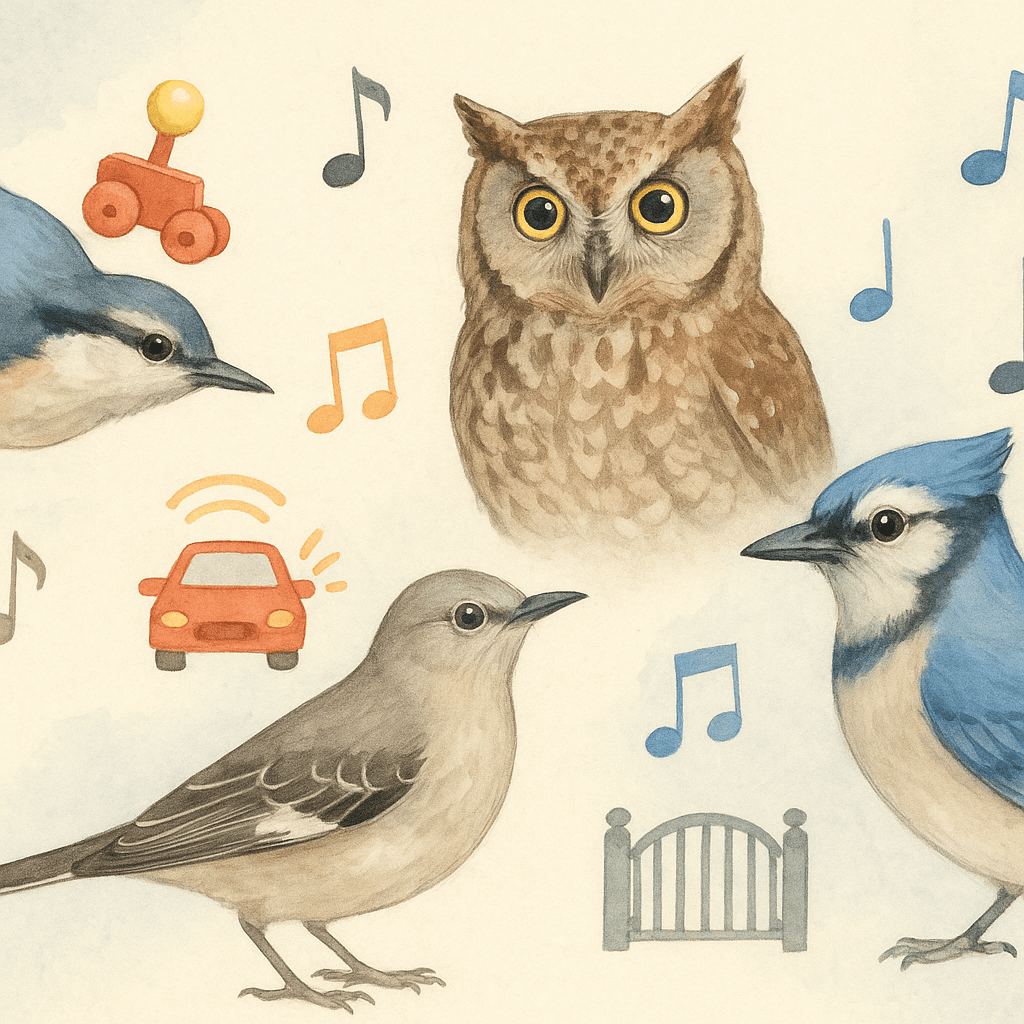
Sound Guide
What Bird Sounds Like a Squeaky Toy?
Meet 6 birds whose calls sound like squeaky toys, rubber ducks, and rusty gates – and learn how to ID them.
Read Article →


That's the grackle's rusty-gate squeal.
Sound: A short, rising, rusty squeal like a hinge forced open
Where: Yards, parks, fields, feeders
Best clue: Glossy blackbird with a long tail and pale yellow eyes
Sound: A high, thin "wee-see wee-see" repeated like a turning wheel
Where: Mature woods, creeping on tree trunks
Best clue: Very high pitch – some people can barely hear it
Sound: A creaky, musical "queedle-queedle" pump-handle call
Where: Oak woods, suburbs, parks, feeders
Best clue: A creak, not a scream – very different from the harsh jay call
Sound: Rapid, high squeaks like a squeezed rubber duck
Where: Southeastern pine forests
Best clue: Several birds squeaking at once in a busy flock
Squeaking outside right now? Record a few seconds in Wings & Whistles and get a match. Get the app free →
There are two main reasons a bird can sound exactly like the swing set in the park or the rusty hinge on the back gate:
Some birds sing very high, very thin notes that rise and fall in a steady, repeated cycle. That back-and-forth, see-sawing rhythm is exactly what your ear expects from a swing rocking on a squeaky chain or a wheel that needs oil. The Black-and-white Warbler and the Brown-headed Nuthatch both land in this zone – pitched so high and so squeaky that "toy" or "wheel" is the first thing most people think of.
The trick is the rhythm. A swing squeaks on a loop, and so do these birds, repeating the same little squeak over and over at an even pace.
Other birds don't squeak so much as creak. Their voices carry a grating, ungreased-metal texture – a built-in rustiness that sounds like old hardware under strain. The Common Grackle is the poster bird for this, with a short, rising squeal that could pass for a gate hinge. The Blue Jay has a softer, creaky "pump-handle" call in the same family of sounds.
Your brain hears "something needs oil" and reaches for the closest match it knows. The bird is just being a bird.
If your mystery sound is more of a single, slow CREEEAK like a heavy wooden door than a fast, rhythmic swing squeak, that is a slightly different cast – we cover it in What Bird Sounds Like a Squeaky Door or Rusty Gate?.
Let's meet the usual suspects.
If you're hearing what sounds like a rusty gate being forced open – one short, grating squeal at a time – the Common Grackle is your most likely culprit. It is the classic "rusty gate" bird.
The grackle's "song" barely qualifies as one. It's a quick, rising squeal, often written as "readle-eak," that ends on a sharp metallic upswing – the audio equivalent of pushing a swing that hasn't been oiled in years.
Audio fingerprint: A single, short, rising squeal that grinds at the top like an ungreased hinge. If a glossy blackbird at your feeder lets out one sharp creak, that's a grackle.
Picture this: A tall, glossy blackbird with a long, keel-shaped tail and bright pale-yellow eyes leans forward on a feeder pole, puffs up its feathers, and forces out a quick, grating "kreee-aak" – like someone shoving a rusty swing into motion.
The Black-and-white Warbler takes the squeak in a different direction. Instead of a rusty creak, it sings a high, thin, two-note squeak – "wee-see wee-see wee-see" – repeated over and over at the same pitch, exactly like a squeaky wheel turning round and round.
The rhythm is what sells it. Each "wee-see" is a little see-saw, and the steady repetition is pure swing-chain energy. The catch is that it's pitched so high that some people can barely hear it at all.
Audio fingerprint: A very high, thin, two-part squeak repeated 6 to 10 times at an even pace – like a wheel that needs oil going around and around.
Picture this: A small black-and-white striped bird inches headfirst down a tree trunk like a nuthatch, pausing to deliver a thin, squeaky "wee-see wee-see wee-see" that sounds like a tiny swing chain creaking in rhythm.

High, thin "wee-see" on repeat. Record a few seconds → check match → confirm in mature woods, often on a tree trunk.
Most people know the Blue Jay for its harsh, screaming "jay! jay!" But the same bird also makes a soft, creaky, musical call – the "pump-handle" call – that rises and falls like an old water-pump handle or a rusty gate being worked back and forth.
This call surprises people because it sounds nothing like the jay's familiar scream. It's gentle, creaky, and almost melodic, with the same ungreased-metal texture you'd expect from a swing or a hinge.
Audio fingerprint: A rising, squeaky, two-part "queedle-queedle" that sounds like someone slowly working a rusty pump handle. If a crested blue-and-white bird creaks instead of screams, that's the pump-handle call.
Picture this: A bold blue-and-white bird with a crest lands on a feeder, looks around, and lets out a soft, creaky "queedle-queedle" that rises and falls like a pump handle being worked up and down.

A creak, not a scream. Record a few seconds → check match → confirm at a feeder or in oak woods.
Three squeakers down, one to go. Learn all four by ear, five minutes a day. Download Wings & Whistles Google Play
The Brown-headed Nuthatch is the most toy-like squeaker of the bunch. Its call is a rapid series of high, squeaky notes that sound exactly like a rubber duck or a dog's squeaky toy being squeezed – over and over.
These little birds travel in chatty flocks, so you often hear several squeaking at once, which only adds to the toy-chest effect. If a patch of pine woods sounds like a basket of rubber ducks, this is your bird.
Audio fingerprint: A rapid run of high, squeaky "squeak-squeak" notes that sound like a rubber duck or squeaky toy being squeezed, usually with a flock joining in.
Picture this: A tiny, brown-capped bird hitches down a pine trunk with its little flock, all of them squeaking together like a handful of rubber ducks in a busy bathtub.

Rubber-ducky squeaks, often several at once. Record a few seconds → check match → confirm in southeastern pine woods.
You don't need to be a bird expert. You just need a simple process. (New to bird sound apps? Check out our guide to identifying bird sounds.)
The Common Grackle is the classic bird that sounds like a squeaky swing or rusty gate, with a short, rising, ungreased-hinge squeal. For a higher, repeated squeak like a turning wheel, listen for the Black-and-white Warbler instead.
The Common Grackle is the best match for a rusty-hinge sound. Its short, grating, rising squeal has a metallic, ungreased quality that sounds exactly like an old gate or swing being forced open.
The Black-and-white Warbler sounds like a squeaky wheel. Its high, thin "wee-see wee-see wee-see" repeats at an even pace, just like a wheel that needs oil turning round and round. It is very high-pitched, so some people can barely hear it.
That is the Blue Jay's "pump-handle" call – a soft, creaky, rising "queedle-queedle" that sounds like an old water-pump handle or a rusty gate being worked. It is surprisingly musical and very different from the jay's harsh scream.
The Brown-headed Nuthatch sounds like a rubber duck or a squeaky toy. It gives rapid, high, repetitive squeaks, often with a whole flock joining in, in the pine forests of the southeastern United States.
Practice identifying squeaky, creaky, and mechanical bird calls with guided lessons in W&W




The next time you hear what sounds like a squeaky swing coming from a tree:
Once you know it's a grackle creaking on a feeder or a flock of nuthatches squeaking through the pines, the sound transforms. What seemed like a hinge that needed oil becomes one more neighbor worth listening for.
And honestly? A bird that sounds like a rubber duck is a pretty good reason to look up.
Open any bird for its recordings, what to listen for, and the birds it gets mistaken for.
Next time you hear the "squeak," record it in W&W and see what it suggests. Download Wings & Whistles Google Play
Meet 6 birds whose calls sound like squeaky toys, rubber ducks, and rusty gates – and learn how to ID them.
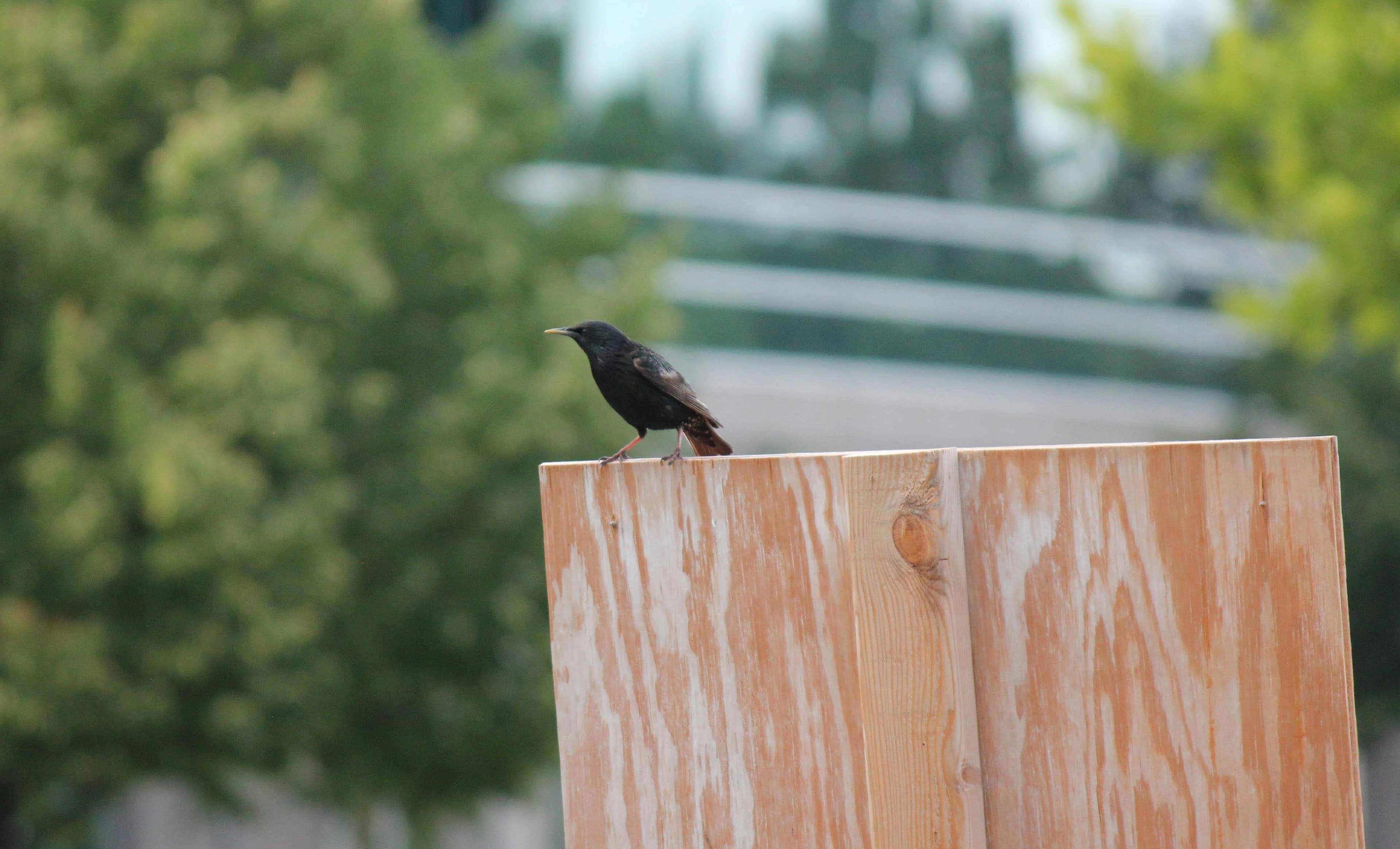
Hearing a bird that sounds like a squeaky door, rusty gate, or creaking hinge? Meet 5 suspects and learn how to tell them apart.