Sound Guide
What Spring Bird Migration Sounds Like in Your Yard
New voices appear overnight in March, April, and May. Here's the eight-week arc of spring migration sound.
Read Article →
That's it. That's the whole practice.
The companion piece to this post, Listening First, makes the case for why attention comes before action. The ear, not the eye, is the doorway into nature most conservation advice skips. This is the practical sequel. If you take that advice and step outside tomorrow morning, here are seven common backyard birds you're likely to hear, and how to recognize each one by sound.
Quick answer: The seven backyard birds you're most likely to hear on Earth Day are the American Robin (cheery running phrases), Northern Cardinal (bright whistled notes), Black-capped or Carolina Chickadee (a clear two-note whistle), Mourning Dove (soft, haunting coos), Song Sparrow (a few clear notes plus a trill), White-throated Sparrow (Old Sam Peabody Peabody Peabody), and Red-winged Blackbird (brassy conk-la-ree!). Start with the one that stands out. One is enough.
Most people learn birds species-first: see a bird, identify it, move on. The eye drives, the ear tags along.
Sound-first birding works the other way around.
Instead of trying to name everything at once, you listen for the layers: the near and the far, the overlapping voices, the call and response. You let the soundscape be a soundscape for a while. Then, slowly, you start attaching names to voices you already recognize.
Use this list as scaffolding. Start with the bird that stands out. One is enough.
Start here. In spring, the American Robin is often the loudest, most persistent singer in your yard.
The song sounds like a cheerful, running conversation. Short phrases with pauses between them, rising and falling as if the bird is thinking out loud. Field guides write it as cheerily, cheer-up, cheerily, cheer-up. Once you hear it that way, you can't un-hear it.
What makes robins ideal for beginners is repetition. Once you notice one, you'll hear them every morning for the rest of spring (and most evenings too).

Where you'll hear it: Across North America, often from treetops, gutters, and rooftops — anywhere with a stage.
If the robin is the narrator, the Northern Cardinal is the trumpet.
Its song is built out of bright, whistled phrases. Clear ringing notes that cut through traffic, lawnmowers, and morning chatter. Listen for patterns: a series of repeated rising or descending whistles, often remembered as birdy-birdy-birdy or cheer-cheer-cheer.
One detail most people miss: both males and females sing, often back and forth across a yard (a fact that quietly upended a century of textbook ornithology. Turns out half the birds were getting credit for the other half's work).

Where you'll hear it: Eastern and central United States, expanding north and west each decade.
Depending on where you live, you have one of two chickadee species: Black-capped Chickadee in the north, Carolina Chickadee in the southeast. For listening purposes, they're nearly interchangeable.
Most people know the chick-a-dee-dee-dee call. That's the alarm and contact call, and you'll hear it year-round. The song is something else entirely: a clear, whistled phrase.
Once you hear the song, you'll start noticing it everywhere. Suburbs, parks, even single trees on a city block.

Where you'll hear it: Most of the U.S., depending on region. Black-capped in the north, Carolina in the southeast, with a thin hybrid zone where the two species overlap and occasionally sing each other's songs (which is exactly as confusing as it sounds).
That soft, haunting coo from a roofline or a telephone wire? Not an owl.
The Mourning Dove's song is a gentle series of coos: one stronger note followed by several fading ones. Coo-OO-oo-oo-oo. It often sounds melancholic. That's the name, after all. But it's actually a male advertising for a mate or holding territory. Love song, not lament.

Where you'll hear it: Nearly everywhere in the United States, year-round.
Drill the 7 birds in this guide with short, audio-first lessons in W&W

Song Sparrows are common, subtle, and constantly singing in spring. The indie folk artist of your hedgerow.
The song usually begins with a few clear, repeated notes, then breaks into a lively trill. Each individual male has his own variations on the basic structure, almost like a personal playlist. Listen long enough and you'll start recognizing not just the species, but specific birds.

Where you'll hear it: Across the U.S., especially near shrubs, hedges, and the messy edges between yard and field.
This one is your seasonal guest.
In late April, White-throated Sparrows migrate through much of the eastern U.S. on their way to breeding grounds in the boreal forest. Their song is unmistakable: a slow, plaintive whistle that birders almost universally remember as:
Old Sam Peabody Peabody Peabody
(Canadians hear Oh sweet Canada Canada Canada. Same bird, same song, different national mnemonic. Yes, this is a real thing ornithologists discuss.)
You'll hear it frequently for a short window. Then it disappears north and you won't hear it again until fall.

Where you'll hear it: Eastern and central U.S. during spring migration. Peak window: late April through mid-May.
Step toward a field, marsh, or roadside ditch, and you'll hear it before you see it: a bold, brassy conk-la-ree! with a buzzing finish.
This is the sound of edges. The Red-winged Blackbird isn't a deep-yard bird. It lives where lawn meets cattail, where road meets wetland. The moment you hear that conk-la-ree!, your listening has shifted from backyard to wider ecosystem.

Where you'll hear it: Across North America, especially near water, marsh, or open land.
Seven birds is not a checklist for one morning.
On Earth Day, start with the practice from the companion piece: stand outside and listen without trying to identify anything. Just notice what's near, what's far, what's repeating, what stands out.
Then, if one voice keeps returning, try to match it to this list.
That's enough. The rest will come over time, as your ear begins to recognize patterns, phrases, and familiar voices in the background.
If you'd like help building that skill, Wings & Whistles teaches birds the way musicians learn songs: by sound, by phrase, by memory. You can start with these seven birds, or simply with the one bird you hear most often outside your window.
But the app can wait.
Tomorrow, go listen.
Open any bird for its recordings, what to listen for, and the birds it gets mistaken for.
Start learning backyard bird sounds Download Wings & Whistles
The American Robin. Robins are loud, repetitive, and singing from somewhere visible in nearly every yard across North America. Once you can pick out the cheery, running phrases, you have an anchor for everything else you hear.
The first hour after sunrise is the richest. That's the dawn chorus, when nearly every singing male is at peak volume and you're hearing the most species at once. Dusk is the second-best window. Mid-day still works. You'll just hear fewer voices and the soundscape will feel quieter.
Listen to the song, not the chick-a-dee call. Black-capped sings a clear two-note fee-bee. Carolina sings a faster four-note fee-bee-fee-bay. In hybrid zones across the central U.S. you'll occasionally hear birds singing both, which is exactly as confusing as it sounds.
Probably not all seven, but likely four or five if you're east of the Rockies and have any tree cover or a nearby field. American Robin and Mourning Dove are nearly guaranteed across most of the U.S. The White-throated Sparrow is the most regional. It's only there during spring migration in the East.
Most birds you can hear, you can't see. They're in the canopy, in dense brush, on the other side of the fence. Sound reaches you from every direction at once. Learning by ear unlocks the majority of the birds in any landscape. The ones you can also see become a bonus.
No. Field guides, recordings, and your own attention are enough. An app like Wings & Whistles speeds up the practice by drilling sounds the way a musician learns songs. The underlying skill is just repeated listening. Tomorrow morning is a fine place to start. Here's a step-by-step guide if you want one.
New voices appear overnight in March, April, and May. Here's the eight-week arc of spring migration sound.
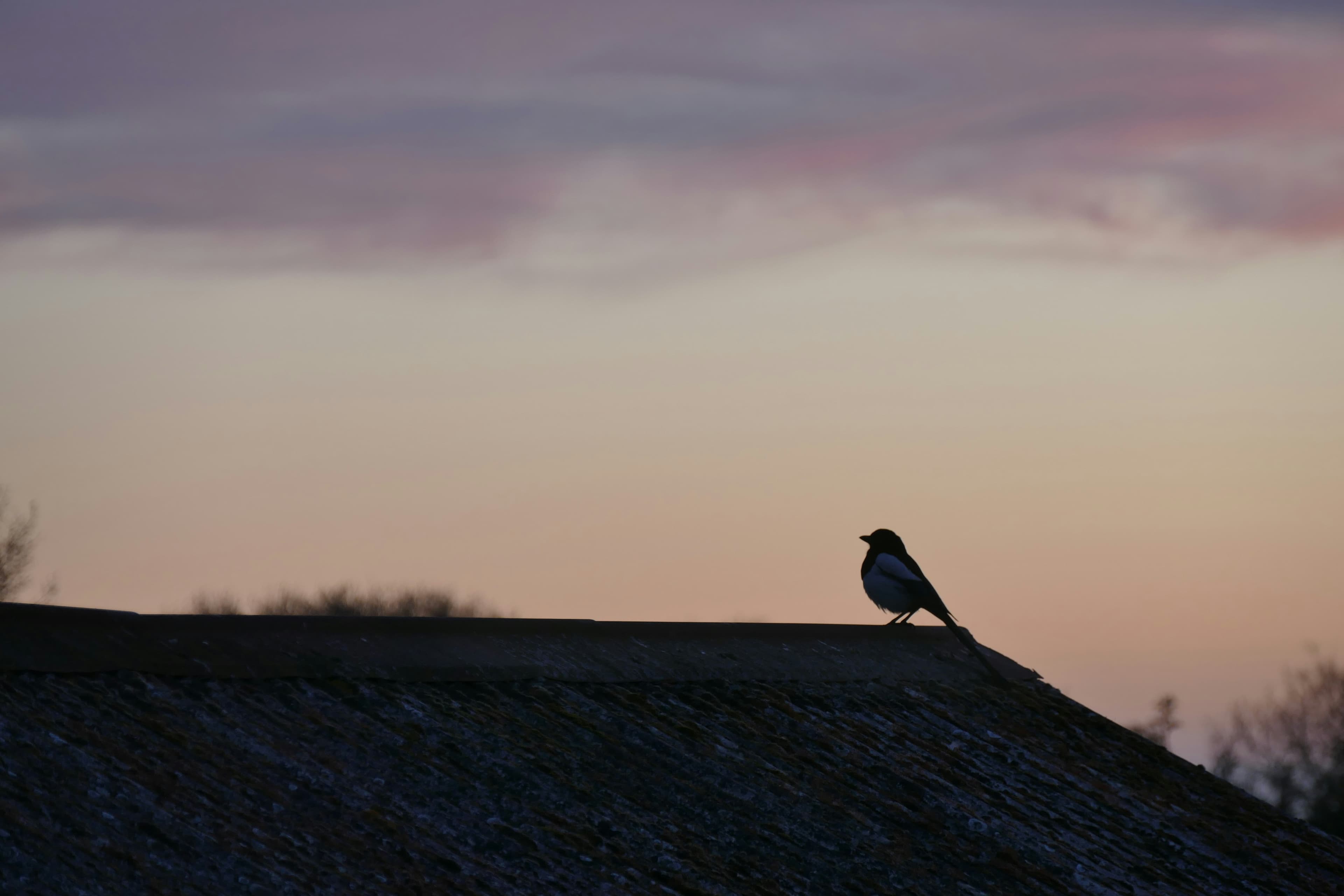
Every morning, birds begin their symphony. But why do they choose dawn for their most vigorous singing?