Why Does a Killdeer Scream 'Kill-Deer'? The Bird Named After Its Own Call
Sep 7, 2026 10 min read
You are crossing a gravel parking lot well after dark, maybe walking back to your car after a late shift, when something invisible directly overhead starts shrieking. Kill-deer! Kill-deer! Kill-deer! Loud, urgent, repeated. You look up and there is nothing to see. Just the sound, circling.
Here is the part that stops most people cold: it is not a coincidence, and it is not your ears lining up nonsense syllables into something that sounds like English. The bird really is screaming its own name. Not a nickname someone invented after the fact and hoped would stick – the actual English common name, Killdeer, is a direct transcription of that call. Whoever named this species did not describe what it looked like or where it lived, the way most bird names do. They just wrote down what they heard.
That is the whole shape of this post: the call itself, why the bird ended up named after its own voice instead of the other way around, why you are most likely to hear it screaming from an empty lot after dark instead of from a bird you can actually see, and the stranger things it does everywhere else in its life that have nothing to do with parking lots at all.
Killdeer give a sharp, piercing kill-deer, kill-deer, repeated over and over and climbing slightly in pitch as it goes. It is most often given in flight, with the bird circling overhead rather than perched somewhere you can spot it, which is a big part of why it can feel so disembodied when you hear it at night.
What it sounds like
A sharp, rising kill-deer, kill-deer, repeated over and over, sometimes for a solid minute or more.
Loudest and most persistent when the bird is disturbed, agitated, or circling in flight.
A separate, quieter dee contact call the rest of the time, which can build into a nervous, bubbling trill when a predator gets close to a nest.
Most English bird names describe what a bird looks like (Red-winged Blackbird) or where it lives (Marsh Wren). Killdeer is the odd one out: say the name next to the call and the transcription is almost too on the nose, kill-deer, kill-deer.
The bird did not choose to announce itself, and it is not calling out its own species name on purpose. The causality runs the other way. People heard a shorebird relative giving a two-syllable, rising cry from open ground, and at some point the easiest name for it became simply that sound, spelled out.
The scientific name backs up the same idea a second, independent way. Charadrius vociferus – vociferus is Latin for “noisy” or “clamorous,” the direct root of the English word “vociferous.” Break it down further and it is built from vox, “voice,” and ferre, “to carry” – a voice that carries. Which, if you have ever been woken up by one from three properties away, checks out.
Why You Hear It at Night
This is the part that actually explains the parking lot. A few things stack on top of each other to produce that specific experience: a scream from an empty lot at midnight.
First, Killdeer are simply active and calling both day and night more than most of their relatives. They do not switch to being nocturnal, they just do not go fully quiet once the sun goes down the way most daytime birds do.
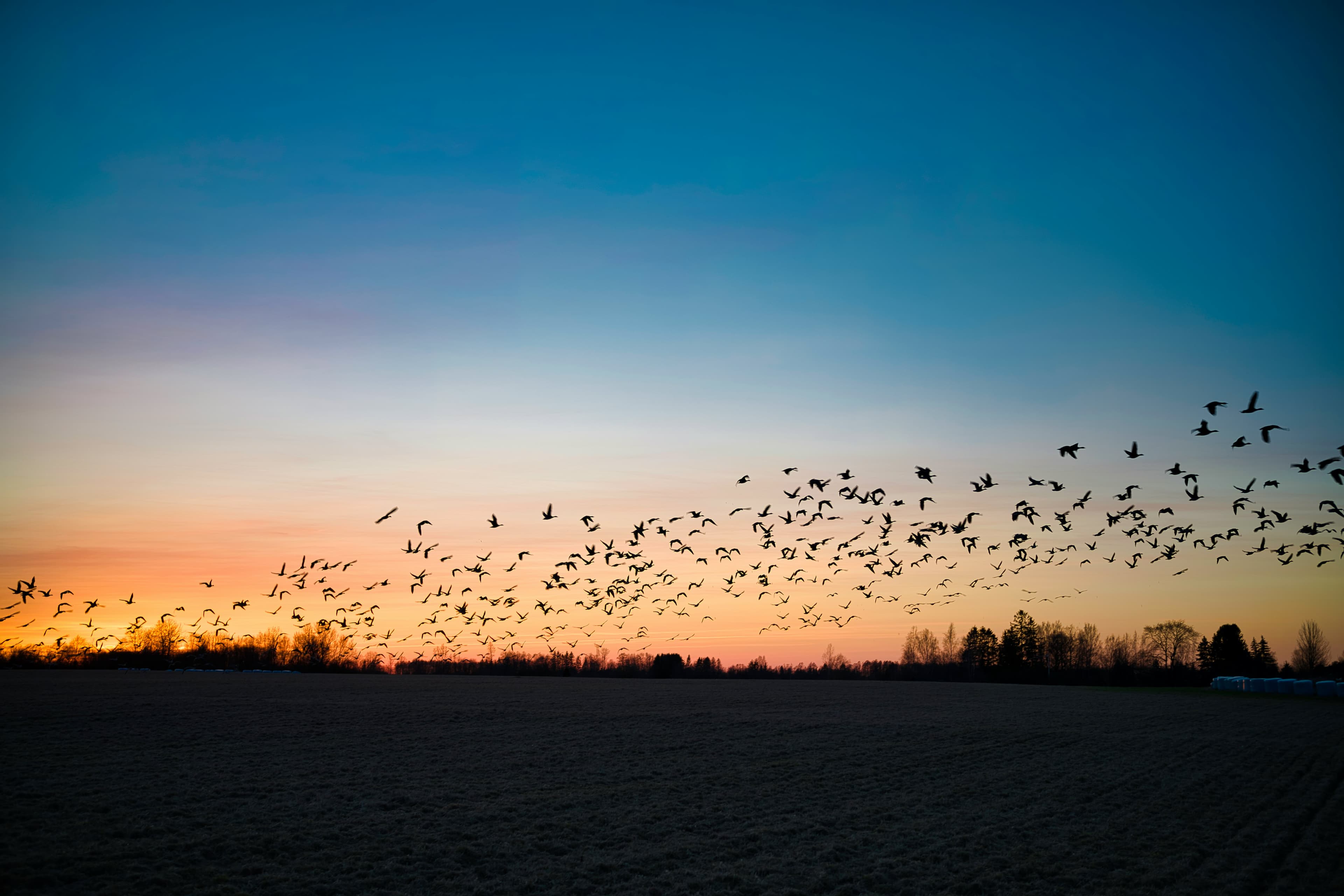
Second, many Killdeer migrate at night. A scream from directly overhead in an otherwise empty lot can come from a bird that was never on the ground there at all, just a Killdeer passing hundreds of feet up on its way somewhere else, calling as it goes. That is especially likely on migration nights in spring and again in late summer.
Third, Killdeer nest and forage on bare, open ground with a clear sightline in every direction: gravel bars, plowed fields, short grass, and open shoreline are the natural version. A gravel parking lot, a ballfield, a flat gravel rooftop, a golf course, or a construction site is the built-environment version of the same thing. To a Killdeer, an office park at 11 p.m. reads a lot like a river gravel bar. That is why the scream so often seems to come from nowhere, over the most ordinary, paved-over patch of ground imaginable.
Sound familiar? You may already recognize this call from our guide to birds that sound like a siren, which covers this same overhead wail alongside three other birds with a long, carrying cry: Common Loon, Northern Mockingbird, and European Starling.
Beyond the Scream
The name and the night noise are the headline, but Killdeer earn their reputation as one of the stranger birds in an open lot in a few other ways too.
The best known is the broken-wing display. When a predator, or a person, gets too close to a nest or chicks, a parent Killdeer will drop a wing, drag it against the ground, and stagger away calling as if it is injured and easy prey. It is an act. The moment the threat is lured a safe distance from the nest, the bird suddenly recovers and flies off.
The act only works on predators smart enough to be tempted by an easy meal. Toward large hoofed animals like cattle or horses, which will not be fooled by a fake injury and might simply step on the nest by accident, Killdeer switch tactics entirely: puffing up, fanning the tail to flash the bright orange rump, and charging straight at the animal instead of retreating.
Nest building is its own performance, called a scrape ceremony. A male scrapes several shallow depressions into bare ground, tail raised and spread, calling the whole time, and the female chooses one by settling into it. Both birds may then add pebbles, shell fragments, and other small debris as lining, sometimes for weeks. In one studied nest, researchers counted more than 1,500 pebbles.
Flat gravel rooftops look, to a Killdeer, close enough to a natural gravel bar to nest on, and it happens on real buildings often enough to be a documented pattern. That creates a genuine hazard, since the chicks cannot fly yet and have to get off the roof somehow. One set of chicks is documented surviving a leap from a seven-story building.
If your yard or lot feels louder with Killdeer lately, that tracks. Breeding wraps up over the summer, and postbreeding birds build into larger flocks heading into September and October as fall migration picks up. There is no single fixed peak date, timing shifts by region, but more Killdeer moving and calling through early fall is a real, general pattern rather than a coincidence.
Birds in this guide
Open any bird for its recordings, what to listen for, and the birds it gets mistaken for.
Because the English name “Killdeer” is an onomatopoeic transcription of the call itself, kill-deer, kill-deer, repeated in flight. The scientific name, Charadrius vociferus, encodes the same trait a second way: vociferus is Latin for “noisy” or “clamorous,” literally built from vox (“voice”) and ferre (“to carry”), a voice that carries. The bird did not choose to announce itself. Humans heard the call first and simply named the species after what they heard.
Why do Killdeer call at night?
Killdeer are unusually vocal after dark for a ground-nesting shorebird relative, active and calling both day and night rather than going quiet at sunset. Many populations also migrate at night, so a scream from an empty lot at midnight can come from a bird passing overhead on its way somewhere else, never touching the ground at all.
Why are Killdeer always in parking lots?
Killdeer nest on bare open ground with good sightlines – natural gravel bars, dirt, and short grass, where they can spot a predator approaching from any direction. A gravel lot, a ballfield, a construction site, or a flat rooftop offers that same open, low-cover profile, so Killdeer readily treat human-built flat ground as a stand-in for their natural habitat.
Is the Killdeer's "kill-deer" call an alarm call?
Not quite, though it is easy to see why it sounds that way. The kill-deer, kill-deer call is primarily a territorial and courtship call – both male and female give it over and over during display flights, whether or not anything is actually wrong – and it gets louder, faster, and more insistent when a predator or person gets too close to a nest or chicks. Killdeer also have a genuinely separate alarm vocabulary worth knowing: a sharp dee that can intensify into a nervous, bubbling trill, plus a rapid chattering call, both used specifically when a threat is nearby. Any of these agitated calls may be paired with the broken-wing distraction display, or, toward large animals that will not be fooled by an act, an aggressive tail-fanning charge instead.
Do Killdeer really nest on rooftops?
Yes. Flat gravel roofs closely resemble the natural gravel bars and open shoreline Killdeer prefer, and rooftop nesting is well documented on buildings with that kind of surface. It creates a real hazard for chicks, which cannot fly yet and have to get off the roof somehow. One documented case involved a set of chicks that survived a leap from a seven-story building.
Does the Killdeer's "kill-deer" call sound like a siren?
Yes, and it is very likely the exact same call. Our guide to birds that sound like a siren covers this Killdeer call alongside three other overhead-wailing birds: Common Loon, Northern Mockingbird, and European Starling. There is no documented evidence Killdeer have two distinguishable calls, a short repeated alarm cry and a separate longer siren-shaped wail. It is the same kill-deer scream described from two different angles: the etymology and night-time behavior here, a four-species roundup there.