What Bird Sounds Like a Monkey (or Someone Laughing)? Learn the 4 Suspects by Ear
Nov 14, 2026 8 min read
Think of the jungle in any old adventure movie. Before the first vine swings into frame, the soundtrack tells you where you are: a loud, rolling cackle that starts as a chuckle, speeds up, climbs, and collapses into hysterical hoots. Your brain files that under "monkeys." It is a bird. Usually it is a Laughing Kookaburra, a big, stocky kingfisher from Australia that has spent decades working as the film industry's all-purpose jungle noise. Which explains a lot about the night you are having.
Why your woods can sound like a jungle soundtrack
The honest part first: the kookaburra is not in your woods, and outside a zoo you will not hear one anywhere in North America. But it trained your ear. After enough movies that dubbed a kookaburra over a rainforest, "monkey" has come to mean a particular shape of sound: loud, coming from up in the trees, a run of notes that speeds up or breaks in pitch, and ideally more than one voice joining in until it sounds like a crowd.
Plenty of North American birds tick some of those boxes. When something behind the house ticks three at once, your brain reaches for the only file it has. The real list is short, and two questions sort most of it out: was it dark, and where were you standing?
What bird sounds like a monkey?
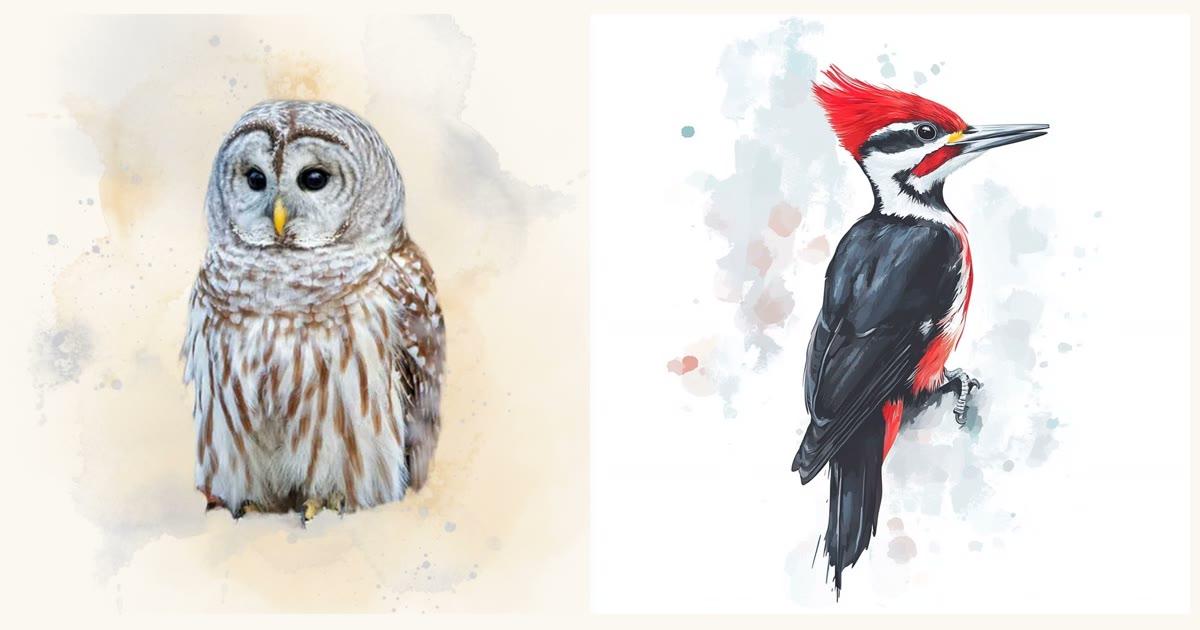
In North America, monkey-like whooping and cackling after dark is almost always a pair of Barred Owls trading calls in a duet. By day in big woods, a loud, ringing, laughing series is usually a Pileated Woodpecker. At the beach it is a Laughing Gull, and in a southern marsh, a Common Gallinule.
Barred Owl: Caterwauling duet
--:--
That is a pair of Barred Owls, mid-argument (or mid-courtship, which in owls sounds about the same): two birds talking over each other without a pause for breath. If that matches what you heard after dark, you have your answer. The rest of this page is for the noises that came at the wrong time or from the wrong place: noon in the woods, a Florida marsh, a crowded beach.
Jungle noises behind the house right now? Open Wings & Whistles, record a few seconds, and check them against the owls. Get the app free →
Quick Suspects
Whoops, cackles, and hoots after dark, two voices trading back and forth: a pair of Barred Owls.
A loud, wild, ringing wuk-wuk-wuk from big trees in daylight, one voice:Pileated Woodpecker.
A higher, thinner, dead-even wick-wick-wick from a lawn or park: a Northern Flicker.
Whinnying, clucking outbursts from cattails or lily pads in the South:Common Gallinule. A loud wail along a Florida canal at night is more likely a Limpkin.
Ha-ha-ha-haah-haah at the beach or the fishing pier:Laughing Gull.
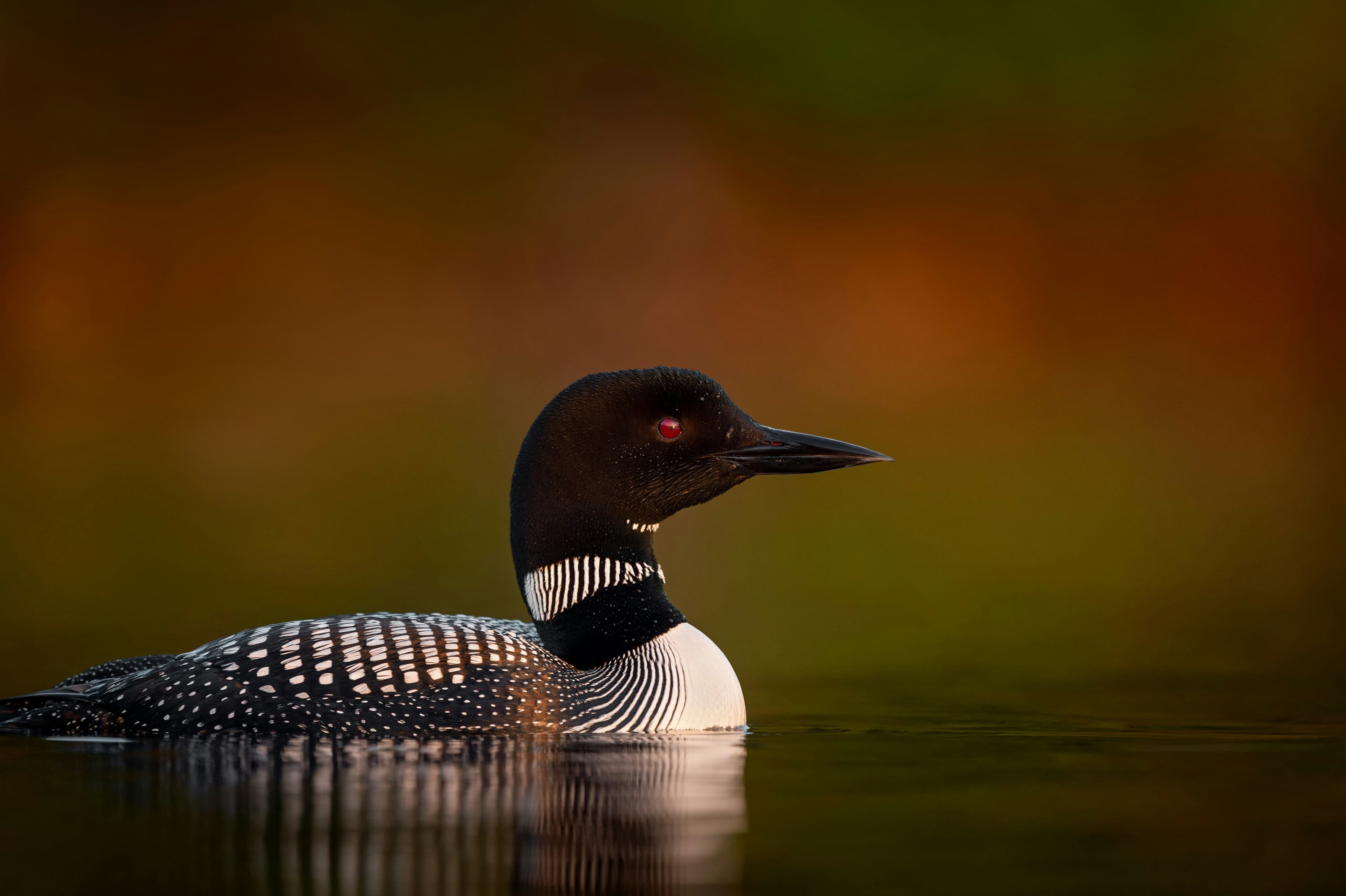
A wavering, shaky laugh across a northern lake: the tremolo of a Common Loon.
The exact laugh from the movie jungle: a Laughing Kookaburra, which lives in Australia (and zoos).
Whooping and cackling after dark: a pair of Barred Owls
Start with the version that sends people to the search bar at 11 p.m. It usually begins politely, with one owl hooting. A second owl answers from a little way off, pitched a touch higher (often the female; her voice sits above his). Then the conversation gets away from them. The hoots run together, the pitch jumps around, and within seconds you have whoops, cackles, gurgles, and caw-like squawks piled on top of each other, sometimes for a minute or two. Birders call it caterwauling. Everyone else calls it monkeys. Either way, it is the pair of Barred Owls in the clip at the top of this page.
The detail that gives the owls away is buried in the racket: short, clean hoots, the low, round note you would expect from an owl, stitched in between the wilder sounds. Monkeys do not hoot like that. The duet is also a true duet: two voices trading back and forth from two spots in the trees. That back-and-forth is the most useful clue on this page, because the daytime suspect in the next section almost never does it.
It helps to know what the same bird sounds like when it is calm. Here is the Barred Owl's everyday song: eight or nine barking hoots in two phrases that birders remember as who cooks for you, who cooks for you-all, with the last note sliding down and away.
Barred Owl
--:--
Tidy and rhythmic. From far off it can pass for a big dog barking somewhere in the woods, and nobody hears it and thinks of a rainforest. If your noise had that steady two-phrase bounce, you heard an owl being an owl. If it fell apart into a cackling free-for-all, you heard two owls getting very excited about each other.
Where and when narrow it further. Barred Owls like big, wet woods: river bottoms, swamps, old forest along a creek, and the leafy suburbs that back onto them. They live across the East and have spread through the Pacific Northwest and western Canada. They do not migrate, so the same pair can be behind your house in any month. They are noisiest in late winter and early spring, when pairs are courting and settling on a nest site, with a second rise in late summer and fall. Most of it happens from dusk through the night, but Barred Owls are not strict about the hours. On a gray, drizzly afternoon a pair will sometimes start up in broad daylight, so do not rule them out too fast in the next section. The Barred Owl species page has the rest of their vocabulary.
The same jungle noise at noon: Pileated Woodpecker
Move the clock to midday. In broad daylight the owls are mostly off the hook (gray afternoons excepted), and the next question is how many voices you heard. A wild, laughing outburst from high in big trees at noon, from one bird rather than two, points to the Pileated Woodpecker. This clip starts with a fast, laugh-like burst, then settles into the long call: a loud, ringing series of wuk notes that carries a long way through the woods.
Pileated Woodpecker: Laugh-like call, then long call
--:--
Listen to the two halves. The opening burst is the unhinged part, a giddy rattle of notes like someone laughing at a joke they are still in the middle of telling. Then the bird gets down to business: single, ringing wuk notes that start soft and swell until they fill the woods. Out in the field that long call often wobbles, rising and falling in pitch and volume, and that wildness plus the sheer volume is what makes people think monkey. Next to the owl duet, though, it is simple: one voice, one bird, ten seconds or so of noise, then silence while it goes back to work.
The best confirmation is not a sound at all. Wait a minute after the call and watch the gaps between trunks. Pileateds are crow-sized, black with a flaming red crest, and when one flies it flashes big white patches under the wings and swoops from tree to tree on deep, rowing wingbeats, like a small pterodactyl with an appointment. Then check the dead trees and stumps nearby. A Pileated chisels oblong, almost rectangular holes, the small ones big enough for your fist and the big ones a foot long, and leaves a pile of fresh wood chips at the base, as if someone had been carving a canoe. Few things in the woods make a mess like that.
Pileateds live year-round in mature forest across the East, through Canada, and down the Pacific Northwest, and they have been moving into older suburbs with big trees. They call by day in every season, which is why time of day makes such a good fork. If the series in your yard was higher, thinner, and dead even from first note to last, a long wick-wick-wick-wick that never wobbles and sounds rehearsed rather than wild, you probably heard a Northern Flicker, a smaller woodpecker that spends a lot of time on lawns.
Two jungle noises, two shifts: owls after dark, a woodpecker at noon. Learn both and the woods behind your house stop sounding like a rainforest. Download Wings & Whistles Google Play
A monkey in a Florida marsh
Everything so far needed big trees. Take the trees away, add shallow water and a few acres of cattails, and the monkey changes species. This branch is for everyone who added "in Florida" (or Georgia, or Texas) to their search, because the Southeast has a marsh voice the woods do not.
Start with the Common Gallinule. Out of nowhere, the reeds erupt: a rattling run of nasal clucks that boils into a cackle, then slows into a few long, whining notes as the bird runs out of steam. It sounds like something small and furious in the cattails just got startled by its own reflection.
Common Gallinule
--:--
A gallinule is about the size of a small chicken, dark slate gray with a white stripe along its side and a bright red bill tipped in yellow, and it walks across lily pads on long, spindly toes that look borrowed from a much bigger bird. You will usually hear it before you see it, because it calls from thick cover. Like the owl pair, it comes in sudden bursts and a neighbor will sometimes answer. Unlike the owls, it calls by day and by night, from water level, with a lot more clucking. Gallinules live year-round in Florida and along the Gulf Coast, and spend the summer in marshes farther north, as far north as the Great Lakes, New England, and the southern edge of Canada. The Common Gallinule species page has more on where to find one.
Florida has two more marsh "monkeys" to know by name. A loud, wailing kur-r-ee-ow, often at night, from along a canal or a spring run is a Limpkin, a brown wading bird that has been spreading north out of Florida in recent years. A flock of high, squealing whistles passing overhead at dusk is a Black-bellied Whistling-Duck, which also turns up in Texas, Louisiana, and Arizona. Neither of them cackles, though. If your Florida noise cackled and clucked from the reeds, start with the gallinule. If it came from big trees after dark, go back two sections: Barred Owls caterwaul in Florida too.
When it sounds less like a monkey and more like laughing
Some people never think "monkey" at all. They think "someone out there is laughing at me," and they are not entirely wrong. A sound reads as a laugh when it is a fast, fairly even run of notes that rises, peaks, and falls, the way a person's ha-ha-HA-ha-ha does. The gallinule's cackle comes close. A couple of birds nail it.
The best of them is the Laughing Gull, which was named for exactly this. It gives a few single, nasal kow notes, then launches into the full routine: a strident ha-ha-ha-ha-haah-haah-haah that starts as quick giggles and stretches into long, drawn-out guffaws.
Laughing Gull
--:--
That call is the soundtrack of Atlantic and Gulf beaches: year-round in the South, summer only farther north. Look for a sleek, medium-sized gull with a black hood in summer (it fades to a gray smudge in winter), working fishing piers, boardwalks, and the parking lot behind the seafood place. They will stand on a railing three feet from your sandwich and laugh, which is hard not to take personally. Compared with the gallinule, the gull laughs out in the open, from overhead or a perch you can see, and usually with a crowd of other gulls joining in. The Laughing Gull species page has more of its calls.
Inland, on a northern lake at night, the laugh belongs to a different bird. The tremolo of the Common Loon is a wavering, quavering giggle across the water, and it means the loon is upset about something (a canoe too close, an eagle overhead). Loons have a second famous call, the long, rising wail, and we sort the two out in our tour of weird bird sounds. And if the ringing laugh came from the woods at midday, you already know who that was.
Tell the owls from the woodpecker in one evening walk
The whole investigation folds into three questions you can ask on the spot, before you reach for your phone. Was it dark? Night favors the owls, noon favors the woodpecker, and a gray afternoon can go either way. Was it one voice or a duet? Two birds trading calls until it boils over into cackling is the owl pair. One loud, loose series and then silence is the woodpecker. Was there water nearby? Big wet woods fit the owls, cattails fit the gallinule, and a beach fits the gull.
Then a two-minute drill. Play the Barred Owl duet at the top of this page, then the Pileated call right after it. Do that twice. Then close your eyes, have someone else press play in a random order, and say "duet" or "solo" before you say a bird name. Naming the shape first is the real skill here. It is how experienced listeners sort sounds long before they know every species, and it works just as well at the beach and in the marsh.
In the Wings & Whistles app, the Barred Owl turns up early in Night Shift: Who's Out There? and again in Hoot School, which sets it beside the other owls so the who-cooks-for-you rhythm sticks. Woodpecker Workshop covers the Pileated and the flicker, so you can drill wild against steady. Gull School: The Klee-OW Crew has the Laughing Gull, and Marsh Secret Agents has the gallinule. If you want the method behind all of it, start with how to learn bird songs by ear. It is a gentle two-week plan, and these two jungle noises make a very good first week.
FAQ: Birds that sound like a monkey
What bird sounds like a monkey at night?
Usually a pair of Barred Owls. When two of them get going, their hoots break down into a wild duet of whoops, cackles, and gurgles that most people take for a troop of monkeys. Listen near big trees and water. They call all year, but the duets are most frequent in late winter and spring, mostly after dark.
What bird sounds like a monkey in Florida?
In a Florida marsh, the best first guess is a Common Gallinule, which bursts out of the cattails with whinnying, cackling, clucking outbursts. A loud, wailing cry, often at night, is more likely a Limpkin, and high, squealing whistles from a flock overhead point to a Black-bellied Whistling-Duck. In big wet woods, Barred Owls caterwaul in Florida too.
What bird sounds like it is laughing?
At the beach, it is most likely a Laughing Gull, named for its nasal ha-ha-ha-ha-haah-haah-haah call. On a northern lake, the wavering laugh is the tremolo of a Common Loon. In the woods, a ringing laugh by day is often a Pileated Woodpecker, and a cackling riot after dark is a pair of Barred Owls.
Is there a woodpecker that sounds like a monkey?
Yes. The Pileated Woodpecker, a crow-sized black-and-white woodpecker with a red crest, gives a loud, ringing series of wuk notes that rises and falls a little irregularly and carries a long way through big woods. It calls by day, which is the easiest way to separate it from caterwauling Barred Owls. A Northern Flicker sounds similar but steadier.
What bird makes the monkey sounds in jungle movies?
Usually not a monkey at all. The rolling, cackling laugh used for decades as a stock jungle sound in films and TV is the Laughing Kookaburra, a big kingfisher that lives in Australia. You will not hear one in the wild in North America. The birds that make the same impression here are Barred Owls and Pileated Woodpeckers.
Do Barred Owls really sound like monkeys?
Yes, and they are the most common reason people search for a monkey bird. Their familiar who-cooks-for-you hoot sounds nothing like a monkey, but when a pair duets, the hoots dissolve into an excited jumble that can run for a minute or two. Listen for short, clean hoots mixed into the racket. Monkeys do not hoot like that.
Birds in this guide
Open any bird for its recordings, what to listen for, and the birds it gets mistaken for.
Learn the duet and the solo. Drill the Barred Owl in Hoot School and the Pileated in Woodpecker Workshop, then go collect the regulars: both birds stay all year, so you will get to hear them again. Download Wings & Whistles Google Play